
The clearest differences between American and British pronunciation come down to a handful of predictable patterns: whether the /r/ sound survives at the end of a syllable, how a small set of vowels shift shape, and what happens to /t/ and /j/ sounds in casual speech. Master these five or six contrasts and your listening comprehension, and your own clarity, improves fast. Everything else is regional color you can layer in later.
TL;DR:
- About half of American speakers merge the “cot” and “caught” vowels, while British English typically keeps them distinct, affecting comprehension.
- Rhoticity differs: American pronunciation always includes the /r/ sound, whereas British Received Pronunciation often drops it at the end of syllables unless followed by a vowel.
- American /t/ sounds often flapped into a /d/ between vowels, whereas British speakers tend to keep a crisp /t/ or replace it with a glottal stop in casual speech.
- British speech frequently inserts the /j/ sound before vowels in words like “tune” and “duty,” a feature many American speakers drop entirely.
- Focusing on the most impactful contrasts, like final consonant clarity and vowel distinctions, accelerates comprehension and can be tailored to specific communication goals.
Table of Contents
- American vs British Pronunciation: The Core Sound Differences
- Word-by-Word Pronunciation Differences to Practice
- How to Train Your Ear for These Contrasts
- What to Prioritize for Faster Comprehension
- Prof. Alex’s Note on Speech-Organ Training
- Choosing Your Target: General American or British Features?
- Put These Contrasts Into Practice With InPronunci
- Sources
- FAQ
American vs British Pronunciation: The Core Sound Differences
Rhoticity is the single biggest signal your ear picks up first. General American accents are rhotic, meaning speakers pronounce the /r/ in every position, including at the end of a word like “car” or in the middle of “nurse.” Many standard British accents, particularly Received Pronunciation, are non-rhotic, so that same /r/ disappears unless another vowel follows it. This is a well-documented phonological split between the two systems, not a casual stylistic choice, and it is the fastest way to identify which accent you are listening to within a single sentence.
Vowels tell the second half of the story. American English keeps a short “a” in words like “bath” and “class,” while British English lengthens that vowel into something closer to “bahth.” American speakers also tend to merge the vowels in “cot” and “caught” into a single sound, a pattern linguists call the cot–caught merger, and a significant portion of American speakers show this merger while British English keeps the two vowels distinct.
Then there is /t/. Between vowels, American speakers often “flap” the /t/ into a quick sound closer to a /d/, so “water” comes out closer to “wa-der” and “better” sounds like “bed-er.” British speakers are more likely to keep a crisp /t/ or, in casual London speech, swap it for a glottal stop, a brief catch in the throat instead of a consonant, as detailed in this comparison of pronunciation systems. Add yod-dropping to the list: British speakers often insert a /j/ sound before certain vowels, so “tune” and “duty” carry a faint “y” glide that many American speakers drop entirely.
- Rhoticity: American keeps /r/ everywhere; British RP drops it unless followed by a vowel.
- Trap–bath split: British lengthens the “a” in bath, class, and dance; American keeps it short.
- Cot–caught merger: about half of American speakers merge these vowels; British speakers keep them separate.
- Flapping: American /t/ between vowels often sounds like a quick /d/.
- Yod-dropping: British speech frequently inserts the /j/ glide in words like “tune” and “new,” which many American speakers drop entirely.
Stress and vowel reduction add a quieter layer to this picture. Unstressed syllables in both accents often collapse into schwa, but British speakers tend to reduce more syllables in longer words, which is part of why “secretary” sounds different on each side of the contrast.
Pro Tip: Pick one contrast at a time. Trying to fix rhoticity, vowel length, and flapping all in the same practice session usually backfires. Isolate one pattern, drill it for a week, then move to the next.
Word-by-Word Pronunciation Differences to Practice
Some individual words carry almost every contrast above in miniature, which makes them efficient practice targets. Listening for these specific words trains your ear faster than abstract rules ever will.
- Tomato — American says “tuh-MAY-toh” with a clear diphthong; British says “tuh-MAH-toh” with the broad “a” from the trap–bath family.
- Vitamin — American stresses the first syllable with a short “i” (VY-tuh-min); British often uses a shorter first vowel closer to “VIT-uh-min.”
- Basil — American rhymes the first syllable with “hazy”; British rhymes it with “razzle.”
- Schedule — American opens with a hard “sk” sound; British frequently opens with “sh.”
- Privacy — American uses a long “i” in the first syllable (PRY-vuh-see); British uses a short “i” (PRIV-uh-see).
- Vase — American rhymes it with “face”; British rhymes it with “cars.”
Household and everyday words reveal the same patterns at smaller scale:
- Garage: American stresses the second syllable (guh-RAHJ); British stresses the first (GA-rij).
- Mobile: American ends with a short “l” sound; British often ends closer to “mo-bile” rhyming with “smile.”
- Oregano: American stresses the third syllable; British stresses the second.
Run each pair through a simple loop: listen to a native model, repeat it three times, record yourself, then compare your recording side by side with the original. This single habit, done consistently, does more for your ear than any list of rules.
How to Train Your Ear for These Contrasts
Minimal pairs are the most efficient drill format because they isolate exactly one sound at a time. Pair “cot” with “caught,” “car” with “cah” (the non-rhotic version), and “water” with a crisply articulated British “wa-ter.” Your brain learns contrasts faster when the only variable that changes is the one sound you are targeting.
A record-compare-repeat cycle works best in short, focused bursts rather than long unfocused sessions:
- Listen to a native model clip twice before attempting the word yourself.
- Record your own version immediately after, without rehearsing extra times first.
- Compare the two recordings back to back, listening specifically for the target sound.
- Repeat the same word five times, adjusting slightly after each comparison.
Cambridge’s pronunciation dictionary is one of the few free resources that gives you both UK and US audio for the same word side by side, which makes it genuinely useful for this kind of contrast training. For the articulatory side, the American [t] sound is worth watching in motion rather than just hearing:
shows tongue placement and airflow for that flap in real time, which is something audio alone can never show you.
Pro Tip: Ten to fifteen minutes of focused minimal-pair drilling every day beats an hour once a week. Consistency trains the ear; marathon sessions just train fatigue.
What to Prioritize for Faster Comprehension
Not every contrast deserves equal attention, especially if your goal is being understood quickly in a specific setting. Prioritizing the features that most affect intelligibility gets you further, faster, than chasing every regional quirk at once.
- Fix final consonants first. Dropped endings on words like “want” or “asked” cause more confusion than any vowel shift.
- Decide deliberately whether you are training rhotic or non-rhotic /r/, and stay consistent rather than mixing both within a sentence.
- Target the vowel contrasts that actually change word meaning, like cot versus caught, before polishing subtler quality differences.
- Match your practice to your goal: TOEFL and IELTS speaking sections reward clear vowel distinctions, while job interviews and presentations reward steady rhythm and stress.
- Build a short weekly checklist: three days on rhoticity, two days on flapping, two days reviewing recorded comparisons.
Learners with a specific goal like career readiness tend to make faster progress because they know exactly which contrast matters most for their next conversation.
Prof. Alex’s Note on Speech-Organ Training
Understanding a phonological rule and being able to produce it are two different skills, and that gap is where most self-study plans stall. Prof. Alex, Ph.D. Accent Coach, built InPronunci’s method around closing that specific gap.
- Speech-organ education teaches you what your tongue, lips, and jaw are actually doing, not just what the sound is supposed to sound like.
- The Interactive 2D Sound Video Simulator makes hidden articulation visible, so a flapped American [t] becomes a movement you can watch and copy, not just a sound you approximate by guessing.
- The curriculum covers 13 consonant sessions and 12 vowel sessions, plus intonation and emphasis training, with AI Accent Coach feedback at both Intermediate and Advanced levels.
Hearing a contrast is only half the job. Seeing where the tongue sits, and feeling your own mouth match that position, is what turns a rule you understand into a sound you can actually produce under pressure.
A free onboarding chapter lets you try the speech-organs-first approach before committing to a subscription.
Choosing Your Target: General American or British Features?
If your goal is international intelligibility, job interviews, or academic presentations, General American’s neutral patterns usually serve you best. If regional identity or connecting with a specific audience matters more than raw neutrality, keep your British features intentionally rather than losing them by accident. Intelligibility first, identity second: that ordering rarely fails you.
— Prof. Alex., Ph.D. Accent Coach
Put These Contrasts Into Practice With InPronunci
Reading about rhoticity and flapping is one thing. Actually producing them under real speaking pressure is another, and that’s the gap InPronunci: Accent Training App was built to close. Instead of guessing at a sound from a written rule, you watch it, hear it, record your own attempt, and get feedback on the exact gap between your version and the native model.
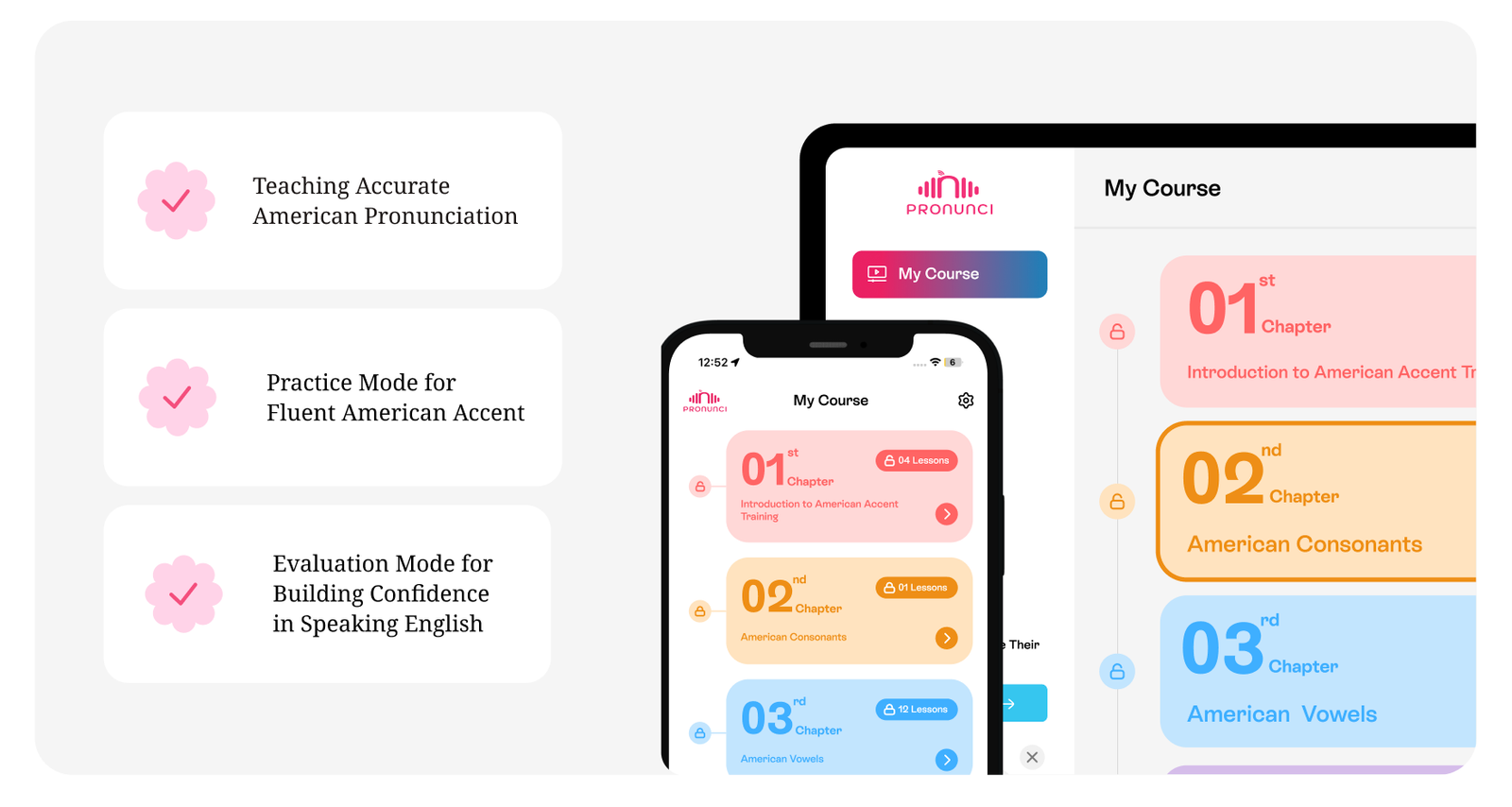
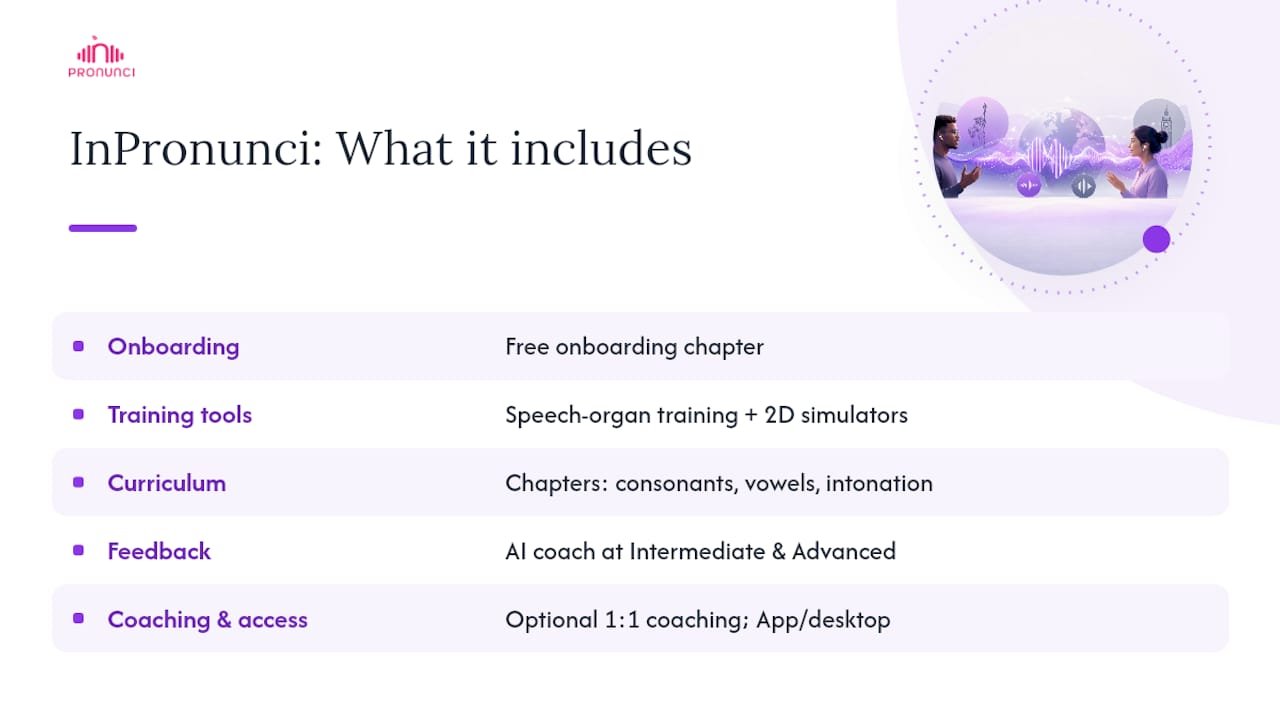
The program starts with a free onboarding chapter, so you can test the speech-organ training and 2D Sound Video Simulators before choosing a monthly or annual subscription. Inside, you’ll work through structured chapters on American consonants, vowels, and intonation, with AI Accent Coach feedback at both Intermediate and Advanced levels, plus optional one-on-one coaching if you want direct human guidance. Everything in this article, from flapping to yod-dropping to the cot–caught merger, maps directly onto a session in the curriculum.
Download InPronunci on the App Store or Google Play, or explore the full InPronunci: American Accent Training Course on desktop to see the complete chapter breakdown before you start your free onboarding session today.
Sources
For deeper study, Cambridge’s pronunciation audio offers free UK and US models, while Oxford Online English’s comparison lesson covers vowel articulation in more detail.
- PMC article on pronunciation differences
- Comparison of General American and Received Pronunciation
- Cambridge English Dictionary pronunciation audio
FAQ
What do Americans pronounce differently than British speakers?
Americans typically pronounce /r/ in every position (rhoticity), flap /t/ into a quick /d/-like sound between vowels, and merge the “cot” and “caught” vowels, while British RP speakers drop /r/ at the end of syllables and lengthen the “a” in words like “bath.”
Why do Americans say “zee” instead of “zed”?
This is a vocabulary difference rather than a pronunciation rule tied to phonology; American English adopted “zee” for the letter Z while British English kept “zed,” and both have been standard in their respective countries for generations.
What are common words that British and American speakers pronounce differently?
Frequently cited examples include tomato, vitamin, basil, schedule, privacy, vase, garage, mobile, and oregano, each showing a distinct vowel, stress, or consonant shift between the two accents.
How do British speakers say “bottle of water”?
British speakers, especially non-rhotic RP speakers, often drop the /t/ sounds into glottal stops and the final /r/ in “water,” producing something closer to “bo’le of wa’ah,” while American speakers flap both /t/ sounds and keep the /r/ fully pronounced.
Should I learn General American or British pronunciation?
Choose General American if your priority is international business communication, exams like TOEFL, or professional clarity in the U.S., since a structured program like InPronunci’s American Accent Training Course is built specifically around that target; choose British features intentionally if local identity or a specific audience matters more.