


Pronunciation coaching for career growth is a targeted process that trains your English sound system, rhythm, and intonation so your speech is clear, confident, and persuasive in professional settings. For non-native English-speaking professionals, clear pronunciation directly affects customer satisfaction scores and job performance in client-facing roles that require voice-based communication. The industry term for this work is accent training or speech training for professionals, and it goes well beyond correcting individual sounds. It addresses stress patterns, connected speech, and the prosodic features that make English sound natural and authoritative. Inpronunci was built specifically to deliver this kind of structured, evidence-based coaching to intermediate and advanced learners.
What are the essential prerequisites for pronunciation coaching for career growth?
Effective speech training for professionals starts with an honest assessment of where you are right now. Before you practice a single sound, you need to understand your Mother Tongue Influence (MTI), which is the degree to which your first language shapes your English pronunciation patterns. Standard professional assessments for voice-based hiring roles last approximately 60 minutes and measure pronunciation, rhythm, and accent clarity. That benchmark tells you exactly which phonetic areas need the most attention.
Three prerequisites make pronunciation coaching work:
- Basic English fluency. Coaching targets your sound system, not your grammar. You need enough vocabulary and sentence structure to practice real speaking situations.
- Daily practice commitment. Consistent daily practice over 2–3 months produces measurable improvements in pronunciation clarity and reduced native language interference. Sporadic effort does not move the needle.
- Access to reliable feedback tools. You need a way to hear yourself, compare your speech to a native speaker model, and receive corrections. AI pronunciation feedback apps, phonetics charts, and structured coaching platforms all serve this function.
The table below shows what each tool type offers at the assessment stage.
| Tool type | Primary function | Best for |
|---|---|---|
| AI pronunciation app | Real-time feedback on sounds, stress, and rhythm | Daily self-study and progress tracking |
| Phonetics chart (IPA) | Visual reference for sound production | Identifying specific problem sounds |
| Professional coaching platform | Structured curriculum with human guidance | Systematic improvement over weeks |
| Voice recorder | Self-monitoring and comparison | Tracking change over time |
How to structure a step-by-step pronunciation coaching plan
A clear plan separates professionals who improve from those who plateau. Follow these seven steps in order.
-
Record your baseline speech. Read a work-related paragraph aloud and record it. Listen for patterns: which sounds feel unstable, where your rhythm breaks down, and where listeners ask you to repeat yourself.
-
Identify your MTI patterns. Compare your recording to a native speaker model. Note which vowels, consonants, or stress patterns differ most. This is your personal phonetic priority list.
-
Practice articulation at the sound level. Work through the specific American vowels and consonants that cause you trouble. Inpronunci’s 2D Sound Motion Technology shows you exactly how native speakers position their tongue, lips, and jaw for each sound. That visual information removes the guesswork that slows most learners down.
Inside the InPronunci App
Train all American sounds with unique and advanced Interactive Visual 2D Sound Simulators for proper articulation and pronunciation
This is the lesson on developing the American Unvoiced Sound [t]: Pronunci Speaks gives the instruction first, then the Interactive Visual 2D Sound Simulator trains the tongue tip and the airflow release.
- EffectiveMost apps offer visual learning. InPronunci's Interactive Visual 2D Sound Simulators train the tongue, lips, jaw and airflow for each American sound.
- ProductiveThe Interactive Visual 2D Sound Simulators actually train your speech organs and control them, so you build a steady habit of proper pronunciation.
- ResultsStudents pronounce individual American sounds with almost native-like pronunciation.
Start Chapter 1 freeChapter 1 is free in the InPronunci app. -
Build rhythm and intonation. Move from individual sounds to sentence-level prosody. Practice stress patterns, sentence rhythm, and rising and falling intonation. Shadowing exercises with native speaker audio are the most reliable method for developing natural prosody.
-
Practice connected speech. Real English runs words together. Sounds link, reduce, and change at word boundaries. Train reductions like “gonna,” “wanna,” and “didja” in context. Phone and remote video communication clarity depends 80% on connected speech mastery, not perfect individual sound production.
-
Apply your skills to real work scripts. Practice the exact language you use at work: client calls, presentation openings, meeting contributions, and interview answers. Role-play these scenarios with AI feedback or a coach so corrections happen in context.
-
Schedule periodic expert review. Every 4–6 weeks, work with a qualified accent coach to address patterns you cannot hear yourself. A coach catches errors that AI tools miss and adjusts your plan based on real progress.
Pro Tip: Record yourself completing a real work task, such as leaving a voicemail or presenting a slide, every two weeks. Comparing recordings across time is the clearest evidence of progress and the strongest motivation to keep going.
What are common pronunciation coaching mistakes to avoid?

The most damaging mistake is chasing a perfect native-like accent instead of targeting intelligibility. The real goal is strategic communication: reliable clarity and persuasion in global business settings. A slight accent is not a problem. Unclear rhythm and missing stress patterns are.
Other common pitfalls include:
- Neglecting connected speech. Professionals who master individual sounds but ignore linking and reduction still sound choppy on phone and video calls. Listeners lose the thread of what you are saying.
- Focusing only on grammar and vocabulary. Phonetic and prosodic systems, specifically rhythm, intonation, and connected speech, are the key to unlocking professional confidence. Grammar fluency alone does not fix a pronunciation barrier.
- Inconsistent practice. Skipping days breaks the motor memory you are building. Pronunciation is a physical skill. Your speech organs need repetition the same way an athlete needs training.
- Ignoring AI feedback. AI tools give you corrections in real time. Professionals who practice without feedback reinforce errors instead of fixing them.
- No clear goals. Vague intentions like “speak better” do not drive progress. Set specific targets: master the American /æ/ vowel this week, reduce MTI in client calls by next month.
Pro Tip: Write down three specific pronunciation goals at the start of each month. Review them every Friday. Goal tracking turns a vague habit into a measurable skill.
How do AI tools and expert human coaching work together?
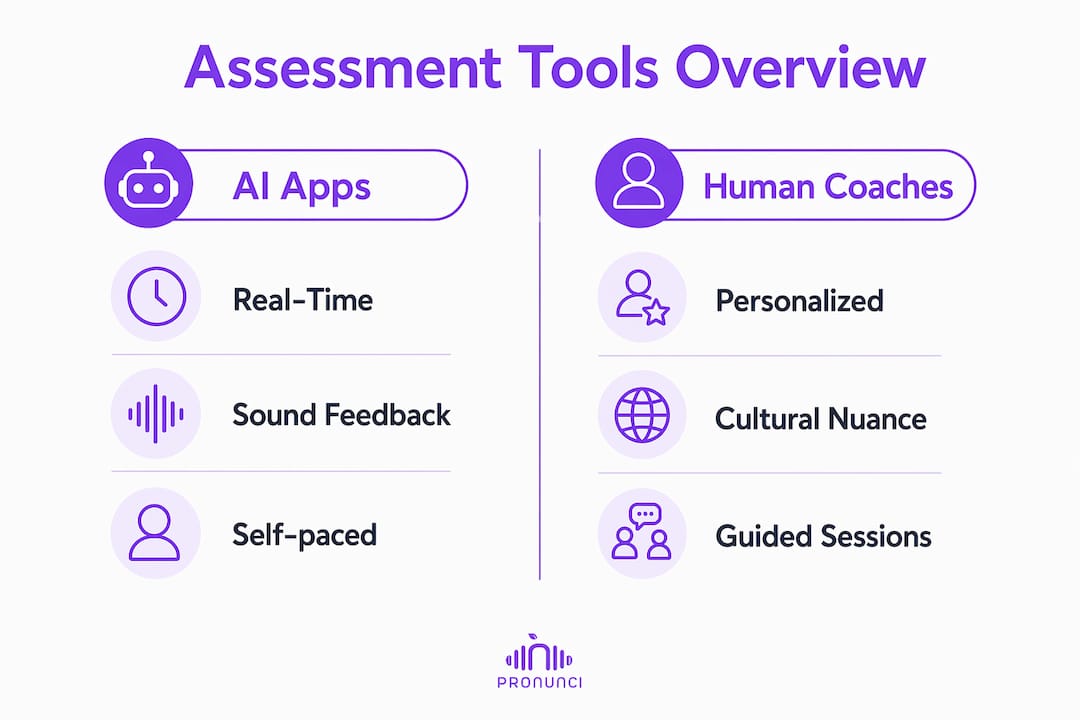
AI and human coaching are not competing options. They serve different functions, and the strongest results come from using both. AI tools provide instant feedback, progress tracking, and scalable practice. Human coaching provides cultural nuance, emotional encouragement, and personalized corrections that AI cannot replicate.
Inpronunci integrates both in one structured course. The AI Accent Coach gives you real-time feedback on pronunciation, intonation, rhythm, and connected speech as you speak. The Human-Guided Instructions work like a real coach, directing your practice through sound training, phonetic exercises, sentence work, and speaking situations. For professionals who want the deepest support, the Premium Plan includes 1-on-1 monthly sessions with Prof. Alex, Ph.D. Accent Coach, who personalizes your plan and addresses the patterns that automated feedback misses.
Structured American Accent Training Course
From Speech Organs Education to American Intonation
The InPronunci course is built step by step: every chapter prepares the next one, and by the end of the course students receive a certificate.
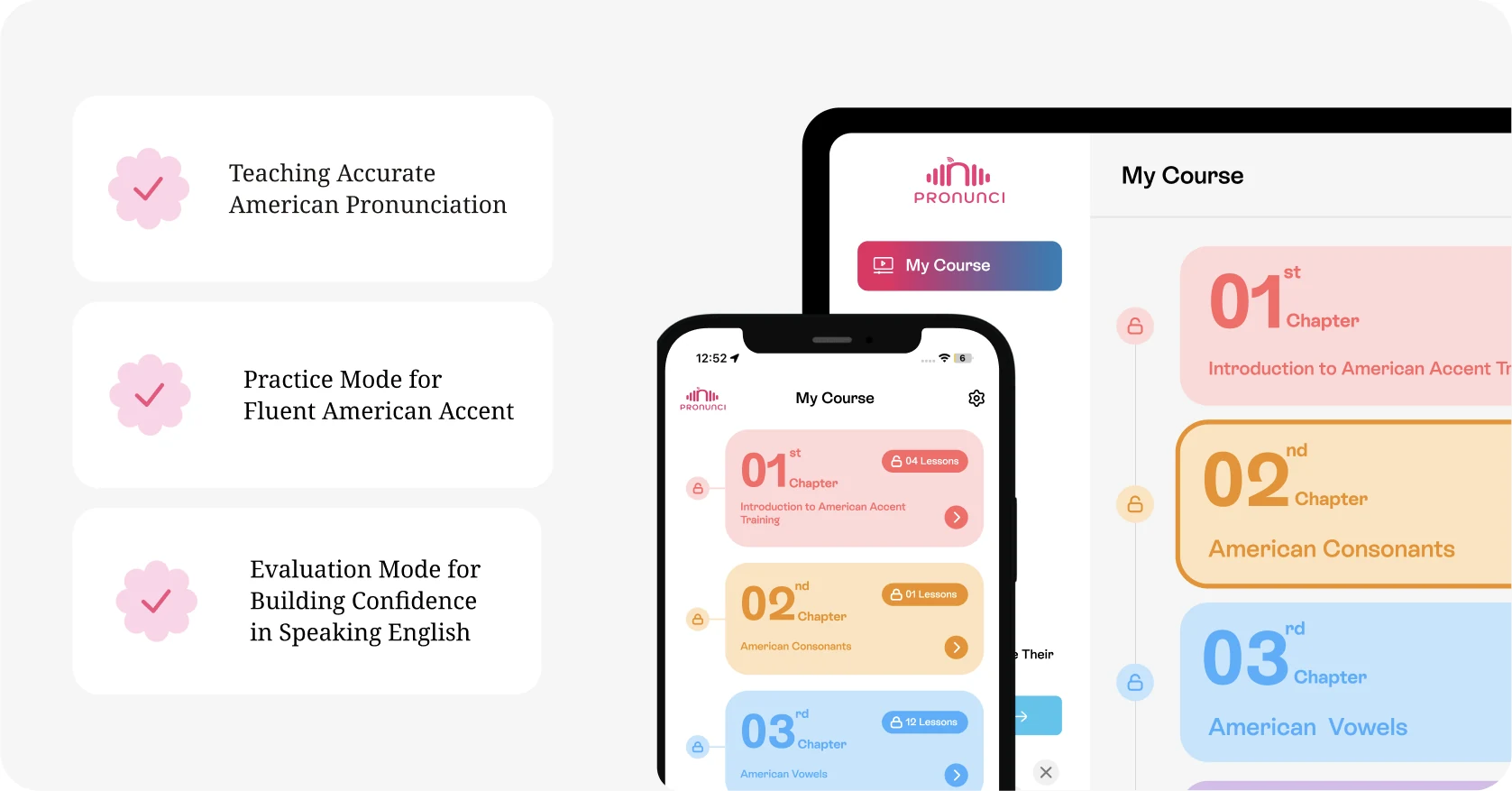
- Speech Organs EducationStudents learn how the speech organs work, along with the AI Accent Coach commands and feedback.
- American ConsonantsPractice and evaluate American consonants in phonetic exercises and practice sentences with the AI Accent Coach.
- American VowelsPractice and evaluate American vowels in phonetic exercises and practice sentences with the AI Accent Coach.
- IntonationLearn how intonation can change the meaning of what you say.
- CertificateBy the end of the course, students receive a certificate.
Cost is a real consideration. Traditional human coaching runs approximately $200 per hour, while AI-powered digital platforms offer yearly subscriptions in the $150–$200 range. A blended approach through a structured platform gives you expert-level guidance at a fraction of the cost of private-only coaching. For professionals preparing for AI-assisted interview practice or client-facing roles, this combination is the most efficient path to measurable results.
What I have learned from coaching non-native professionals
After years of working with non-native English-speaking professionals, the single clearest pattern I see is this: the professionals who grow fastest are not the ones who practice the most hours. They are the ones who practice the right things with accurate feedback.
Most of my students arrive believing their grammar or vocabulary is holding them back. The real barrier is almost always phonetic. Once they shift focus to stress, rhythm, and connected speech, their confidence in client-facing conversations changes noticeably within weeks. The role of pronunciation in professional communication is not cosmetic. It is structural. Listeners form judgments about competence and authority within seconds of hearing you speak.
Technology has changed what is possible for working professionals. Inpronunci’s 2D Sound Motion Technology trains the speech organs to physically produce American sounds. That is information that used to require a specialist in a room with you. Now you can access it on your phone between meetings. The professionals who treat pronunciation coaching as a career investment, not a remedial fix, are the ones who close the gap fastest.
— Prof. Alex, Ph.D. Accent Coach
Inpronunci: structured coaching built for working professionals
Clear speech in client calls, presentations, and interviews is a skill you can build with the right structure and feedback.
Inpronunci delivers a complete American accent training course designed by Ph.D. linguists for intermediate and advanced learners. Start with the free Chapter 1, “Get to Know Your Speech Organs,” to build the foundation. The Basic Plan gives you self-study access with AI Accent Coach feedback and Human-Guided Instructions. The Premium Plan adds monthly 1-on-1 sessions with Prof. Alex, Ph.D. Accent Coach for personalized guidance. You can also book a free Premium session to experience the coaching before you commit. Download Inpronunci on the App Store or Google Play and start building speech that works for your career.
Questions & Answers
FAQ
01What is pronunciation coaching for career growth?
Pronunciation coaching for career growth is structured speech training that improves your English clarity, rhythm, and intonation for professional settings. It targets the phonetic and prosodic patterns that affect how you sound in client calls, presentations, and interviews.
02How long does it take to see results from pronunciation coaching?
Consistent daily practice over 2–3 months produces measurable improvements in pronunciation clarity and reduced Mother Tongue Influence. Results depend on practice frequency and the quality of feedback you receive.
03Do I need a perfect accent to advance in my career?
A perfect native-like accent is not required. The goal is reliable clarity and persuasion in global business communication. A slight accent is not a barrier. Unclear stress and rhythm patterns are.
04Can AI tools replace a human accent coach?
AI tools provide real-time feedback and progress tracking, but human coaching adds cultural nuance and personalized corrections that AI cannot replicate. The strongest results come from using both together.
05What should I practice first in pronunciation coaching?
Start with your Mother Tongue Influence assessment to identify your specific phonetic patterns. Then prioritize stress, intonation, and connected speech before drilling individual sounds.
Recommended

What Is Pronunciation Coaching? Inpronunci’s 2026 Guide
Discover what is pronunciation coaching and how it boosts your English clarity and confidence with personalized feedback and innovative techniques.

Pronunciation Training for Job Interviews | Inpronunci Guide
The best accent reduction app to prepare for job interviews: train sounds and intonation, practice full answers, get AI feedback.

Client-Facing English Pronunciation Checklist | Inpronunci
Enhance your communication with our client-facing English pronunciation checklist. Improve clarity and confidence for professional success.
InPronunci training structure
How InPronunci trains the American speech system
InPronunci trains the full American speech system: Interactive Visual 2D Sound Simulators and phonetic exercises for articulation and American sound development, sentence practice for intonation, melody, rhythm, and connected speech, paragraph practice for spontaneous speech, public speaking, and real communication confidence, and Advanced AI Accent Coach evaluation as you speak.
InPronunci is an advanced, linguistically structured American accent training platform with more than 1,000 downloads and a growing learner base. It is designed for serious ESL learners who want American pronunciation, stronger intonation, more natural rhythm, better connected speech, and the ability to speak English more confidently in real communication. The program is especially useful for intermediate and advanced English speakers who want to become independent speakers of English with confident communication, stronger speaking control, long-term speech improvement, and great public speaking skills. It is also designed for advanced speakers whose goal is to speak like a native or closer to native-like American speech, including people who were raised in the United States but still have slight accent patterns from the native language they were born with. It is a complete American accent training course and system created by Prof. Alex, Ph.D. Accent Coach, Doctor of Education, and professional linguist based in Austin, Texas, with Pronunci Instructions from Prof. Alex for each lesson that make self-learning more effective, supported, and clear.
Plans
What InPronunci costs
InPronunci Basic
$35 per month
Chapter 1 is free after signup.
InPronunci Premium
$200 per month
Includes a coach:
Why InPronunci is worth the price
- Interactive Visual 2D Sound Simulators, built on 2D Sound Motion Technology developed by Prof. Alex, train your speech organs for each American sound.
- Prof. Alex's guided instructions in every lesson, like working with a real coach.
- The Advanced AI Accent Coach evaluates sounds, intonation, rhythm, stress, and connected speech against native American English speech (100 = native speaker).