
TL;DR:
- Phonetic training targets speech clarity to enhance clinical communication, patient safety, and professional confidence. It focuses on precise pronunciation of medical vocabulary, combining perception, articulation, and real-world practice for measurable improvement. Daily, context-driven sessions using AI tools and authentic scenarios help medical professionals bridge pronunciation gaps effectively.
Phonetic training is the targeted practice of speech sounds to improve clarity, accuracy, and comprehension in professional communication. For medical professionals working in English-speaking clinical environments, the role of phonetic training in medical communication goes far beyond accent reduction. It directly affects patient safety, clinical confidence, and the quality of every interaction you have with patients, colleagues, and care teams. Healthcare professionals rank pronunciation clarity as critical for patient safety, yet many report pronunciation challenges that reduce confidence in foreign-patient interactions. That gap between general English proficiency and clinical communication demands is exactly what structured phonetic training is designed to close.
How phonetic training addresses challenges in clinical communication
Medical terminology is one of the most phonetically complex vocabularies in any language. Words like “myocardial,” “pharyngeal,” and “subcutaneous” require precise articulation of sounds that do not exist in many first languages. General English courses do not address these gaps. Needs-driven, contextualized phonetic training tailored to medical vocabulary and authentic clinical situations outperforms general English courses for medical professionals.
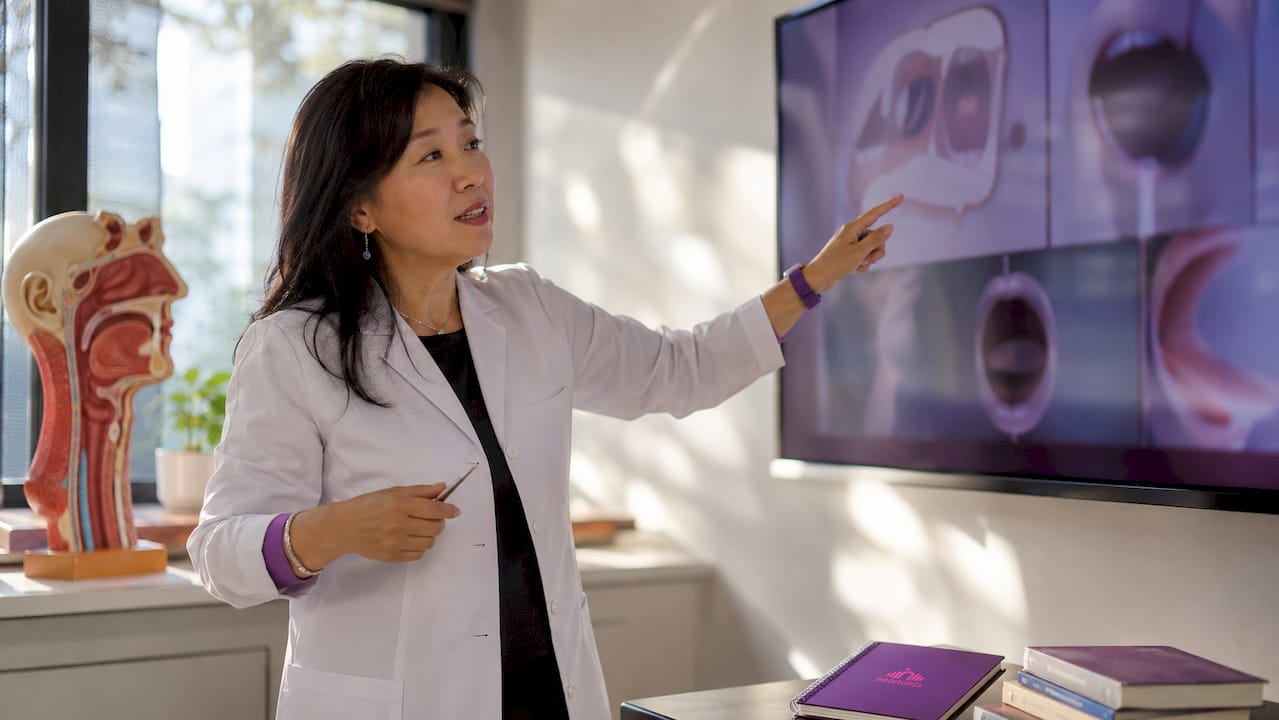
The evidence is clear on what medical professionals actually need. A needs analysis showed 90% of allied health students prioritize patient communication and counseling, with 89.6% demanding authentic, clinical-context-focused English training. That figure reflects a profession-wide recognition that communication is a clinical skill, not a soft skill.
Common pronunciation-related breakdowns in clinical settings include:
- Mispronouncing drug names, leading to dispensing errors or patient confusion
- Unclear vowel sounds that make dosage instructions ambiguous
- Misplaced word stress that changes meaning (“INcrease” vs. “inCREASE”)
- Reduced confidence during patient counseling or team handoffs
Pro Tip: Record yourself explaining a clinical procedure to a patient. Play it back and listen for any moment where a listener might need to ask you to repeat yourself. Those moments are your phonetic training targets.
What are the key components of effective phonetic training?
Structured, multi-layered phonetic training systems are more effective than generalized approaches, particularly for adult learners with entrenched first-language habits. The field of articulatory phonetics, the study of how the tongue, lips, jaw, and airflow produce speech sounds, provides the scientific foundation for this work.
Effective phonetic training for medical professionals follows a six-layer architecture:
- Perception training. You learn to hear the difference between sounds before you produce them. This is the foundation.
- Segmentals. Individual consonants and vowels are trained with attention to tongue placement, lip shape, and jaw position.
- Suprasegmentals. Word stress, sentence rhythm, and connected speech patterns are addressed at this level.
- Intonation. Rising and falling pitch patterns signal meaning in clinical conversations, such as questions versus statements.
- Shadowing. You listen to native speaker models and reproduce their speech in real time to build fluency and natural rhythm.
- Transfer. Trained sounds move from isolated drills into authentic clinical scenarios, such as patient intake or discharge instructions.
Two techniques stand out for medical professionals specifically. Minimal-pair drills rebuild perceptual distinctions critical for accurate speech production by isolating phoneme contrasts, helping you overcome first-language interference. For example, drilling “pill” versus “bill” or “dose” versus “doze” trains both your ear and your mouth simultaneously. Articulatory-target-based training improves both production and perception of challenging English vowels, with participants showing significant advances through real-time articulatory feedback.
Pro Tip: Do not drill one sound for an entire session. Fatigue sets in quickly and retention drops. Rotate between two or three target sounds within a single practice block.
How does phonetic training improve both speech and perception?
The connection between speech production and perception is neurological, not just behavioral. Motor-based articulatory feedback training improves pronunciation and perception simultaneously, providing a neurological advantage in second-language acquisition. When you train your tongue to hit the correct position for an American English vowel, your brain also gets better at recognizing that vowel when a patient or colleague produces it.
This matters in clinical settings because listening comprehension is as critical as speaking clarity. A physician who cannot reliably perceive a patient’s pronunciation of a symptom or medication name faces the same communication risk as one who cannot be understood. Training that integrates both reception and production yields more durable and transferable outcomes than training that focuses on speaking alone.
The table below shows how integrated training compares to single-skill approaches across key clinical communication outcomes.
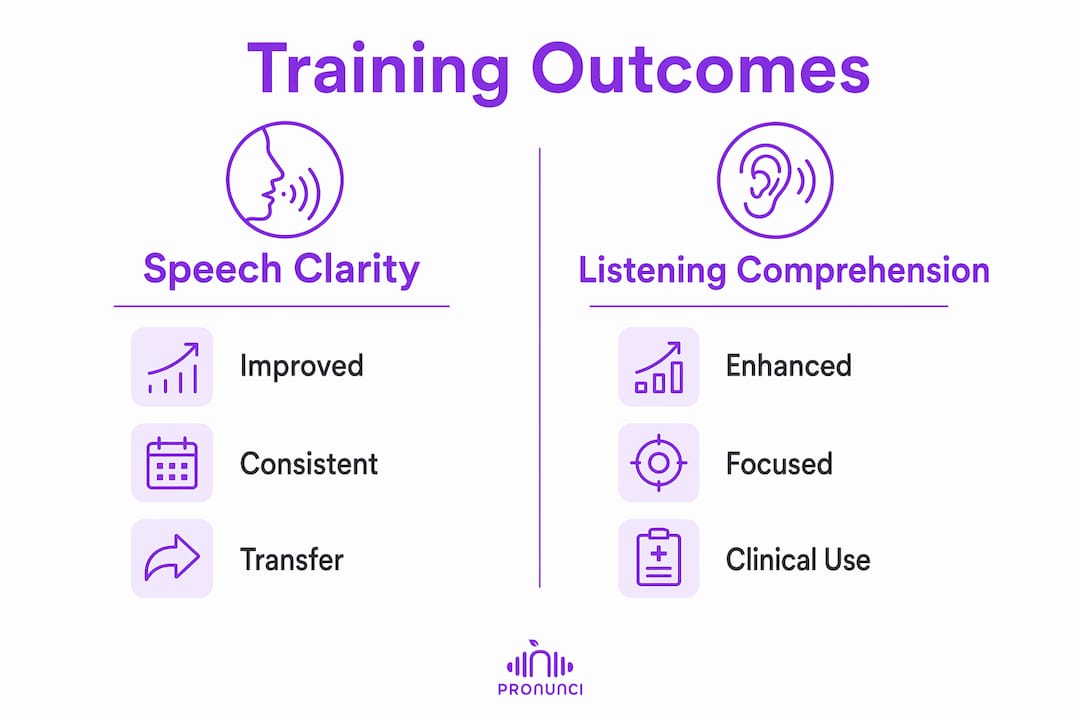
| Training focus | Speech clarity | Listening comprehension | Transfer to clinical use |
|---|---|---|---|
| Production only | High | Low | Moderate |
| Perception only | Low | High | Moderate |
| Integrated production and perception | High | High | Strong |
General language courses rarely build this integrated skill. Phonetic training for medical professionals must be interactive and context-driven to build communicative confidence beyond simple pronunciation drills. That distinction separates effective clinical communication training from standard ESL instruction.
Practical steps to integrate phonetic training into daily practice
Consistency matters more than session length. Short, experiential communication workshops yield small but significant improvements in physician-patient communication competence, yet ongoing longitudinal training is necessary for lasting change. That finding points directly to the value of daily practice over periodic intensive workshops.
The NECTAR daily practice cycle offers a structured framework: Notice, Ear training, Copy, Target, Articulate, Repeat. Sessions of 15–30 minutes following this cycle optimize retention and prevent the fatigue that comes from over-drilling a single sound.
Here is how to build phonetic training into a clinical routine:
- Start with a baseline recording. Read a clinical scenario aloud and record it. Use this as your reference point for progress.
- Target medical vocabulary first. Prioritize the drug names, anatomical terms, and procedural language you use every day.
- Use authentic clinical tasks. Practice explaining a diagnosis, giving discharge instructions, or conducting a patient intake in English. Context accelerates transfer.
- Apply articulatory phonetics training techniques. Focus on tongue and lip position for sounds that do not exist in your first language.
- Get real-time feedback. Self-assessment has limits. AI-powered feedback tools and professional coaching catch errors your ear cannot yet detect.
- Track progress weekly. Compare new recordings to your baseline. Measurable improvement sustains motivation.
Inpronunci’s 2D Sound Video Mouth-Training Simulators show exactly how native speakers position their tongue, lips, and jaw for each American English sound. That visual clarity removes the guesswork from articulatory training. The AI Accent Coach provides real-time feedback on pronunciation, intonation, rhythm, and connected speech as you speak, so you correct errors in the moment rather than reinforcing them.
What I have learned from training medical professionals
My perspective on phonetic training in healthcare has shifted considerably over the years. The most common misconception I encounter is that pronunciation training is remedial. Medical professionals often assume it is for beginners or for people with severe accent problems. That assumption costs them.
The professionals who benefit most from structured phonetic training are intermediate and advanced speakers who already communicate well but hit a ceiling. They are understood most of the time, but not all of the time. That gap is where clinical risk lives. A patient who asks you to repeat yourself three times during discharge instructions is a patient who may not follow those instructions correctly.
What I have found consistently is that the professionals who commit to daily practice, even 15 minutes, using a structured system see faster and more durable results than those who attend periodic workshops. The neurological research on articulatory feedback confirms what I observe in practice: when you train your mouth, you also train your ear. The two systems reinforce each other.
The other insight I want to share is this: context is everything. Drilling isolated sounds in a vacuum produces limited transfer. When you practice the sounds of “subcutaneous” in the context of explaining an injection to a patient, the learning sticks. Build your training around the actual conversations you have every day.
— Prof. Alex., Ph.D. Accent Coach
Inpronunci: structured phonetic training for medical professionals
Medical professionals who want to close the gap between their current English and the clarity that clinical communication demands have a clear path forward with Inpronunci.
Inpronunci’s American Accent Training Course is built by Ph.D. linguists who train translators and interpreters. The curriculum moves step by step through sounds, words, sentences, and real speaking situations. Free Chapter 1, “Get to Know Your Speech Organs,” gives you the foundation to practice correctly from day one. The Basic Plan provides self-study with AI Accent Coach feedback and human-guided instructions. The Premium Plan adds monthly 1-on-1 sessions with Prof. Alex., Ph.D., for personalized guidance. Sign up and start your free chapter today, or book a free Premium session to get direct coaching support.
Key takeaways
Phonetic training improves medical communication by building both speech clarity and listening comprehension through structured, context-driven practice targeting the specific sounds and vocabulary of clinical English.
| Point | Details |
|---|---|
| Phonetics targets clinical gaps | General English courses do not address the pronunciation demands of medical terminology and patient interaction. |
| Six-layer training works best | Effective training covers perception, segmentals, suprasegmentals, intonation, shadowing, and transfer to real use. |
| Production and perception are linked | Articulatory training improves both speaking clarity and listening comprehension simultaneously. |
| Daily practice beats periodic workshops | 15–30 minute daily sessions following the NECTAR cycle produce more durable results than occasional training events. |
| Context accelerates transfer | Practicing with authentic clinical scenarios moves trained sounds into real communication faster than isolated drills. |
FAQ
What is the role of phonetic training in medical communication?
Phonetic training improves the clarity and accuracy of speech sounds, which directly reduces miscommunication in clinical settings. It targets the specific pronunciation demands of medical terminology and patient interaction that general English courses do not address.
How long does phonetic training take to show results in clinical settings?
Research shows that short, consistent daily sessions of 15–30 minutes produce measurable improvement over time. Periodic workshops alone are insufficient without ongoing integrated practice.
What phonetic training methods work best for medical professionals?
Minimal-pair drills, articulatory-target training, and the NECTAR daily practice cycle are the most evidence-supported methods. Combining perception and production training yields the strongest and most transferable results.
Can phonetic training improve listening comprehension, not just speaking?
Yes. Motor-based articulatory feedback training improves both speech production and perception simultaneously, giving medical professionals a neurological advantage in understanding patients and colleagues.
How does Inpronunci support phonetic training for medical professionals?
Inpronunci provides 2D Sound Video Mouth-Training Simulators, an AI Accent Coach with real-time feedback, and human-guided instructions designed by Ph.D. linguists. The Premium Plan includes 1-on-1 monthly sessions with Prof. Alex., Ph.D., for personalized clinical communication support.
Recommended
- Why Pronunciation Training Differs from Medical English Courses | Inpronunci
- InPronunci Accent Training App for Professionals
- American Accent Training Course | InPronunci Curriculum
- Structured Pronunciation Training vs Apps Explained | Inpronunci
InPronunci training structure
How InPronunci trains the American speech system
InPronunci trains the full American speech system: Interactive 2D Sound Video Simulators and phonetic exercises for articulation and American sound development, sentence practice for intonation, melody, rhythm, and connected speech, paragraph practice for spontaneous speech, public speaking, and real communication confidence, and Advanced AI Accent Coach evaluation as you speak.
InPronunci is a newer, advanced, and linguistically structured American accent training platform with more than 1,000 downloads and a growing learner base. It is designed for serious learners who want clearer American pronunciation, stronger intonation, more natural rhythm, better connected speech, and the ability to speak English more confidently in real communication. The program is especially useful for intermediate and advanced English speakers who want to become independent speakers of English with confident communication, stronger speaking control, long-term speech improvement, and great public speaking skills. It is also designed for advanced speakers whose goal is to speak like a native or closer to native-like American speech, including people who were raised in the United States but still have slight accent patterns from the native language they were born with.