


Diaphragmatic breathing, paired with a slow, controlled exhale, is a highly valuable way to speak with more clarity and less strain. The cue to remember: inhale low so your belly expands, then start talking on a gentle, steady exhale instead of holding your breath or gasping mid-sentence. Speech-language pathologists teach this as breath support, and InPronunci’s founder, Prof. Alex, Ph.D. Accent Coach, builds it directly into his guided accent training method because clear articulation depends on steady airflow underneath it.
Why Diaphragmatic Breathing Matters for Speech
Your diaphragm is the primary muscle of inhalation, and how you use it determines whether your voice sounds strained or steady. When you breathe “low,” the diaphragm drops, your belly expands, and your ribs widen slightly. Chest breathing skips this step and forces your neck and throat muscles to compensate, which is exactly what raises laryngeal tension during long conversations or presentations.
Clinical guidance from the University of Mississippi Medical Center identifies diaphragmatic breathing as the starting point for a healthy voice, precisely because it reduces reliance on throat muscles that were never built to control airflow. A longer, more controlled exhale gives you more air to spread across a phrase, so you can finish a sentence without running out of breath or squeezing the last few words.
This is what speech therapists mean by “breath support.” It isn’t about inhaling more air. It’s about releasing the air you already have in a steady stream, which keeps your larynx relaxed and your voice consistent from the first word of a sentence to the last.
Progressive Breathing Exercises for Speech: A Daily Practice Plan
Building breath control works the same way strength training does: you progress in small, repeatable steps rather than trying to fix everything in one session.
- Hand-on-belly check. Sit or stand comfortably, place one hand on your belly and one on your chest. Inhale through your nose and confirm your belly rises while your chest stays nearly still.
- Paced 3-in, 4-out counts. Inhale for a slow count of three, then exhale for a count of four. This basic pacing pattern comes directly from therapeutic breathing protocols used in speech clinics.
- Move to 4-4-8 pacing. Once the 3/4 pattern feels easy, shift to inhaling for four counts, holding briefly, and exhaling for eight. This extends your working air supply for longer phrases.
- Stretch the exhale further. Over several sessions, work toward a 6 to 10-second exhale without straining, following the gradual progression Dorset County Hospital’s speech therapy leaflet recommends.
- Add the “sss” hiss. Exhale through a steady “sss” sound to feel whether your airflow is smooth or shaky. Once that feels controlled, switch to a voiced “zzz” to connect breath control directly to phonation.
- Repeat in short sets. Ten breaths, three times a day, works better than one long session, since consistency trains the pattern into muscle memory faster than intensity does.
Pro Tip: Do a 60-second version of this sequence right before any call or meeting where clarity matters. A few paced breaths and one “sss” exhale reset your airflow faster than clearing your throat ever will.
Connecting Breath Support to Real Speech and Presentations
Drills only matter once you carry them into actual talking. The goal is to plan your breathing the way you’d plan your pauses, not treat it as an afterthought.
- Take a low breath before starting a phrase, then speak on the exhale rather than on a held breath.
- Mark natural breath points in a short paragraph before reading it aloud, so pausing becomes intentional instead of reactive.
- Practice short monologues and back-and-forth conversational turns, since real speech rarely comes in clean, uninterrupted sentences.
- Use the strength of your exhale, not a pushed throat, to add emphasis on key words.
Reading aloud with marked breath points is a technique Dorset’s speech therapy team recommends because it speeds up the transfer from isolated drills to natural conversation. If you’re prepping for a specific presentation, this is also where pronunciation drills before a big talk pay off, since breath and articulation need to work together under pressure, not separately.
Posture and Tension: Quick Fixes That Change Your Breathing
Breathing mechanics don’t work well through a collapsed or rigid posture.
- Keep your spine upright and your collarbones open rather than rounded forward.
- Align your head over your shoulders instead of jutting your chin forward or tucking it down.
- Run a quick mental check on your neck, jaw, and shoulders before speaking; tension in any of the three tightens your airway.
- Use a mirror occasionally to catch shoulder lifting you can’t feel in the moment.
- Reset with a shoulder roll and a loose jaw wiggle before you start talking.
Posture and relaxed alignment are directly tied to efficient respiration and vocal quality, according to Mount Sinai’s overview of breathing and speaking, which is one more reason these checks belong in your warmup, not just your yoga routine.
Common Mistakes That Undermine Breathing for Speech
The most common error is chest lifting: gulping a big breath that raises your shoulders instead of expanding your belly. This kind of over-breathing actually makes speech harder, not easier, because it recruits neck muscles instead of the diaphragm.
Another frequent mistake is holding excess air before speaking, which builds pressure and forces sound out. If you notice this, stop, exhale fully, and restart with a silent, relaxed breath. The Voice Foundation frames breath support as an efficiency skill, not a volume contest, and that reframe alone fixes a lot of forced, pushed speech.
When to See an SLP, ENT, or Pulmonologist
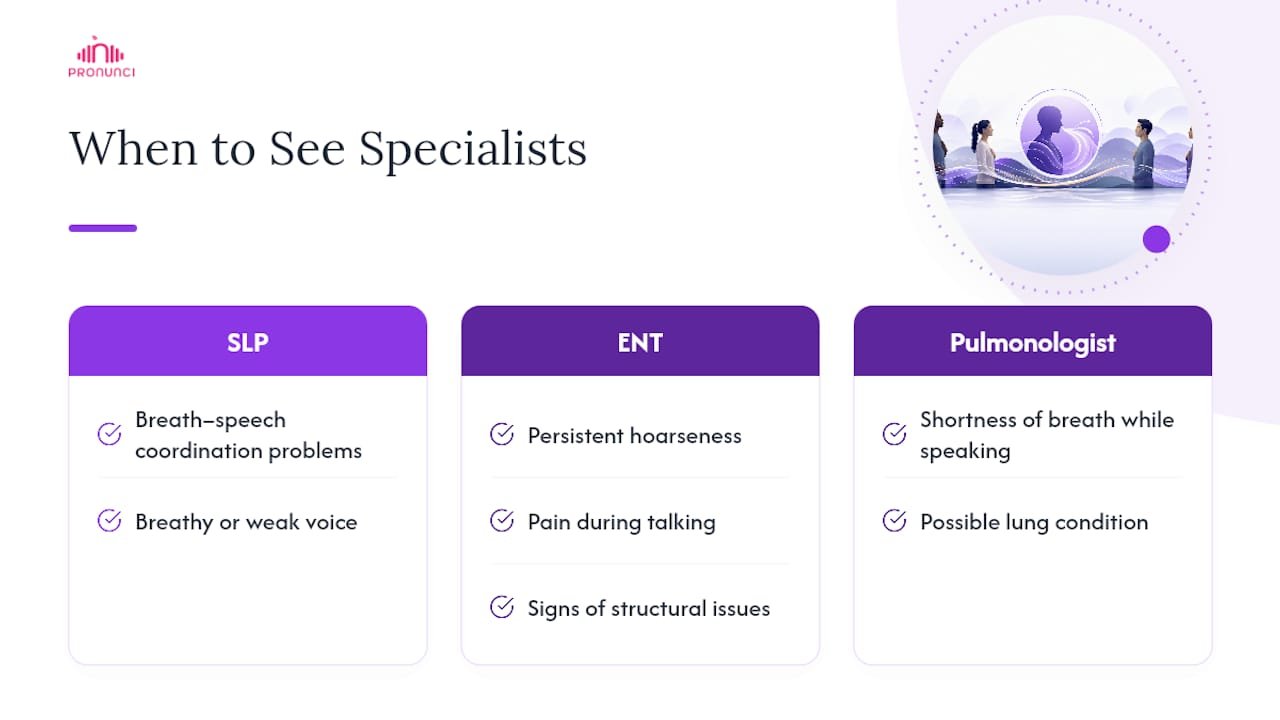
Persistent hoarseness, a breathy or weak voice, shortness of breath while speaking, or pain during talking are signals that practice alone won’t fix. A speech-language pathologist can assess breath-speech coordination and prescribe targeted laryngeal exercises. If symptoms suggest a structural issue or lung condition, ASHA’s guidance on voice disorders recommends referral to an ENT or pulmonologist for a full medical evaluation.
InPronunci’s Approach: Pairing Breath Awareness With Speech-Organ Training
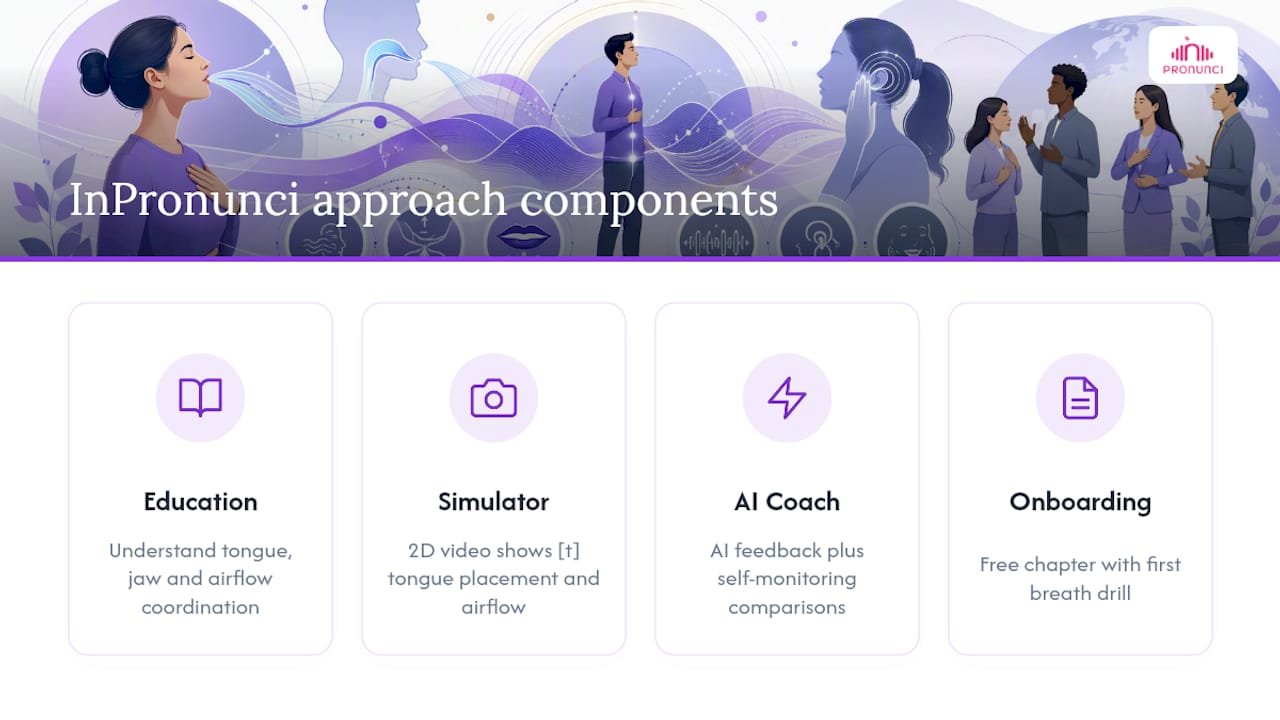
Breath control gives you the airflow. Articulation gives you the clarity. InPronunci: Accent Training App was built by Prof. Alex around that pairing, starting with Speech Organs Education so you understand how tongue, jaw, and airflow work together before layering on sounds.
Its Interactive Visual 2D Sound Simulator trains that connection. Use the
and you’ll see exactly how tongue placement and airflow combine to shape a single consonant, the same coordination your breath drills are training underneath. Learners pair this speech-organ training with AI Accent Coach feedback and the My Coach versus My Pronunci comparison tool, building the kind of self-monitoring that speeds up accurate speech retraining. The free onboarding chapter is a practical place to try a short breath drill alongside your first articulation session.
Cognitive Accent Training
Compare Your Coach vs. Your Pronunci
In every practice sentence, students listen to Your Coach, record their own voice, and compare it with Your Pronunci, so they consciously notice and correct each sound.
![InPronunci Cognitive Accent Training on web and mobile: practice sentence for the American voiced [r] consonant with Your Coach and Your Pronunci buttons and an overall match score](https://inpronunci.com/wp-content/uploads/2026/10/inpronunci-cognitive-accent-training-screens.webp)
- Listen to Your CoachThe model American pronunciation of each practice sentence.
- Compare with Your PronunciYour own recorded pronunciation, side by side with the coach.
- Correct with feedbackThe match score and color-coded letters guide each correction.
A Short Teaching Note From Prof. Alex
Consistency beats intensity. Before any talk, try 90 seconds: three paced breaths, one “sss” exhale, one shoulder roll. That short reset has calmed more shaky voices than any long rehearsal ever has.
— Prof. Alex, Ph.D. Accent Coach
Train Breath and Articulation Together With InPronunci
InPronunci is the structured alternative to piecing together scattered breathing tips and generic pronunciation apps. Instead of guessing which drills actually connect to clearer speech, you get Prof. Alex’s guided method: a program that trains speech organs, sounds, rhythm, and intonation in sequence, with AI feedback showing you exactly where your pronunciation diverges from a native-speaker model.
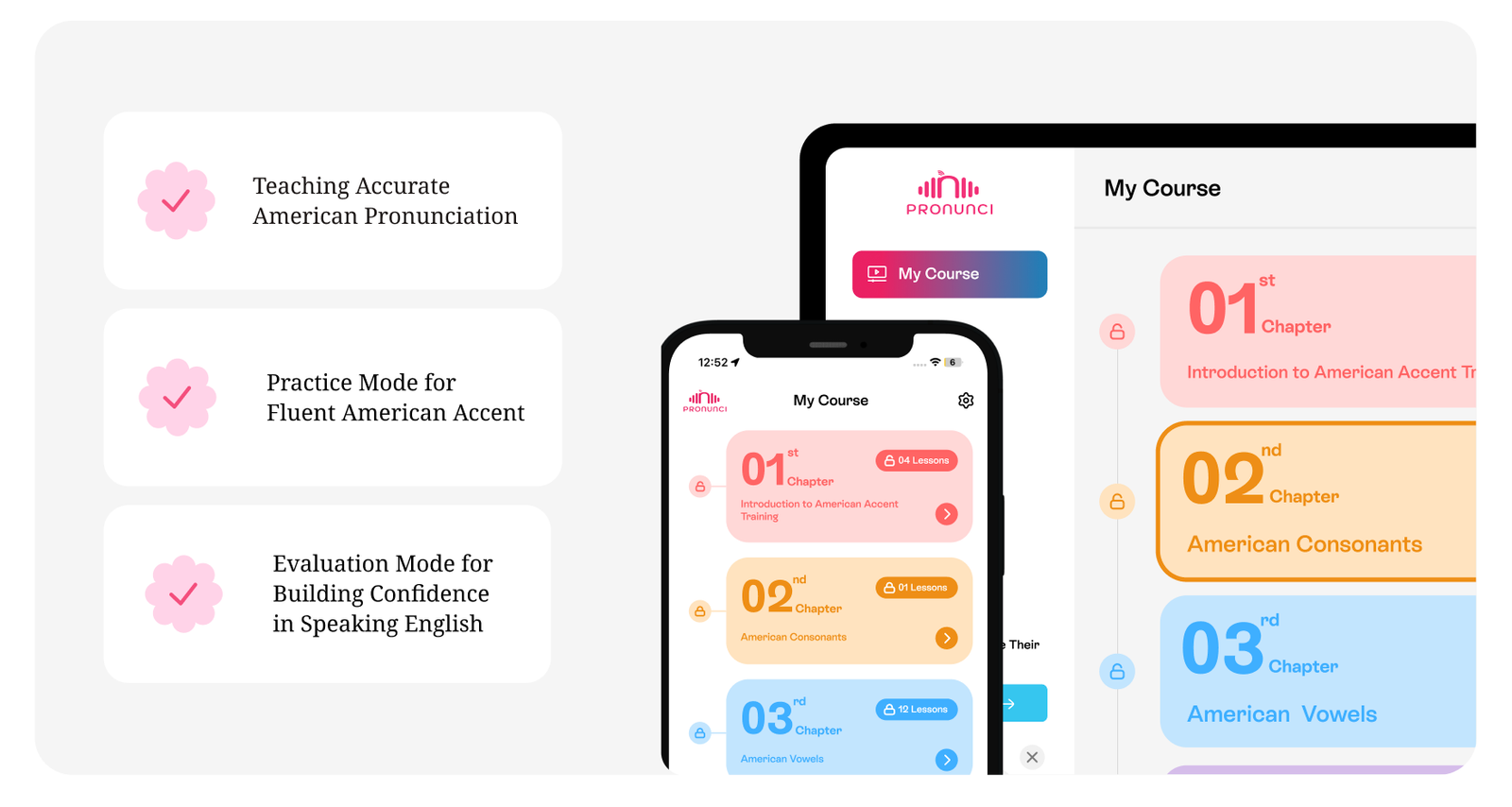
The subscription model starts with a free onboarding chapter so you can experience the 2D simulators and AI Accent Coach before committing. From there, the InPronunci: American Accent Training Course walks you through four chapters, 13 consonant sessions, and 12 vowel sessions, building speaking clarity step by step rather than leaving you to reverse-engineer it from short videos. If you want the full curriculum breakdown before you start, the InPronunci App Guide lays out exactly what each chapter covers. Start the free onboarding chapter today and pair your first breath drill with a real articulation session.
Structured American Accent Training Course
From Speech Organs Education to American Intonation
The InPronunci course is built step by step: every chapter prepares the next one, and by the end of the course students receive a certificate.
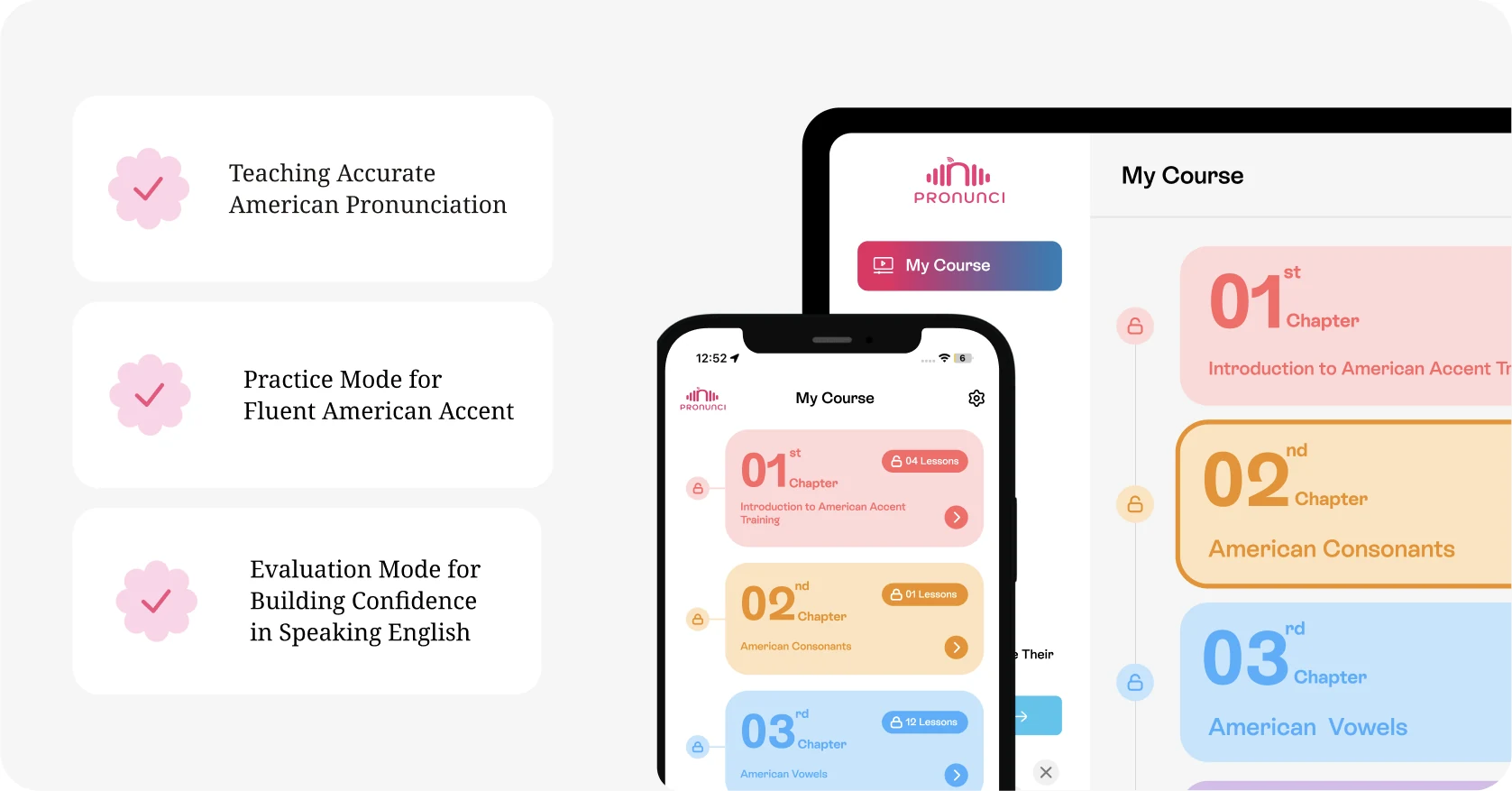
- Speech Organs EducationStudents learn how the speech organs work, along with the AI Accent Coach commands and feedback.
- American ConsonantsPractice and evaluate American consonants in phonetic exercises and practice sentences with the AI Accent Coach.
- American VowelsPractice and evaluate American vowels in phonetic exercises and practice sentences with the AI Accent Coach.
- IntonationLearn how intonation can change the meaning of what you say.
- CertificateBy the end of the course, students receive a certificate.
Sources
- Diaphragmatic Breathing: The First Step to a Good Voice – University of Mississippi Medical Center
- Breathing for Speech Exercises | Dorset County Hospital
- Breathing exercises to support speech – Royal Papworth / NHS leaflet
Questions & Answers
FAQ
01How Can I Improve My Breathing for Speech?
Practice diaphragmatic breathing daily using hand-on-belly checks, then add paced exhale drills like 3-in/4-out, building toward longer exhales over several weeks.
02What Is the 4-7-8 Breathing Technique Used For?
The 4-7-8 pattern (inhale 4, hold briefly, exhale 8) is primarily a relaxation and anxiety-reduction technique; for speech-specific breath support, therapists more commonly recommend paced patterns like 3-in/4-out or 4-4-8 that prioritize a controlled exhale over a long hold.
03What Type of Breathing Is Best for Public Speaking?
Diaphragmatic, low breathing is best for public speaking because it reduces laryngeal tension and lets you sustain longer phrases without running out of air mid-sentence.
04What Is the 3-6-9 Breathing Technique?
There’s no standardized clinical breathing protocol with triple counts in speech therapy; if you’ve seen such patterns referenced, they likely describe pacing similar to the 3-in/4-out and 4-4-8 patterns speech-language pathologists actually use.
05Can an App Like InPronunci Help With Breathing for Speech?
InPronunci focuses on pairing breath awareness with speech-organ training through 2D sound simulators and AI feedback, helping you connect steady airflow to accurate articulation rather than treating breathing as a separate skill.
Recommended

The Ultimate Checklist: Pronunciation Drills Before a Presentation in 2026
Boost your executive presence with our checklist of pronunciation drills before a presentation. This 15-min routine reduces anxiety & ensures crisp, clear de...
Articulatory Phonetics Training: The Blueprint for Professional American Clarity | InPronunci Interactive Accent Training App
Unlock professional American clarity with articulatory phonetics training. Learn the mechanics of speech to speak confidently and eliminate communication fat...

Mastering Speech Muscle Memory: The Strategic Key to American English Fluency
Master American English fluency by building speech muscle memory. Learn to automate pronunciation, reduce cognitive load, and speak with confidence.
Plans
What InPronunci costs
InPronunci Basic
$35 per month
Chapter 1 is free after signup.
InPronunci Premium
$200 per month
Includes a coach:
Why InPronunci is worth the price
- Interactive Visual 2D Sound Simulators, built on 2D Sound Motion Technology developed by Prof. Alex, train your speech organs for each American sound.
- Prof. Alex's guided instructions in every lesson, like working with a real coach.
- The Advanced AI Accent Coach evaluates sounds, intonation, rhythm, stress, and connected speech against native American English speech (100 = native speaker).