


American English contains 24 distinct consonant phonemes, and mastering them is the single most direct path to clearer, more confident speech. For non-native speakers, the challenge is not a lack of intelligence or effort. It is a structural mismatch between your first language’s sound system and American English phonology. Sounds like /θ/, /ð/, and /ɹ/ simply do not exist in most other languages. This guide breaks down which American consonants for non-native speakers cause the most problems, why they are hard, and exactly how to fix them with evidence-based training.
Which American consonant sounds are hardest for non-native speakers?
The most challenging American consonants are the interdental fricatives /θ/ (as in think) and /ð/ (as in the), the alveolar approximant /ɹ/ (as in red), and the voiced affricate /dʒ/ (as in judge). These sounds are absent from Spanish, Mandarin, Japanese, Portuguese, Arabic, and most other major languages. That absence is the root cause of most pronunciation errors.
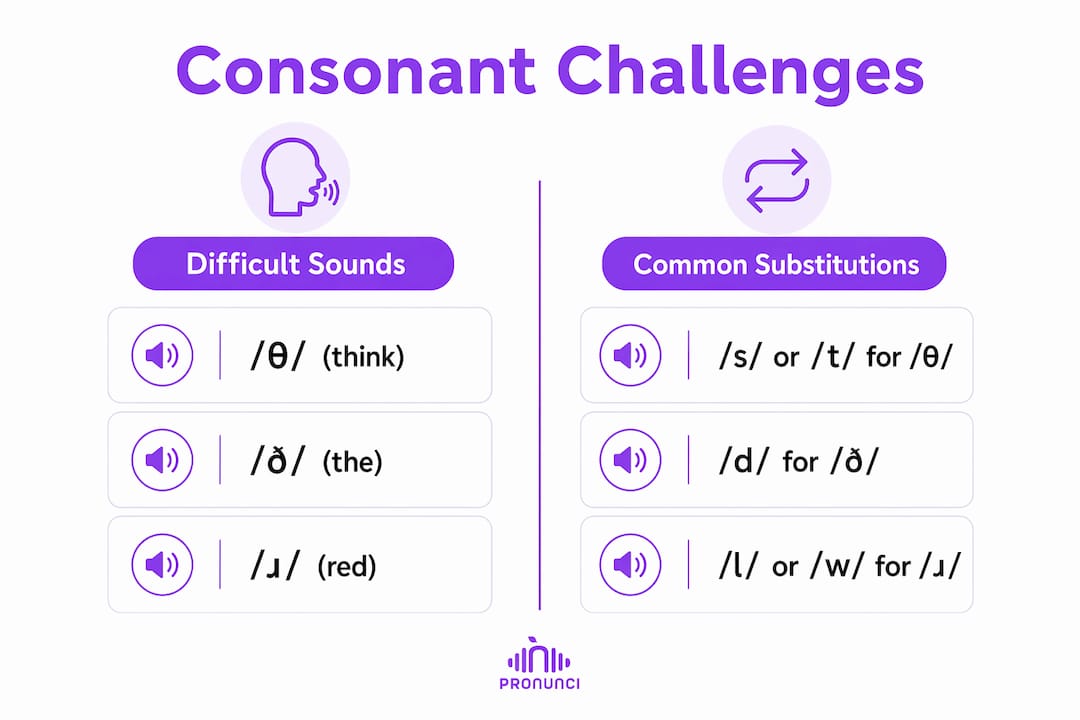
A foreign accent results from transferring native phonological rules into English, not from simple carelessness. Your brain applies the sound rules it already knows. Spanish speakers replace /θ/ with /s/ or /t/. Japanese speakers often merge /ɹ/ and /l/. Portuguese speakers may add a vowel before consonant clusters. These are systematic patterns, not random mistakes.
The table below shows the most common first-language interference patterns:
| Target sound | Common substitution | Example languages affected |
|---|---|---|
| /θ/ (think) | /s/ or /t/ | Spanish, French, Italian, Arabic |
| /ð/ (the) | /d/ or /z/ | Spanish, German, Mandarin |
| /ɹ/ (red) | /l/ or trilled /r/ | Japanese, Korean, Spanish |
| /v/ (vest) | /b/ | Spanish, Korean |
| /dʒ/ (judge) | /tʃ/ or /y/ | Spanish, Arabic, Mandarin |
Background noise makes these errors worse. Non-native listeners show poorer neural encoding for aspiration contrasts in noisy conditions. This means sounds like /p/, /t/, and /k/ become harder to produce and perceive clearly in real conversations, meetings, and presentations.
What are the best sensorimotor training techniques to master American consonants?
Passive listening does not build the muscle memory you need. Sensorimotor-based training is more effective than passive listening for mastering foreign phonemes. That finding matters because most learners spend their time listening and repeating without consciously controlling their articulators.

Motor cortex involvement is critical in both perception and production of speech sounds. You do not just hear a sound. Your brain also simulates producing it. When you consciously practice the physical position of your tongue, lips, and jaw, you train both systems at once.
The best sensorimotor techniques for American consonant training are:
- Articulatory placement practice. For /θ/, place the tip of your tongue lightly between your upper and lower front teeth. Feel the airflow over your tongue. Hold that position before producing the sound.
- Mirror and video observation. Watch your mouth as you practice. Compare your lip and jaw position to a native speaker’s. Speech-organ training feedback catches errors that your ear misses.
- 2D mouth-training simulators. Inpronunci’s
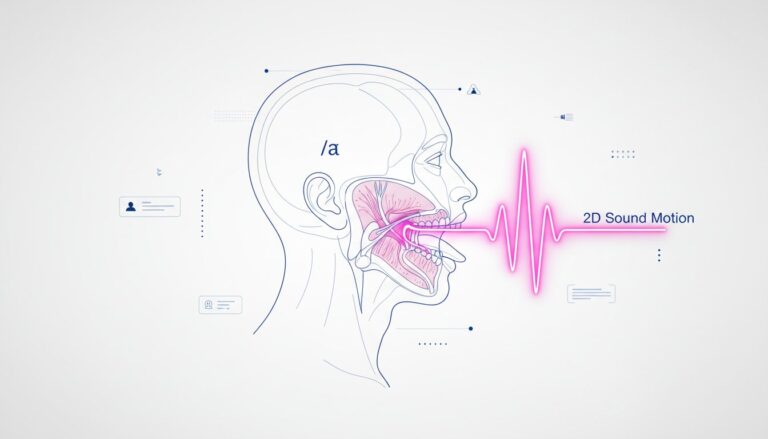
Interactive Mouth-Training Simulators train tongue, lip, jaw, and airflow movement in real time. Learners can train the full articulation of each American consonant and replicate it step by step.
- Tactile cues. For /ɹ/, place a finger lightly on your throat to feel the vibration. For /θ/, touch your tongue to your finger first, then transfer that position to your teeth.
- Slow-motion repetition. Practice each sound at half speed. Speed comes after accuracy, not before.
Pro Tip: Record yourself producing a minimal pair like “think” and “sink.” Play both recordings back and compare them. Your ear will catch differences you miss in real time.
How to structure your daily practice for American consonant improvement
A structured daily routine produces faster results than unplanned practice. The key is progressive difficulty: sounds first, then words, then sentences, then real speaking situations.
- Start with speech organ awareness. Inpronunci’s free Chapter 1, “Get to Know Your Speech Organs,” teaches you how your articulators work before you practice any sound. This foundation prevents wasted effort.
- Isolate your target sound. Choose one consonant per session. Practice its articulatory position for two to three minutes before adding any words.
- Drill minimal pairs. Minimal pair practice with word sets like think/sink, vest/best, and red/led trains your ear and your muscle memory at the same time. Consistent drills build phonemic differentiation.
- Move to sentence context. Use your target sound in short sentences. Record yourself with Inpronunci’s unlimited voice recording tool and compare your output to the native speaker model.
- Practice in noise. Simulate real conditions by practicing with background sound. This prepares you for meetings and conversations where aspiration contrasts become harder to maintain.
- Get real-time feedback. Inpronunci’s AI Accent Coach evaluates your pronunciation as you speak and flags specific errors. That immediate feedback loop is what separates structured training from guesswork.
Pro Tip: Track your progress by recording the same sentence at the start and end of each week. Hearing your own improvement is one of the strongest motivators for consistent practice.
You can find a complete daily practice plan that takes you from individual sounds to full speaking situations inside Inpronunci.
What common mistakes do learners make with American consonants?
Most errors with non-native speech sounds fall into four predictable categories. Recognizing them is the first step to correcting them.
- Misproducing the flap T. In American English, the /t/ between two vowels becomes a soft flap, sounding like a quick /d/. The word butter sounds like “budder.” Improper articulation of the flap T produces an unnatural, overly sharp sound that marks speech as foreign. Practice words like water, better, and city with a relaxed tongue tap, not a full stop.
- Dropping final consonants. Many learners omit the final consonant in words like test, asked, or facts. This reduces intelligibility significantly, especially in professional settings. Practice holding the final consonant position even when it is not fully released.
- Confusing /l/ and /ɹ/. These two sounds require very different tongue positions. For /l/, the tongue tip touches the ridge behind your upper front teeth. For /ɹ/, the tongue tip curls back slightly and never touches anything. Mixing them changes word meaning entirely, as in light versus right.
- Overemphasizing consonants. Stressing every consonant equally creates choppy, unnatural rhythm. American English uses reduced and connected speech. Consonants in unstressed syllables are often softened or blended. Overemphasis signals a lack of fluency even when individual sounds are correct.
A full breakdown of American consonant and vowel sounds with phonetic comparisons is available through Inpronunci’s teaching resources.
What I have learned from training non-native speakers on American consonants
After years of training translators, interpreters, and professionals from dozens of language backgrounds, one pattern stands out clearly. Learners who struggle the longest are almost always the ones who rely on listening alone. They hear the correct sound. They repeat it. Nothing changes. That is because listening without physical awareness does not retrain your articulators.
The shift happens when a learner stops asking “What does it sound like?” and starts asking “Where does my tongue go?” That question changes everything. Once you know that /θ/ requires your tongue between your teeth and a steady airflow, you have something concrete to practice. You are not chasing a sound. You are building a position.
Patience matters here. Your speech organs have followed the same patterns for decades. Retraining them takes weeks of consistent, focused work, not hours of casual listening. The learners who make the fastest progress are the ones who practice daily, record themselves honestly, and use feedback to correct specific errors rather than practicing the same mistake repeatedly.
Technology helps, but it does not replace guided structure. Inpronunci combines AI feedback with human-guided instructions because both are necessary. The AI catches errors in real time. The human guidance tells you what to do about them. That combination is what produces real results. You can see what that looks like in practice through student results from
Andrew,
Thiago, and
InPronunci training structure
How InPronunci trains the American speech system
InPronunci trains the full American speech system: Interactive Visual 2D Sound Simulators and phonetic exercises for articulation and American sound development, sentence practice for intonation, melody, rhythm, and connected speech, paragraph practice for spontaneous speech, public speaking, and real communication confidence, and Advanced AI Accent Coach evaluation as you speak.
InPronunci is an advanced, linguistically structured American accent training platform with more than 1,000 downloads and a growing learner base. It is designed for serious ESL learners who want American pronunciation, stronger intonation, more natural rhythm, better connected speech, and the ability to speak English more confidently in real communication. The program is especially useful for intermediate and advanced English speakers who want to become independent speakers of English with confident communication, stronger speaking control, long-term speech improvement, and great public speaking skills. It is also designed for advanced speakers whose goal is to speak like a native or closer to native-like American speech, including people who were raised in the United States but still have slight accent patterns from the native language they were born with. It is a complete American accent training course and system created by Prof. Alex, Ph.D. Accent Coach, Doctor of Education, and professional linguist based in Austin, Texas, with Pronunci Instructions from Prof. Alex for each lesson that make self-learning more effective, supported, and clear.
Tian.
— Prof. Alex, Ph.D. Accent Coach
Inpronunci’s tools for American consonant training
Inpronunci is built specifically for learners who are serious about mastering American English pronunciation. The course is designed by Ph.D. linguists and structured to take you from individual sounds to real speaking situations, step by step.
The 2D Sound Video Mouth-Training Simulators show you exactly how each American consonant is produced, including tongue placement, lip shape, jaw position, and airflow. The AI Accent Coach gives you feedback as you speak. Human-guided instructions keep you on the right path throughout every exercise. You can start with the free Chapter 1 to learn speech organ positioning, then move to the Basic Plan for self-study or the Premium Plan for monthly 1-on-1 sessions with Prof. Alex, Ph.D. Accent Coach Sign up here or download the app on the App Store or Google Play. Ready for personalized guidance? Book a free Premium session today.
Questions & Answers
FAQ
01How many consonant sounds does American English have?
American English has 24 distinct consonant phonemes. Several of them, including /θ/, /ð/, and /ɹ/, do not exist in most other languages.
02Why is the /θ/ sound so hard for non-native speakers?
The /θ/ sound requires placing the tongue tip between the teeth, a position that most languages never use. Learners default to /s/ or /t/ because those sounds already exist in their first language.
03What is the flap T in American English?
The flap T is the soft /d/-like sound that replaces /t/ between two vowels, as in butter or water. It is one of the most distinctive features of American speech and requires a relaxed tongue tap rather than a full stop.
04How long does it take to correct a consonant pronunciation error?
The timeline varies by learner and sound, but consistent daily practice targeting a specific consonant typically produces noticeable improvement within several weeks. Sensorimotor training with real-time feedback accelerates that process.
05Can I improve my American consonant pronunciation without a teacher?
Yes, with the right structure. Inpronunci’s Basic Plan provides AI Accent Coach feedback and human-guided instructions for self-study. The Premium Plan adds monthly 1-on-1 sessions with Prof. Alex, Ph.D. Accent Coach, for learners who want personalized support.
Recommended
American English Consonant and Vowel Sounds Explained
How American consonant and vowel sounds are produced, and how to train each one with the speech organs for clearer English.
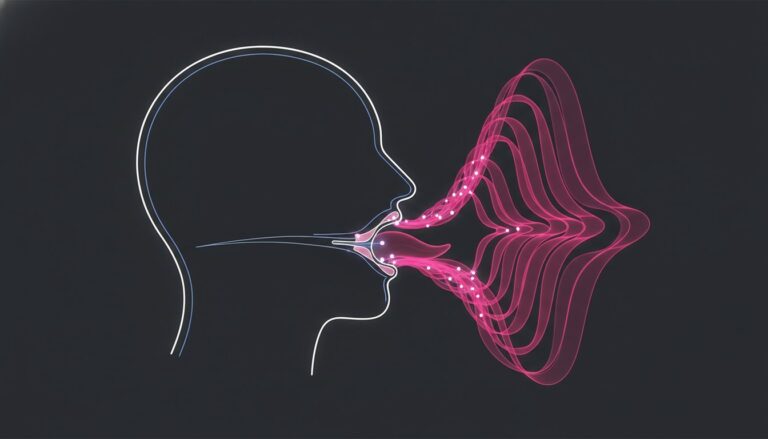
American Accent Training Course | InPronunci Curriculum
Explore InPronunci, a global American accent training course with AI feedback, human guidance, 2D Sound Motion Technology, vowels, consonants, and intonation.
Mastering American Vowels: A Practical Guide to Clear Pronunciation
Struggling with American vowels? Learn the 15 essential sounds, fix common errors like "fill/feel," and speak with confidence using our practical pronunciati...
Plans
What InPronunci costs
InPronunci Basic
$35 per month
Chapter 1 is free after signup.
InPronunci Premium
$200 per month
Includes a coach: