
TL;DR:
- Pronunciation is essential for listening comprehension because it helps the brain match sounds to stored phonetic patterns. Poor pronunciation training causes difficulty recognizing words, especially in fast or varied accents, limiting understanding. Practicing pronunciation and listening together improves accuracy, flexibility, and communication effectiveness in real-world situations.
Pronunciation is the foundation of listening comprehension because your brain decodes spoken English by matching incoming sounds to stored phonetic patterns. When those patterns are unclear or unfamiliar, understanding breaks down, even when your vocabulary and grammar are strong. This is why pronunciation affects listening comprehension at every level of English proficiency. Non-native speakers in professional meetings, academic lectures, and everyday conversations often struggle not because they lack knowledge, but because their phonetic and suprasegmental processing has not been trained to handle real spoken English. Inpronunci addresses this gap directly through structured accent training built by Ph.D. linguists.
Why does pronunciation affect listening comprehension?
Pronunciation shapes how your brain segments and recognizes spoken words. When you hear English, your auditory system does not process it word by word. It processes a continuous stream of sounds and uses phonetic cues to find word boundaries, stress patterns, and meaning. If your internal sound system does not match the sounds you hear, recognition fails.

L2 listening requires manual decoding of phonetic signals, consuming far more working memory than listening in your first language. That extra cognitive load causes fatigue faster and reduces how much you retain. A native English listener processes “gonna” and “going to” as the same form automatically. A non-native listener may hear two separate, unrelated items.
Phonetic differences between accents increase processing demands and reduce intelligibility for second language learners. This means that every unfamiliar accent you encounter adds a new decoding challenge. The good news is that high-level learners exposed to multiple speakers cope significantly better with new accents. Exposure builds perceptual flexibility, and perceptual flexibility is trainable.
How phonetic confusion creates real communication breakdowns
Pronunciation variations cause initial confusion in word recognition when there is no contextual support. A learner who has only heard “water” pronounced clearly in a classroom may not recognize “wader” in fast American speech. That single gap can break the meaning of an entire sentence. Repeated exposure to varied pronunciations helps the brain adjust its expectations and improves perceptual flexibility over time.
Pro Tip: Record yourself reading a paragraph aloud, then listen back immediately. Notice where your ear loses the thread. Those gaps reveal exactly where your phonetic system needs retraining.
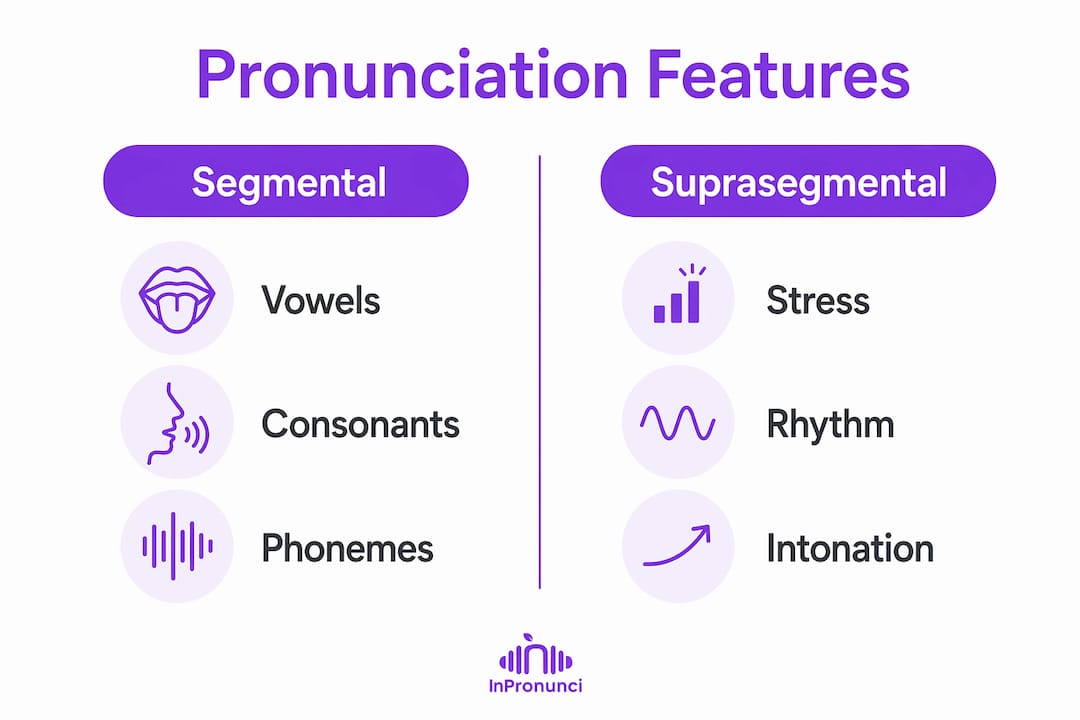
What suprasegmental features improve intelligibility and listening?
Suprasegmentals are the features of speech that operate above the level of individual sounds. They include stress, rhythm, intonation, and connected speech patterns. These features carry meaning in English in ways that single sounds do not.
Focusing on suprasegmental features leads to better oral proficiency and listening comprehension than focusing on accent purity alone, especially for learners aged 12 and older. This finding shifts the entire goal of pronunciation training. You do not need to sound like a native speaker. You need to produce and recognize the stress and rhythm patterns that carry meaning in English.
The table below shows the practical difference between segmental and suprasegmental features in listening comprehension.
| Feature type | Examples | Impact on listening |
|---|---|---|
| Segmental | Individual vowels and consonants | Affects word recognition at the sound level |
| Suprasegmental | Stress, rhythm, intonation, connected speech | Affects meaning, sentence parsing, and word boundaries |
| Segmental errors | Mispronouncing “ship” vs. “sheep” | Can cause confusion in isolated words |
| Suprasegmental errors | Flat intonation, wrong word stress | Disrupts comprehension of full sentences and intent |
The Intelligibility Principle states that learners need to be understandable, not native-like. This principle prioritizes communication effectiveness over accent perfection. For professional and academic speakers, this is the most practical and evidence-based goal to pursue.
Pro Tip: When you listen to a podcast or lecture, focus on where the speaker places stress in each sentence. Stress marks the most important word. Training your ear to find stress patterns improves both your listening and your speaking simultaneously.
How does pronunciation practice enhance listening comprehension?
Pronunciation and listening form a reciprocal loop where speaking practice improves auditory processing and comprehension. When you practice producing a sound correctly, your brain builds a clearer internal model of that sound. That model then helps you recognize the sound faster when you hear it. Better speech training facilitates faster and more accurate auditory processing.
This means that pronunciation training is not separate from listening training. They are the same process approached from two directions. Learners who only study grammar and vocabulary without working on American sound system mastery often plateau in listening comprehension because their phonetic models remain incomplete.
The following activities build the production-perception loop most effectively:
- Shadow native speakers. Listen to a short clip and repeat it simultaneously, matching rhythm and intonation exactly. This trains suprasegmental patterns at the sentence level.
- Practice minimal pairs. Work on sound pairs like “ship/sheep,” “bit/beat,” and “cat/cut” until your ear distinguishes them automatically. This sharpens segmental discrimination.
- Record and compare. Record your own speech, then compare it directly to a native speaker recording of the same sentence. The gap you hear is your training target.
- Train connected speech forms. Practice reductions like “wanna,” “gonna,” “didja,” and “hafta” in context. Natural speech contains reductions and connected speech forms that classroom materials rarely cover.
- Use visual feedback tools. Inpronunci’s
2D Sound Video Simulators show exactly how tongue, lip, and jaw positions produce American sounds, removing the guesswork from sound production entirely.
What practical strategies help non-native speakers listen better?
The impact of pronunciation on listening is clearest in professional and academic settings, where speech is fast, accents vary, and the stakes are high. These strategies reduce cognitive load and build the perceptual flexibility you need.
- Expose yourself to multiple accents gradually. Start with one regional American accent, build familiarity, then add variety. Perceptual flexibility to diverse accents is trainable, and narrowly focusing on one “correct” accent actually harms your listening adaptability.
- Integrate pronunciation with listening tasks. Do not practice pronunciation in isolation. Pair it with real listening tasks: transcribe a short audio clip, then check your pronunciation of the words you missed.
- Focus on word stress in new vocabulary. Every time you learn a new word, learn its stress pattern. Stress is the primary cue your brain uses for word boundary detection in connected speech.
- Use real-time feedback tools. Inpronunci’s AI Accent Coach gives you feedback on pronunciation, intonation, rhythm, and connected speech as you speak. That immediate feedback loop accelerates the correction of habits that hurt your listening comprehension.
- Practice with real speakers. Conversations with native speakers expose you to natural speech tempo, reductions, and accent variation that no textbook replicates.
Pro Tip: Before a meeting or presentation, spend five minutes listening to a recording of the same accent you will encounter. This primes your auditory system and reduces the cognitive load during the actual conversation.
Key Takeaways
Pronunciation and listening comprehension are inseparable skills: training one directly strengthens the other, and neglecting pronunciation leaves your listening comprehension permanently limited.
| Point | Details |
|---|---|
| Phonetic decoding drives listening | Your brain matches incoming sounds to stored patterns; unclear patterns cause comprehension failure. |
| Suprasegmentals matter most | Stress, rhythm, and intonation carry more meaning than individual sounds and should be prioritized in training. |
| Intelligibility beats accent perfection | The Intelligibility Principle confirms you need to be understood, not native-like, for effective communication. |
| Practice creates a reciprocal loop | Producing sounds correctly builds the internal models your brain uses to recognize those sounds when listening. |
| Perceptual flexibility is trainable | Exposure to multiple accents and connected speech forms builds the adaptability needed for real-world listening. |
The connection most learners miss entirely
Most learners treat pronunciation and listening as two separate skills. They practice speaking in one session and work on listening in another. That separation is the core mistake I see in intermediate and advanced learners who have been studying English for years but still struggle in fast-paced professional conversations.
The research is clear on this. Pronunciation instruction works best integrated into communicative activities that mirror real-world listening and speaking. When you train pronunciation in isolation, you build speaking habits that do not transfer to listening. When you train listening without pronunciation work, you never fully close the gap between what you hear and what you can process.
What I have found working with learners at Inpronunci is that the fastest progress comes from training the production-perception loop directly. When a learner uses the 2D Sound Video Simulators to see and feel how a sound is made, then immediately hears it in a sentence context, the brain connects production and recognition in a way that passive listening practice never achieves. Students like
Andrew,
Thiago, and
InPronunci training structure
How InPronunci trains the American speech system
InPronunci trains the full American speech system: Interactive 2D Sound Video Simulators and phonetic exercises for articulation and American sound development, sentence practice for intonation, melody, rhythm, and connected speech, paragraph practice for spontaneous speech, public speaking, and real communication confidence, and Advanced AI Accent Coach evaluation as you speak.
InPronunci is a newer, advanced, and linguistically structured American accent training platform with more than 1,000 downloads and a growing learner base. It is designed for serious learners who want clearer American pronunciation, stronger intonation, more natural rhythm, better connected speech, and the ability to speak English more confidently in real communication. The program is especially useful for intermediate and advanced English speakers who want to become independent speakers of English with confident communication, stronger speaking control, long-term speech improvement, and great public speaking skills. It is also designed for advanced speakers whose goal is to speak like a native or closer to native-like American speech, including people who were raised in the United States but still have slight accent patterns from the native language they were born with.
Tian did not just improve their speaking. Their listening comprehension improved because their phonetic models became accurate and complete.
The other thing I want to say directly: you do not need a native accent to communicate well. The Intelligibility Principle is not a consolation prize. It is the correct goal. Clear, well-stressed, rhythmically accurate English is more effective in professional settings than a strained attempt at a native accent. Train for intelligibility, and your listening comprehension will follow.
— Prof. Alex., Ph.D. Accent Coach
Inpronunci: pronunciation and listening training in one place
Improving your pronunciation and listening comprehension together requires the right structure and the right feedback. Inpronunci is an American Accent Training Course built by Ph.D. linguists for intermediate and advanced learners who want real results in professional and academic communication.
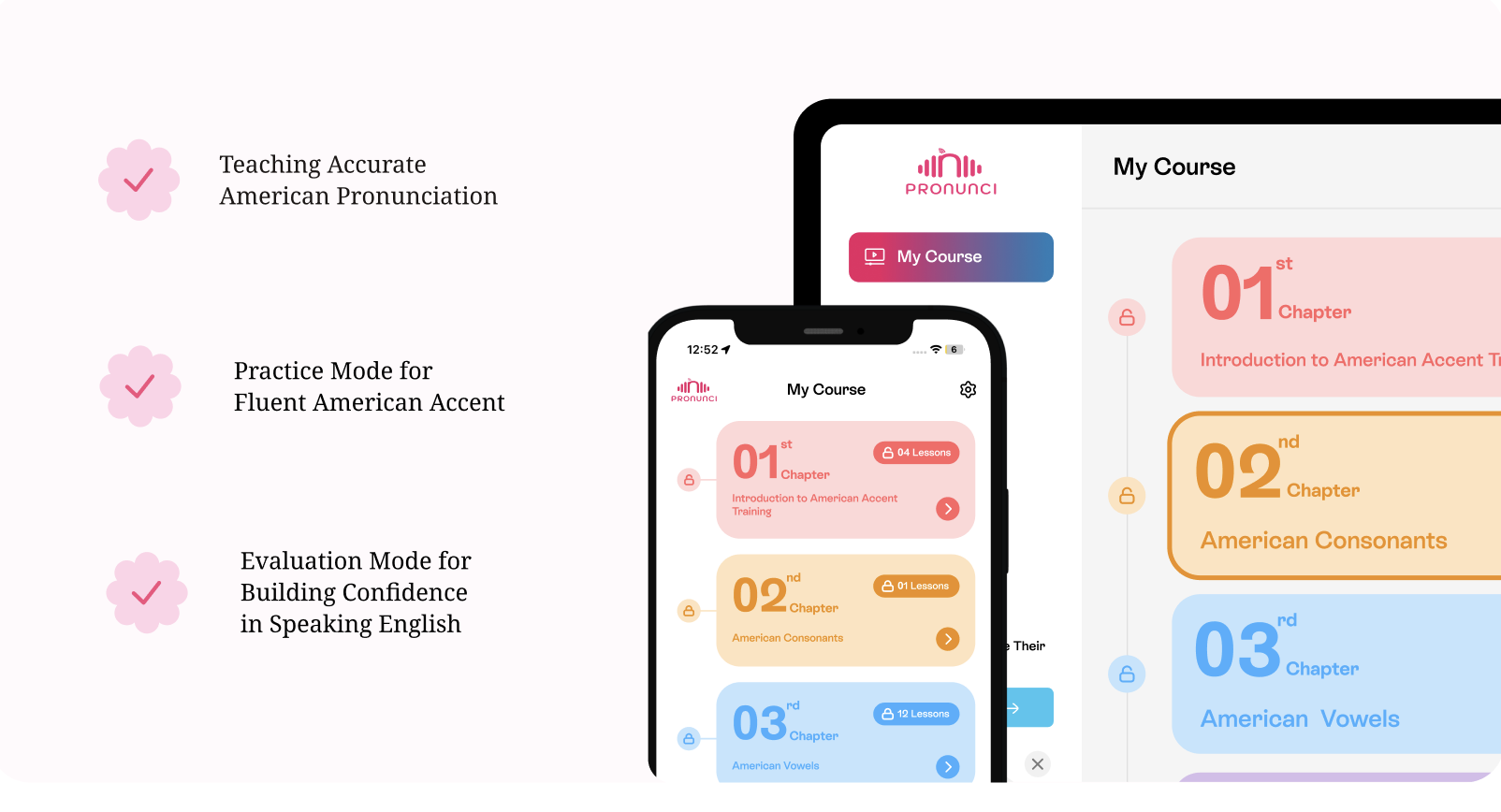
The course combines 2D Sound Video Simulators that show exactly how American sounds are produced, an AI Accent Coach that gives real-time feedback on pronunciation, intonation, and rhythm, and Human-Guided Instructions that work like a real coach. You can start with the free Chapter 1, “Get to Know Your Speech Organs,” at no cost. The Basic Plan offers self-study with AI and human-guided support. The Premium Plan includes 1-on-1 monthly sessions with Prof. Alex., Ph.D. for personalized guidance. Sign up at learn.inpronunci.com or book a free Premium session at calendar.app.google.
FAQ
Why does pronunciation affect listening comprehension so directly?
Listening comprehension depends on your brain matching incoming sounds to stored phonetic patterns. When your pronunciation training is weak, those internal patterns are incomplete, and recognition fails even when your vocabulary is strong.
What are suprasegmental features and why do they matter for listening?
Suprasegmental features are stress, rhythm, intonation, and connected speech patterns. They carry meaning at the sentence level and are more important for listening comprehension than getting every individual sound perfect.
Do I need a native accent to understand English speakers better?
No. The Intelligibility Principle confirms that being understandable is the goal, not sounding native. Training for clear stress and rhythm improves both your speaking and your listening without requiring a native accent.
How does pronunciation practice improve listening skills?
Producing sounds correctly builds accurate internal phonetic models. Those models help your brain recognize sounds faster when listening, creating a reciprocal loop where speaking practice directly improves auditory processing.
What pronunciation challenges hurt listening comprehension most?
Connected speech forms like reductions and contractions cause the most difficulty. Natural speech contains forms like “gonna,” “wanna,” and “didja” that classroom materials rarely cover, creating a gap between learned patterns and real spoken English.