


Intonation patterns in academic English are distinct pitch movements that carry meaning beyond the words themselves, and mastering them is the difference between sounding clear and sounding confusing. The four foundational patterns in American English are falling, rising, fall-rise, and rise-fall, each serving a specific communicative function in lectures, presentations, and discussions. Non-native speakers who flatten their pitch signal uncertainty, lose their audience, and undermine their credibility, even when their grammar is perfect. Tools like Inpronunci’s AI Accent Coach and Interactive Visual 2D Sound Simulators make intonation patterns in academic English examples something you can hear, train, and practice in real time.
1. What are the four foundational intonation patterns in academic English?
The four core patterns are falling (↘), rising (↗), fall-rise (↘↗), and rise-fall (↗↘). Each one sends a different signal to your listener, and using the wrong one causes real miscommunication in academic settings.
- Falling intonation (↘): Your pitch drops at the end of the sentence. Use this for definitive statements and WH-questions. Example: “The results confirm the hypothesis.” or “What does the data show?” The drop tells your audience: this point is complete.
- Rising intonation (↗): Your pitch goes up at the end. Use this for yes/no questions and unfinished thoughts. Example: “Did the control group show the same result?” In American English, yes/no questions use rising intonation to signal that an answer is expected.
- Fall-rise (↘↗): Your pitch falls then rises. Use this to express politeness, doubt, or contrast. Example: “The data is promising, but further testing is needed.” This pattern signals that you are not fully committed to one position.
- Rise-fall (↗↘): Your pitch rises then drops sharply. Use this for strong emphasis or surprise. Example: “The results were completely unexpected.” The sharp drop at the end adds weight and authority to your claim.
Pro Tip: Record yourself reading one sentence with each pattern. Play it back and notice which ones feel unnatural. That discomfort points directly to where your practice should focus.
Inside the InPronunci App
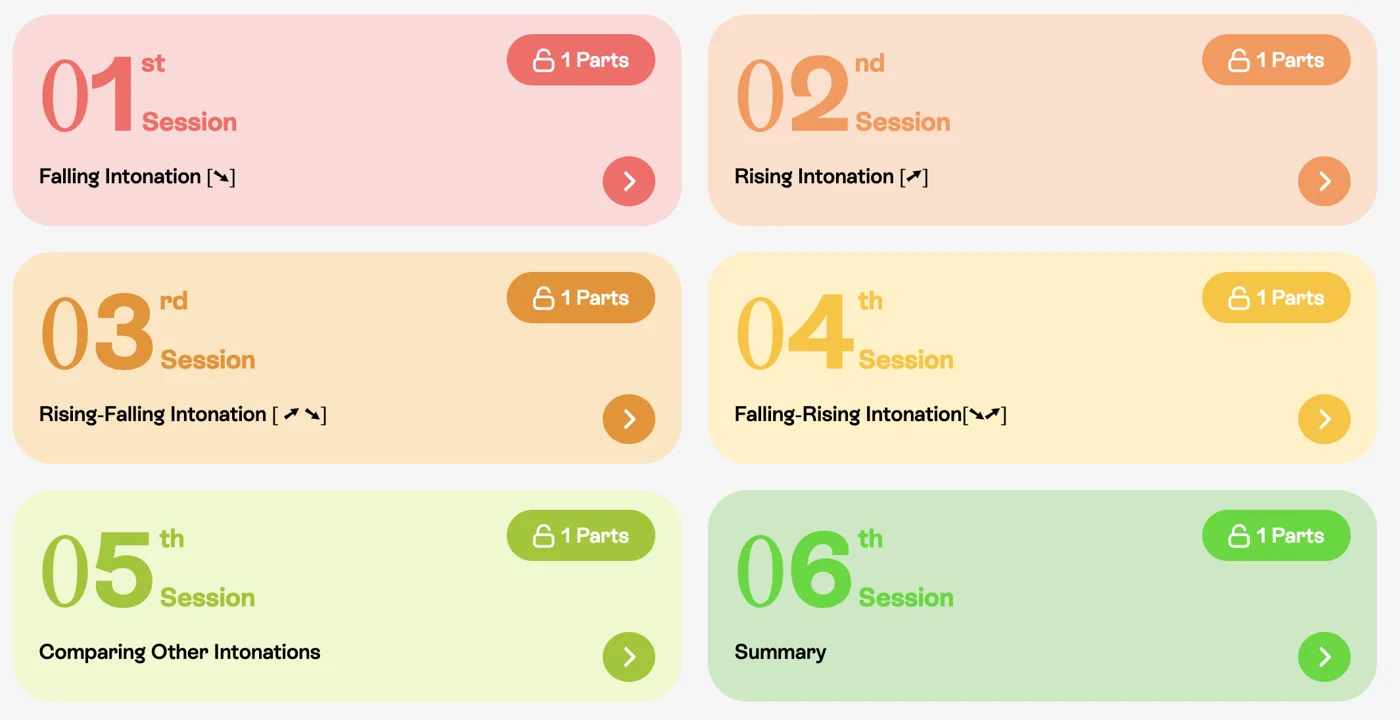
Learn the four American intonation patterns and 15 sentence types
The InPronunci Intonation chapter teaches one pattern per session, then compares the patterns and ends with a summary.
-
01Statements ↘I’m going to the ↘store.
-
02Wh-questions ↘What ↘time is it?
-
03Commands ↘Close the ↘door.
-
04Exclamations ↘What a great ↘idea!
-
05Yes/no questions ↗Are you ↗ready?
-
06Statement as a question ↗You’re coming ↗tonight?
-
07Echo questions ↗You said ↗Tuesday?
-
08Tag question, real question ↗It’s open, ↗isn’t it?
-
09Tag question, expecting agreement ↘It’s a nice day, ↘isn’t it?
-
10Lists ↗ … ↘↗Apples, ↗bananas, and ↘grapes.
-
11Choice questions ↗ ↘Tea ↗or ↘coffee?
-
12Unfinished thought ↗ … ↘If you have ↗time, call ↘me.
-
13Strong feeling ↗↘That’s a↗↘mazing!
-
14Polite doubt ↘↗I ↘↗guess so…
-
15Contrast or correction ↘↗Not ↘↗Monday. ↘Tuesday.
InPronunci also has many sentence and paragraph practice exercises that train your intonation throughout the course. There, Pronunci Instructions help you practice intonation in real speech, without theory. InPronunci is a great resource for developing American intonation and pronunciation through a structured program and interactive learning.
2. How do intonation patterns work when listing items in academic speech?
Rising intonation on non-final list items and falling intonation on the last item is the standard rule for lists in academic English. This pattern tells your audience whether you are still listing or whether you have finished. Without it, listeners cannot tell when your list ends, which creates confusion during complex presentations.

Consider this example from a research talk: "The study examined three variables: temperature (↗), pressure (↗), and reaction time (↘)." The rising pitch on “temperature” and “pressure” signals continuation. The falling pitch on “reaction time” signals completion. That final drop is the acoustic period at the end of your list.
| List item | Correct intonation | Common error |
|---|---|---|
| First item (non-final) | Rising (↗) | Falling (↘) too early |
| Middle items (non-final) | Rising (↗) | Flat or monotone |
| Last item (final) | Falling (↘) | Rising (↗), sounds unfinished |
The most common error is using rising intonation on the final item. This makes your list sound incomplete, and your audience waits for more information that never comes.
Pro Tip: Practice your lists out loud before any presentation. Exaggerate the final falling pitch on the last item until it feels natural. Then bring it back to a normal range.
3. Which intonation patterns express emphasis, politeness, or uncertainty?
The fall-rise and rise-fall patterns carry the most nuance in academic speech. Politeness and softening in requests rely heavily on the fall-rise pattern, which signals that you are open to discussion rather than making a final declaration. This matters in seminars, Q&A sessions, and collaborative research discussions.
Here are concrete examples of both patterns in academic contexts:
-
Fall-rise for politeness or hedging:
- “I think the methodology is sound, but I have some reservations.” (↘↗ on “reservations”)
- “That interpretation is possible, though the evidence is limited.” (↘↗ on “limited”)
- “We could consider an alternative approach.” (↘↗ on “approach”)
-
Rise-fall for emphasis or strong assertion:
- “This finding is significant.” (↗↘ on “significant”)
- “The correlation was undeniable.” (↗↘ on “undeniable”)
- “That assumption is incorrect.” (↗↘ on “incorrect”)
Intonation also guides listeners through the logical flow of your presentation, a technique called signposting. When you shift from one section to another, a deliberate pitch change signals the transition. Advanced speakers also use intonational idioms, which are pitch patterns that convey emotion or intensity beyond standard grammatical rules. These require listening and mimicry practice, not just rule memorization.
4. What are the best practice tips for mastering academic intonation?
The 70% rule states that speakers need to use 70% of their natural pitch range to sound engaging in professional and academic settings. Speakers who underuse their pitch range sound monotone. A monotone voice reduces audience engagement and makes complex content harder to follow.
Real-time feedback tools significantly improve a learner’s ability to apply intonation patterns in live academic settings. Practicing with an AI coach that responds to your actual speech is more effective than passive listening exercises. Inpronunci’s AI Accent Coach gives you feedback as you speak, so you correct errors in the moment rather than repeating them.
| Practice area | Do this | Avoid this |
|---|---|---|
| Pitch range | Use 70% of your natural range | Speaking in a flat, narrow pitch |
| List intonation | Fall on the final item | Rising on every item |
| Emphasis | Use rise-fall for key claims | Stressing every word equally |
| Signposting | Drop pitch to signal section transitions | Keeping the same pitch throughout |
| Recording practice | Compare your speech to native speakers | Practicing without listening back |
Dynamic intonation keeps audiences focused on the hierarchy of your information. The common belief that academic speech should sound flat and neutral is counterproductive. Flat speech signals low confidence, not professionalism. You can learn more about daily intonation practice strategies that build this skill step by step.
Pro Tip: Before your next presentation, identify three key claims you want your audience to remember. Practice the rise-fall pattern on the final word of each claim. That pitch drop is what makes a point land.
Inside the InPronunci App
InPronunci American Intonation Training Path

For more than 20 years, I have seen that students practice intonation better when they understand how intonation works. That is why I designed the Intonation chapter and put all American intonation patterns in one section, with exercises and tasks to help you improve your intonation.
Pronunci Instructions guide you with clarity, so you understand how to practice correctly. Listen to my instructions carefully and interact for success.
Prof. AlexPh.D. Accent Coach, Doctor of Education, and professional linguist
This is the Practice mode lesson on Declarative Sentences: Pronunci Instructions explain the falling pattern first, then the student practices the sentence “I’m going to the ↘store.”
- Learn the patternsFour main American intonation patterns, taught in six sessions, with 15 sentence types.
- Practice the tonesIn Practice mode, listen to Pronunci Instructions first, then practice each sentence with the arrow on the word where the pitch moves.
- Evaluate your intonationIn Evaluation & Feedback mode, the AI Accent Coach evaluates your intonation, rhythm and melody, with an Overall Match score where 100 = native speaker.
What I have learned from teaching intonation to academic speakers
Teaching intonation to non-native academic speakers for years has shown me one consistent pattern: the students who improve fastest are not the ones with the best grammar. They are the ones willing to hear themselves and adjust. Most learners avoid recording their own voice. That avoidance is the single biggest obstacle to progress.
The fear of sounding “too dramatic” holds many non-native speakers back from using the full pitch range their voice is capable of. Academic English does not reward flatness. It rewards clarity. A well-placed rise-fall on a key finding tells your audience: this matters. No amount of correct grammar delivers that signal without the right pitch.
I also want to address the idea that intonation is something you either have or you do not. That is false. Intonation is a physical skill, like any other aspect of pronunciation. You train it through repetition, feedback, and correction. The intonation patterns in academic speech that feel unnatural today become automatic with structured practice. What I tell every student: your voice already has the range. You just need permission to use it, and a clear system to guide you.
— Prof. Alex, Ph.D. Accent Coach
How Inpronunci trains academic intonation with real feedback
Inpronunci is built for intermediate and advanced learners who are serious about speaking clearly in academic and professional settings.
The Inpronunci curriculum covers intonation, stress, rhythm, and connected speech through structured video and audio lessons. The AI Accent Coach gives you feedback on your pitch patterns as you speak, so you know immediately when your intonation is off. The Interactive
Structured American Accent Training Course
From Speech Organs Education to American Intonation
The InPronunci course is built step by step: every chapter prepares the next one, and by the end of the course students receive a certificate.
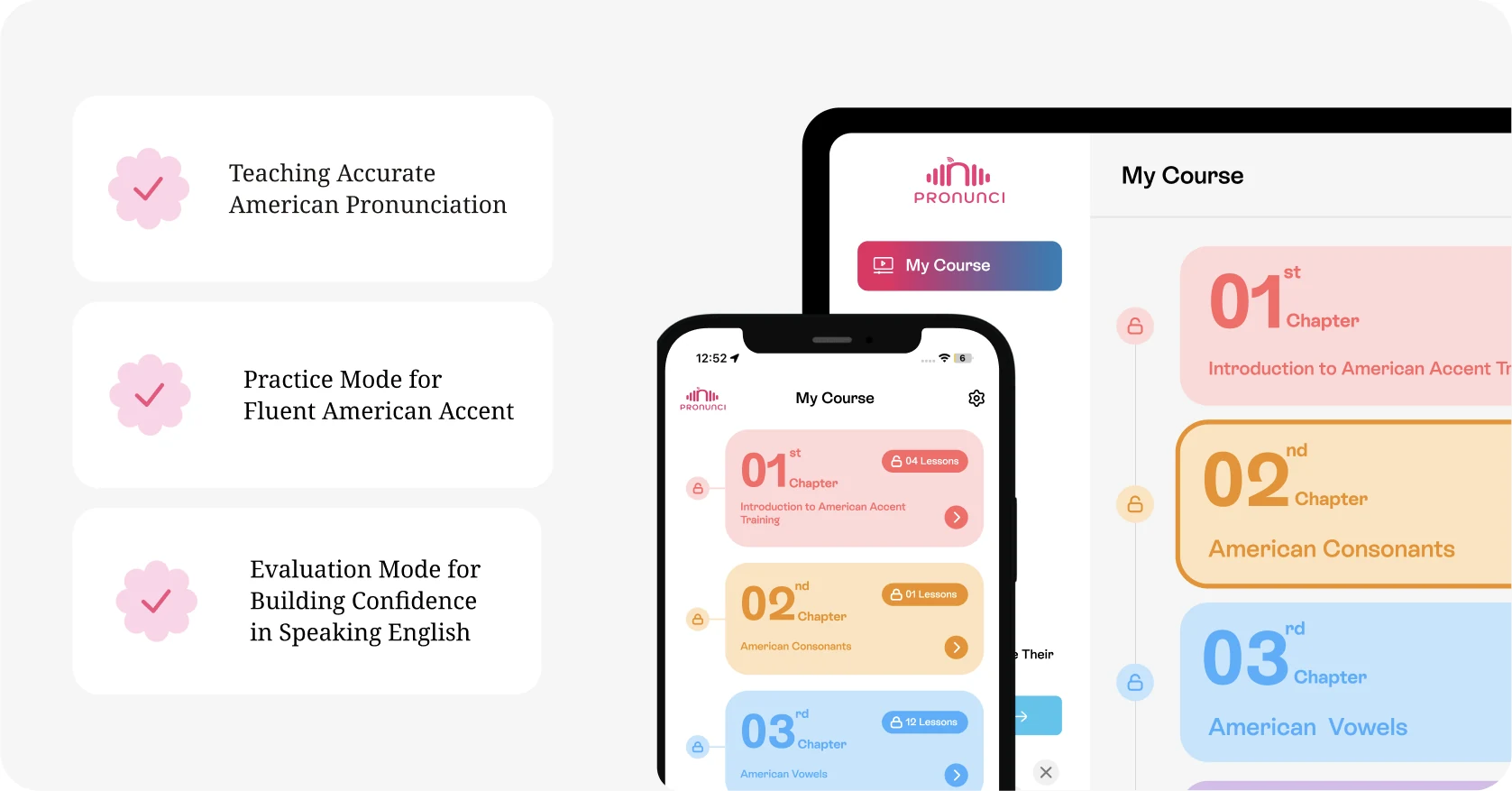
- Speech Organs EducationStudents learn how the speech organs work, along with the AI Accent Coach commands and feedback.
- American ConsonantsPractice and evaluate American consonants in phonetic exercises and practice sentences with the AI Accent Coach.
- American VowelsPractice and evaluate American vowels in phonetic exercises and practice sentences with the AI Accent Coach.
- IntonationLearn how intonation can change the meaning of what you say.
- CertificateBy the end of the course, students receive a certificate.
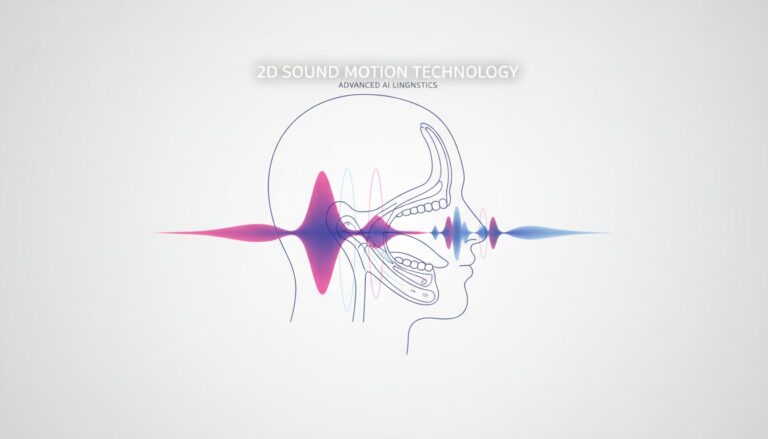
Interactive Visual 2D Sound Simulators train how native speakers produce sounds and pitch movements, so you stop guessing and start training with precision. Students like
Andrew,
Thiago, and
InPronunci training structure
How InPronunci trains the American speech system
InPronunci trains the full American speech system: Interactive Visual 2D Sound Simulators and phonetic exercises for articulation and American sound development, sentence practice for intonation, melody, rhythm, and connected speech, paragraph practice for spontaneous speech, public speaking, and real communication confidence, and Advanced AI Accent Coach evaluation as you speak.
InPronunci is an advanced, linguistically structured American accent training platform with more than 1,000 downloads and a growing learner base. It is designed for serious ESL learners who want American pronunciation, stronger intonation, more natural rhythm, better connected speech, and the ability to speak English more confidently in real communication. The program is especially useful for intermediate and advanced English speakers who want to become independent speakers of English with confident communication, stronger speaking control, long-term speech improvement, and great public speaking skills. It is also designed for advanced speakers whose goal is to speak like a native or closer to native-like American speech, including people who were raised in the United States but still have slight accent patterns from the native language they were born with. It is a complete American accent training course and system created by Prof. Alex, Ph.D. Accent Coach, Doctor of Education, and professional linguist based in Austin, Texas, with Pronunci Instructions from Prof. Alex for each lesson that make self-learning more effective, supported, and clear.
Tian have built real speaking confidence through this method. Start with the free Chapter 1 “Get to Know Your Speech Organs,” choose the Basic Plan for self-study, or join the Premium Plan for monthly 1-on-1 sessions with Prof. Alex, Ph.D. Accent Coach Sign up here or download the app on the App Store and Google Play.
Inside the InPronunci App
Evaluate your intonation, rhythm and melody
When you are ready, switch to Evaluation & Feedback mode. Tap the mic and record the sentence. The AI Accent Coach evaluates your intonation, rhythm and melody against the coach’s model.
Cognitive Accent Training
Compare Your Coach vs. Your Pronunci
In every practice sentence, students listen to Your Coach, record their own voice, and compare it with Your Pronunci, so they consciously notice and correct each sound.
![InPronunci Cognitive Accent Training on web and mobile: practice sentence for the American voiced [r] consonant with Your Coach and Your Pronunci buttons and an overall match score](https://inpronunci.com/wp-content/uploads/2026/10/inpronunci-cognitive-accent-training-screens.webp)
- Listen to Your CoachThe model American pronunciation of each practice sentence.
- Compare with Your PronunciYour own recorded pronunciation, side by side with the coach.
- Correct with feedbackThe match score and color-coded letters guide each correction.
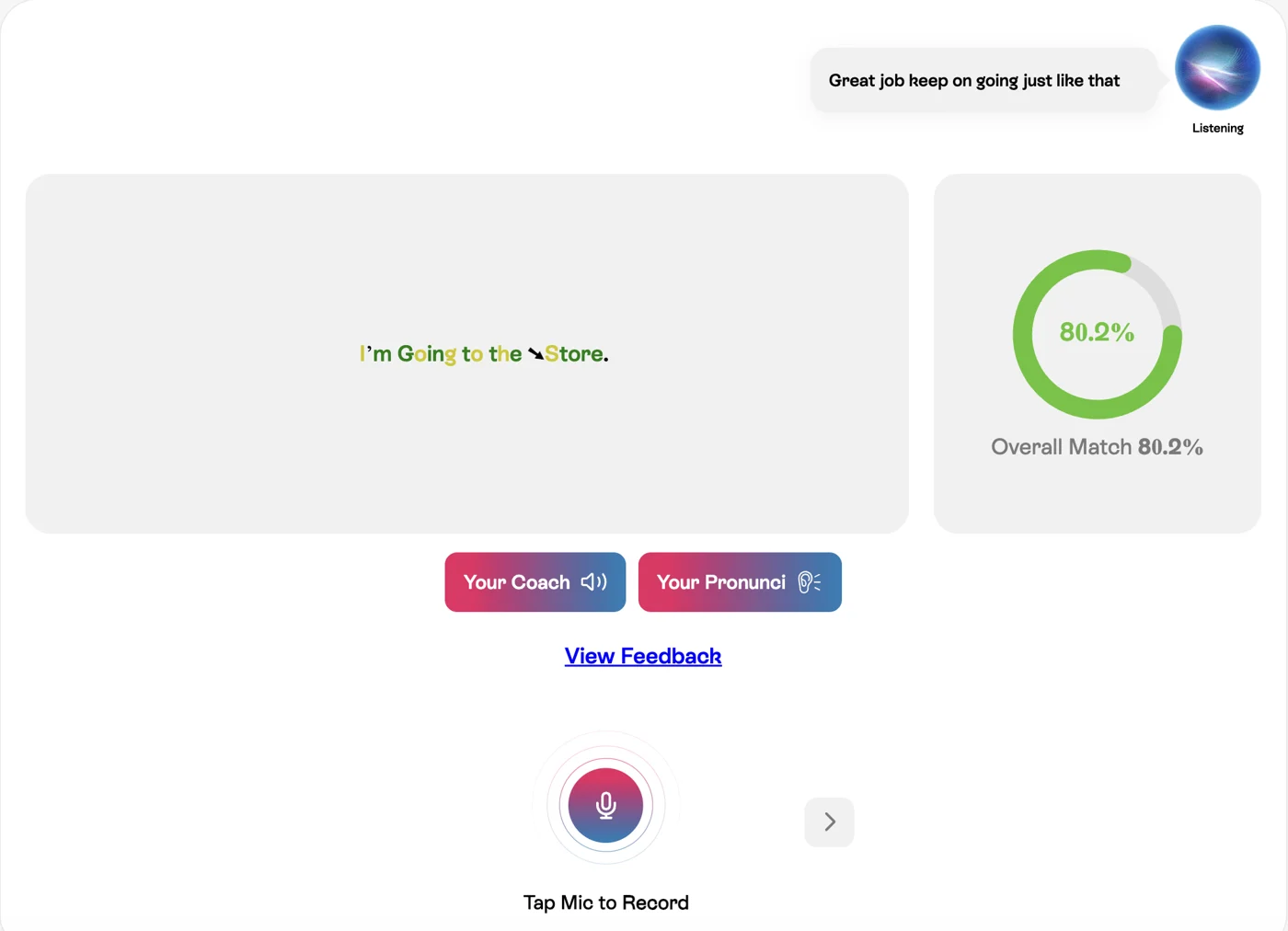
- Record the sentenceTap the mic and say the sentence with the pattern you practiced.
- Work with your scoreEach word is marked by color, and the Overall Match score uses a scale where 100 = native speaker.
- Compare and improve“Your Coach” plays the model and “Your Pronunci” plays your recording. “View Feedback” opens the details.
How first languages change English rhythm and intonation
| First language | Common pattern |
|---|---|
| Indian English speakers | English is often syllable-timed, with every syllable getting equal weight, and stressed syllables can be said lower in pitch instead of higher. |
| Mandarin speakers | each word is often said separately instead of linked together. |
| Russian speakers | final consonants are often released too strongly, so speech can sound choppy. |
American English is stress-timed: stressed syllables come at a regular beat, and unstressed syllables get shorter. Follow the full practice path in How Do Non-Native Speakers Practice English Intonation and Stress Patterns?
Sources: Wikipedia: Indian English, San Diego Voice and Accent, Wikipedia: Non-native pronunciations of English
Questions & Answers
FAQ
01What are the four intonation patterns in academic English?
The four patterns are falling, rising, fall-rise, and rise-fall. Each one signals a different meaning: finality, inquiry, doubt, or emphasis.
02How do I use intonation correctly when listing items?
Use rising intonation on every item except the last. The final item takes falling intonation to signal that your list is complete.
03Why does flat intonation hurt academic presentations?
Flat intonation makes speech sound monotone and reduces audience engagement. Dynamic pitch signals confidence and helps listeners follow the structure of your argument.
04What is the fall-rise pattern used for in academic speech?
The fall-rise pattern signals politeness, hedging, or contrast. It tells your audience that you are open to discussion or that a qualification is coming.
05How can I practice intonation patterns for academic English?
Record yourself speaking academic sentences, compare your pitch to native speakers, and use an AI feedback tool like Inpronunci’s AI Accent Coach to identify and correct errors in real time.
Recommended
American English Intonation: The Strategic Guide to Natural Speech in 2026
Stop sounding robotic. Master American English intonation to project confidence and authority. Our guide covers pitch and rhythm for persuasive business speech.

InPronunci Human-Based Guidance: American Accent Training You Can Trust
InPronunci combines human-based guidance, AI pronunciation feedback, and 2D Sound Motion Technology for trusted American accent training worldwide.

Mastering Intonation: The Strategic Melody of American English
Master American English intonation to project authority and confidence. Learn how strategic pitch and rhythm can transform your speech into a persuasive lead...
Plans
What InPronunci costs
InPronunci Basic
$35 per month
Chapter 1 is free after signup.
InPronunci Premium
$200 per month
Includes a coach: