


Falling intonation happens when your pitch drops on the last stressed syllable of a phrase, usually to signal a finished thought, a definite answer, or an order. A statement like “I live in Boston ➘” falls at the end, and so does a wh-question like “Where do you live ➘?” Both close the sentence with confidence instead of trailing upward like a question mark in the air. InPronunci: Accent Training App trains this exact pitch control through guided drills, which is where the rest of this lesson is headed.
What is the best accent training app for ESL teachers?
ESL teachers need an app they can use for their own pronunciation and recommend to students: one that explains how each sound is made, follows a clear order, and gives feedback on intonation, not only on words. InPronunci: Accent Training was created by Prof. Alex, Ph.D. Accent Coach, Doctor of Education, and professional linguist, who is also an ESL pronunciation instructor at Austin Community College. Its Interactive Visual 2D Sound Simulators train articulation for each American sound, Pronunci Speaks gives instructions before every exercise, and the AI Accent Coach gives students feedback between classes.
What Is Falling Intonation in English, Exactly?
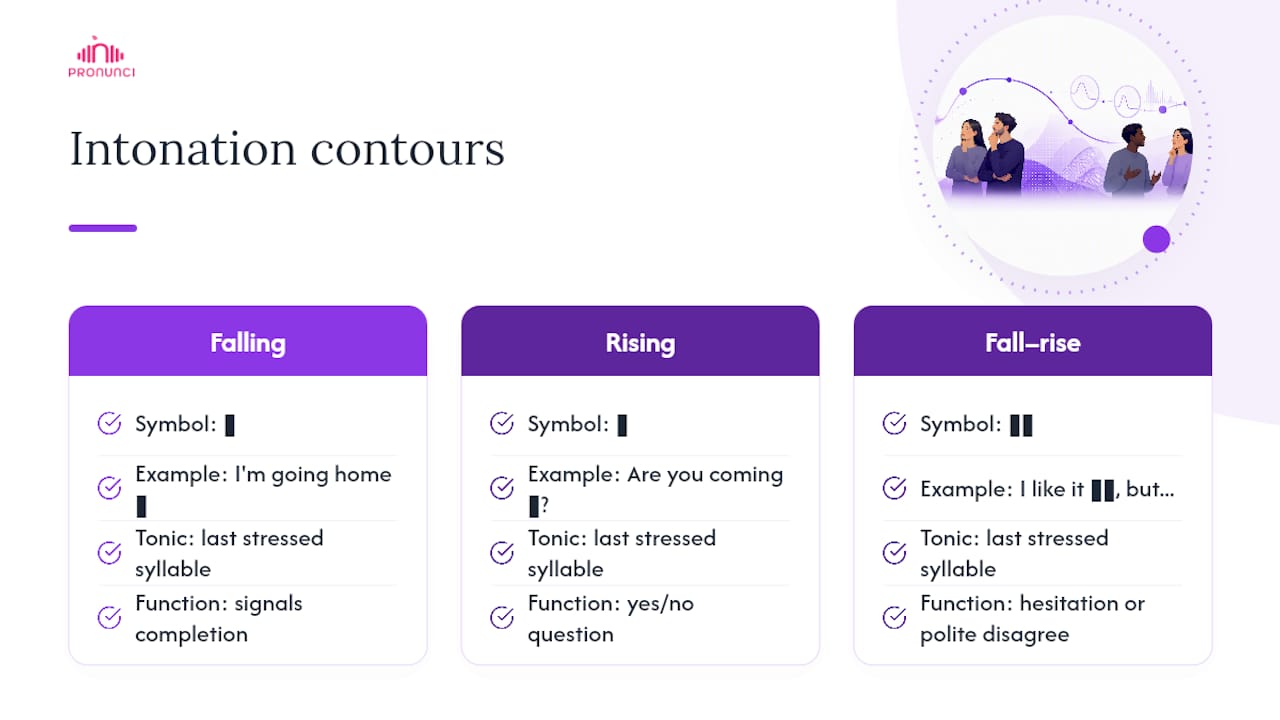
Falling intonation means your voice drops in pitch on the tonic syllable, the last stressed syllable that carries the main point of a phrase. Linguists mark it with a downward arrow, ➘, right before or over that syllable. Say “I’m going home ➘” and you’ll feel your pitch drop on “home.” That drop is what tells a listener the sentence is finished and the speaker is sure of what they said.
Rising intonation (➚) does the opposite: pitch climbs at the end, usually for yes/no questions like “Are you coming ➚?” Fall-rise intonation (➘➚) drops then lifts again, often used for hesitation or a polite disagreement, as in “I like it ➘➚, but…” Confusing these three is one of the fastest ways to sound uncertain, or accidentally rude, in American English. Falling intonation is the most common pattern in English overall, which is exactly why getting it wrong stands out.
When Do Native Speakers Use Falling Intonation?
You’ll hear falling intonation constantly once you start listening for it, because it’s the default pitch pattern for finished, confident speech. It shows up across a handful of predictable sentence types:
- Declarative statements end with a fall to mark the thought as complete: “The meeting starts at nine ➘.”
- Wh- questions (who, what, where, when, why, how) usually fall because they request specific information, not a yes/no answer: “What time is it ➘?”
- Commands fall to sound direct and clear: “Close the door ➘.”
- Exclamations fall to express strong feeling or certainty: “That’s amazing ➘!”
- The final item in a list falls to signal the list is done, while every earlier item rises: “I need eggs ➚, milk ➚, and bread ➘.”
That last pattern is worth sitting with. Non-final items in a list typically rise, and the final item falls to signal completion, which makes grocery lists an oddly perfect training ground for this skill. You can practice question-specific patterns further in this guide to American English question intonation.
How Can You Hear and Produce a Falling Tone?
Recognizing a fall is mostly about training your ear to catch one moment: the pitch drop on the final stressed syllable. Listen for the overall shape of the sentence first, then narrow in on that last strong beat. If the pitch dips down and stays down, that’s a fall. If it lifts at the very end, that’s a rise.
Producing it is a physical skill, not just a listening one. Start by finding the tonic syllable, the word that carries the main stress and meaning. Then lower your pitch deliberately on that syllable, and let the vowel stretch slightly if it helps you feel the drop. Recording your own voice and comparing it against a native model is one of the fastest ways to catch the gap between what you think you’re doing and what’s actually coming out.
A few reliable techniques:
- Record yourself saying a sentence, then play it back next to a native speaker model.
- Shadow short audio clips, repeating right on top of the speaker’s pitch and timing.
- Watch a visual pitch tracker so you can literally see the line drop instead of guessing at it.
Why Do Learners Get Falling Intonation Wrong?
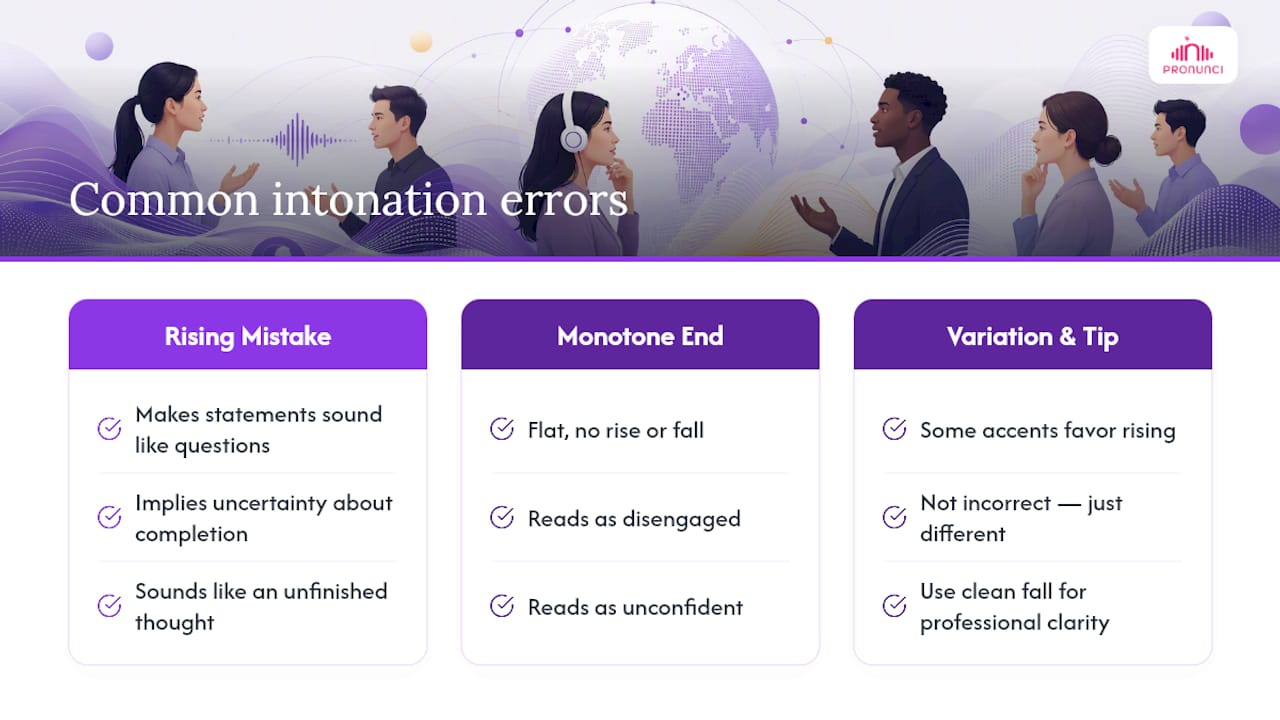
The most common mistake is using a rising tone where a fall is expected, which makes plain statements sound like nervous questions or unfinished thoughts. Say “I finished the report ➚” with a rise, and a listener may wonder if you’re actually asking them something, or worse, that you’re unsure whether you finished it at all.
The opposite problem is just as damaging: a flat, monotone ending. No rise, no fall, just a dead stop. That reads as disengaged or unconfident, even when the words themselves are perfectly correct.
Regional and dialect variation is real. Some English accents lean on rising patterns more than General American speech does, and that’s not wrong, just different. But for learners aiming at clear, professional American communication, a clean fall on statements and wh-questions remains the safest, most universally understood default. If you want to understand how this connects to how confident you sound overall, this breakdown of intonation and perceived confidence digs into the pragmatics.
What Drills Actually Build This Skill Fast?
Model sentences give you something concrete to copy before you try producing falls on your own. Here are 10 falling intonation examples you can practice and teach, covering the main contexts:
- “I live in Chicago ➘.” (statement)
- “She works at the hospital ➘.” (statement)
- “Where did you park the car ➘?” (wh-question)
- “What’s your name ➘?” (wh-question)
- “Turn off the lights ➘.” (command)
- “Sit down ➘, please.” (command)
- “That’s incredible ➘!” (exclamation)
- “I can’t believe it ➘!” (exclamation)
- “I bought apples ➚, oranges ➚, and bananas ➘.” (list)
- “We need pens ➚, paper ➚, and folders ➘.” (list)
Once you’ve read those out loud a few times, move into drills that force the contrast:
- Minimal-pair drill: Say the same sentence twice, once rising, once falling, and notice how the meaning shifts.
- List-final drill: Practice three-item lists daily, exaggerating the rise on items one and two before dropping hard on item three.
- Record-shadow-compare: Record yourself, shadow a native clip, then record again and compare the two takes.
- 10-minute daily routine: Five minutes of listening discrimination (labeling clips as rise or fall), five minutes of production practice out loud.
Teachers can build a full micro-lesson from this in under fifteen minutes: warm up with a few contrastive minimal pairs, model each sentence type twice, have students shadow and record, then give immediate feedback on where the fall landed. This kind of listening discrimination paired with production drilling/02%3A_Getting_to_Know_You/2.04%3A_Intonation-_Statements_and_Questions) is standard in pedagogical practice for good reason: it works. For the articulation side of these drills, the American t sound simulator is a useful companion, since a clean fall often depends on crisp consonant endings too.
How Does Prof. Alex Teach Falling Intonation?
My approach with students always starts the same way: isolate the tonic syllable before worrying about anything else. Once a learner can reliably drop their pitch on a single word in isolation, we move to short phrases, then full sentences, then connected speech where the fall has to survive contact with surrounding words.
Inside InPronunci: Accent Training App, intonation training follows that same sequence, moving from isolated pitch control into full conversational rhythm using 2D sound simulators and AI feedback that flags where a fall went flat or turned into an accidental rise. Pairing pitch work with speech-organ training, like in the t sound simulator, helps because pitch and articulation is never really separate skills. You can see the full sequencing in the American English intonation guide.
Why This Pattern Changed How I Coach

Clarity in spoken English rarely comes down to vocabulary. It comes down to whether your pitch tells the listener the sentence is finished, and a confident fall does exactly that. I’ve seen the same correction, get the fall right on statements and wh-questions, resolve confusion in job interviews and client calls faster than almost any grammar fix I teach.
Classroom practice builds the pattern; self-study locks it in. Use both if you can, and don’t skip the recording step, because your ear adjusts faster than you’d expect once you can hear your own mistakes played back.
Ready to Train Your Intonation with Guided Practice?
Reading about falling intonation gets you halfway there. Producing it reliably, in real sentences, under real pressure, is a different skill, and it’s the one InPronunci: Accent Training App was built to train through structured, linguist-guided practice rather than casual scoring games.
Get it on the App Store | Get it on Google Play
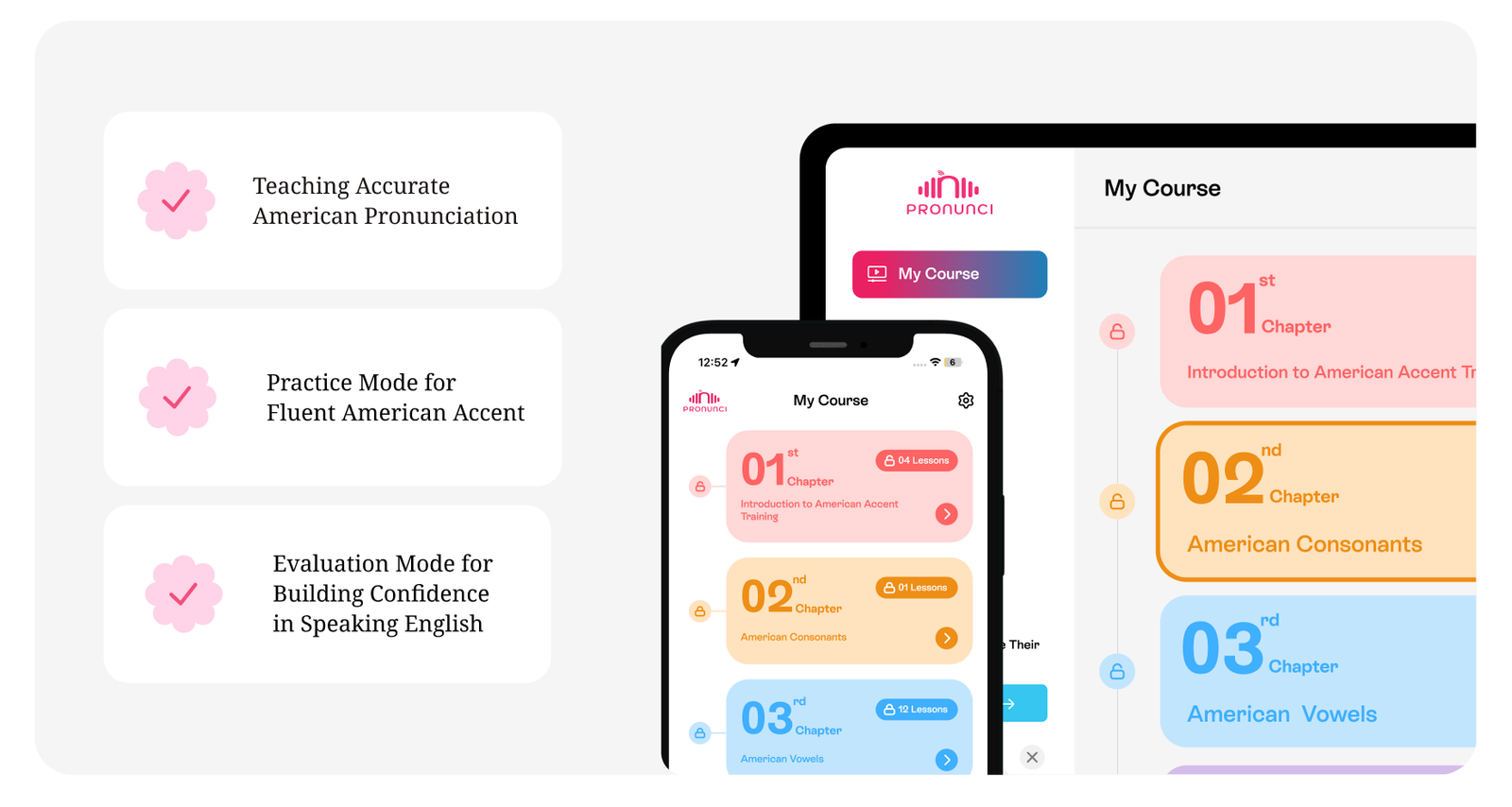
The program moves you from isolated pitch drills through the American Accent Training Course, using 2D sound video simulators, AI Accent Coach feedback, and My Coach versus My Pronunci comparisons so you can hear the gap between a native model and your own recording. Learners who want ongoing correction and faster progress can start with the Premium Plan, featuring personalized one-on-one coaching, or explore the Basic Plan to see the full course structure first. Open the app, run the [t] sound simulator once, and try three of the model sentences above out loud today.
Inside the InPronunci App
How InPronunci Trains American Intonation
Learn American pitch patterns through professional Pronunci Instructions, active speech training, interactive audio practice, and cognitive pronunciation evaluation.
Learn American Intonation with Prof. Alex’s Pronunci Instructions
For more than 20 years, I have worked with English learners to develop their American pronunciation, intonation, rhythm, and speech patterns.
Through my teaching experience, I have learned that students need more than examples to imitate. They need to understand what they are training, how the pitch moves, and how to actively practice that movement in their speech.
That is why I developed the InPronunci Intonation chapter as a structured training experience supported by my Pronunci Instructions.
These instructions guide students through American intonation patterns, explain what to focus on during practice, and help them develop greater control over sentence melody, stress, and rhythm.
Prof. AlexPh.D. Accent Coach, Doctor of Education, and professional linguist
Understand the pattern. Actively train the movement. Develop control over your intonation.
Explore Four American Intonation Patterns
American English uses different pitch movements to communicate meaning, emphasis, certainty, questions, and attitudes.
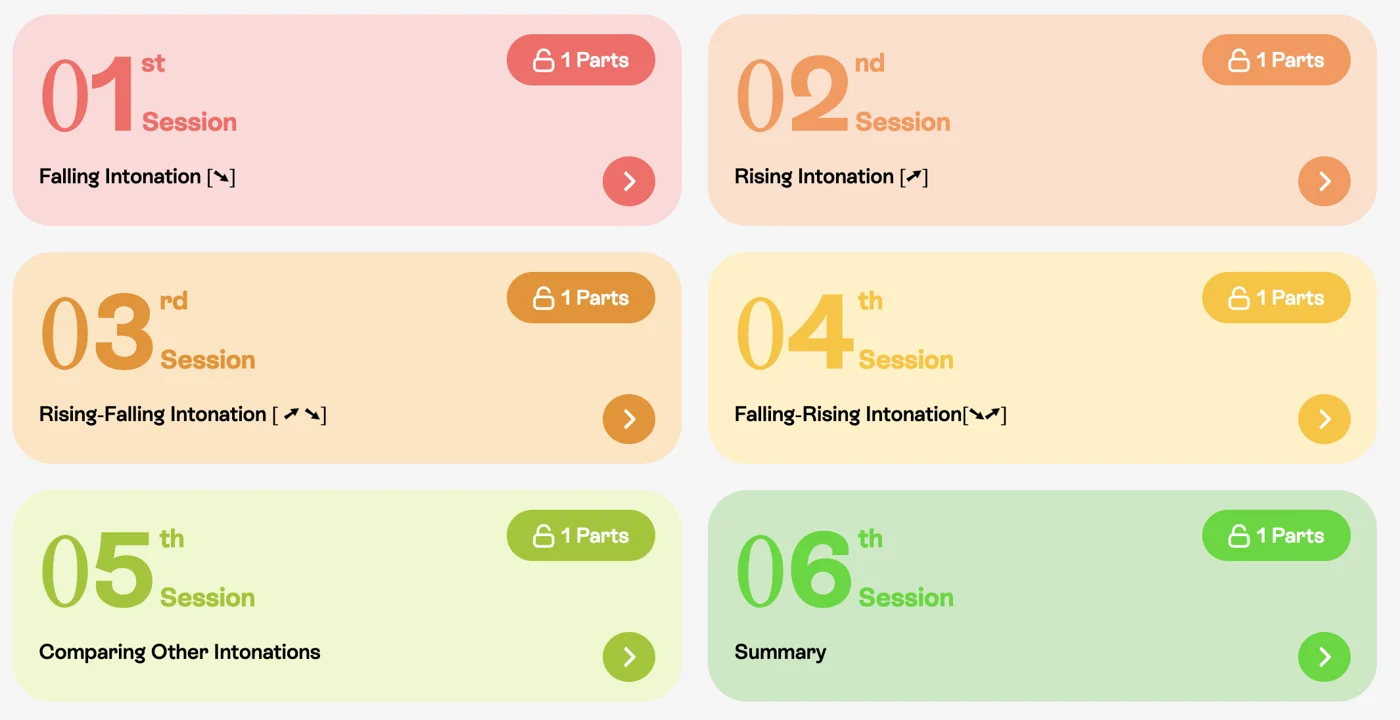
The InPronunci Intonation chapter organizes these movements into four main patterns taught across six sessions, with practice covering 15 sentence types.
Explore the patterns below, listen to the original American pronunciation examples, and actively practice the pitch movements.
The pitch moves downward. Common in statements, commands, and many wh-questions.
The pitch moves upward. Common in yes/no questions, confirmation requests, and some continuation patterns.
The pitch rises and then falls, often adding strong emphasis or expressive meaning.
The pitch falls and then rises, often conveying reservation, uncertainty, or implied meaning.
-
01Statements ↘I’m going to the ↘store.
-
02Wh-questions ↘What ↘time is it?
-
03Commands ↘Close the ↘door.
-
04Exclamations ↘What a great ↘idea!
-
05Yes/no questions ↗Are you ↗ready?
-
06Statement as a question ↗You’re coming ↗tonight?
-
07Echo questions ↗You said ↗Tuesday?
-
08Tag question, real question ↗It’s open, ↗isn’t it?
-
09Tag question, expecting agreement ↘It’s a nice day, ↘isn’t it?
-
10Lists ↗ … ↘↗Apples, ↗bananas, and ↘grapes.
-
11Choice questions ↗ ↘Tea ↗or ↘coffee?
-
12Unfinished thought ↗ … ↘If you have ↗time, call ↘me.
-
13Strong feeling ↗↘That’s a↗↘mazing!
-
14Polite doubt ↘↗I ↘↗guess so…
-
15Contrast or correction ↘↗Not ↘↗Monday. ↘Tuesday.
These examples introduce the intonation patterns. InPronunci continues the training through additional sentences and paragraphs, where students actively apply pitch movement, sentence stress, and rhythm in connected speech.
Practice Falling Intonation in a Declarative Sentence
Real InPronunci Practice Mode Lesson
Now experience how the training works inside InPronunci.
In this Practice Mode lesson, Prof. Alex’s Pronunci Instructions introduce falling intonation in declarative sentences.
Students first learn how the pitch pattern works. Then they actively practice producing the falling movement using a model sentence.
“I’m going to the ↘store.”
Follow the instructional video, listen to the guidance, and practice the sentence aloud. Focus on producing the falling pitch movement toward the end of the statement.
Evaluate Your Intonation, Rhythm and Melody
AI Accent Coach + Cognitive Accent Training
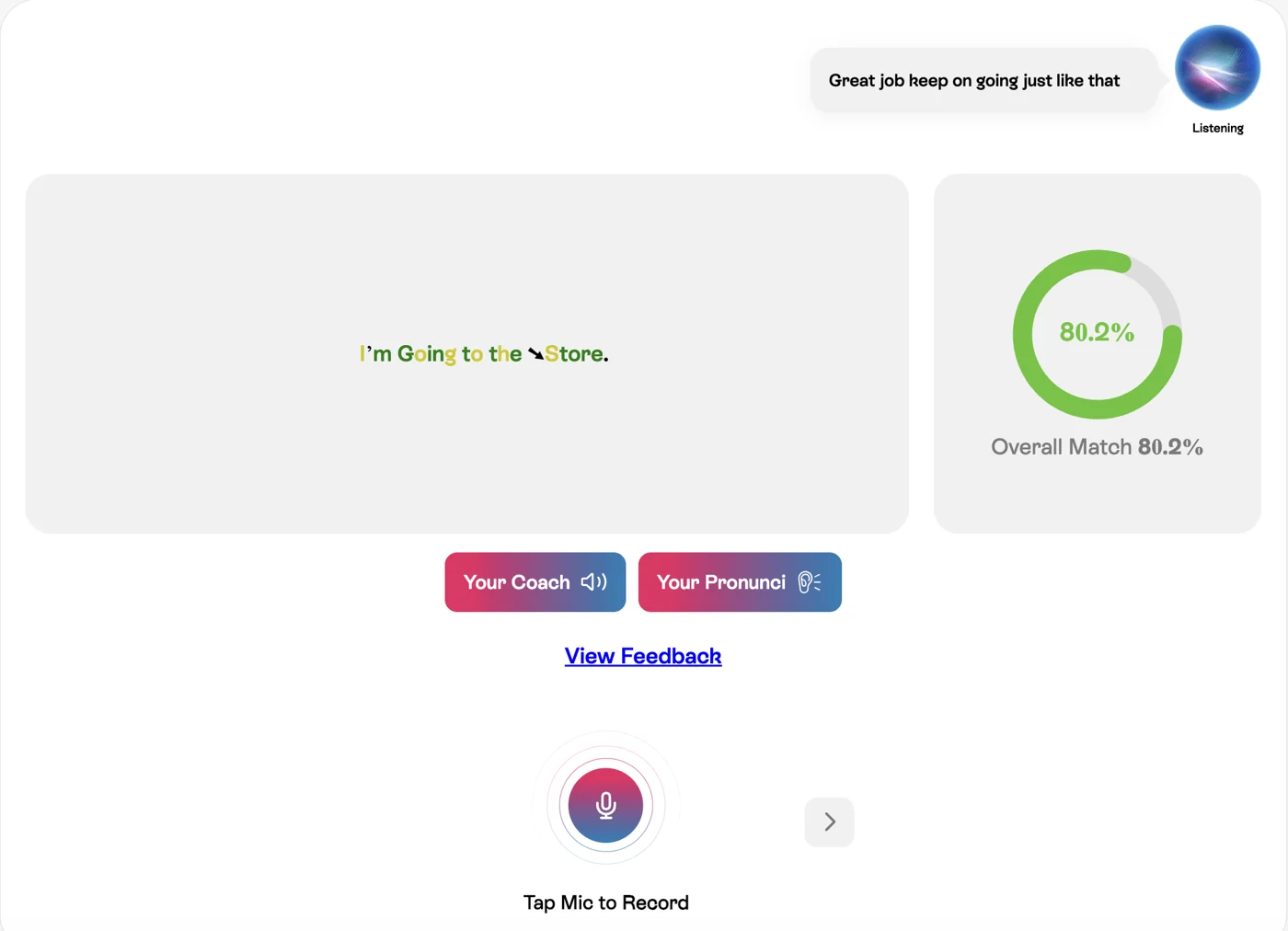
After practicing the intonation pattern, students move into InPronunci’s Evaluation & Feedback Mode to evaluate their speech.
The student records the sentence, and the AI Accent Coach provides feedback on pronunciation, intonation, rhythm, and melody.
The evaluation helps students identify which parts of their speech differ from the American pronunciation model and where additional practice may be needed.
Cognitive Accent Training: Learn to Recognize and Correct Your Own Intonation
Evaluation is not the final step of training.
With Your Coach vs. Your Pronunci, students listen to the American pronunciation model and their own recordings, compare the differences, and recognize where their intonation, rhythm, or melody needs attention.
The AI Accent Coach provides detailed feedback, while the comparison process helps students develop greater awareness of their own speech.
Students then return to practice, apply the corrections, and record again.
This is how InPronunci connects active intonation training with cognitive recognition and independent pronunciation correction.
- Record your sentencePractice the intonation pattern, then record your speech in Evaluation & Feedback Mode.
- Analyze your performanceReview the AI Accent Coach feedback and Overall Match score to identify areas for improvement.
- Compare, recognize and correctListen to Your Coach and Your Pronunci, identify differences, and repeat the training with greater awareness and control.
UnderstandExplorePracticeRecordCompareRecognizeCorrectImprove
Become an Independent English Speaker
Develop your American pronunciation through structured training, professional Pronunci Instructions, interactive practice, and detailed AI feedback.
Start with free Chapter 1 and explore how InPronunci guides you from individual sounds to natural American speech.
Sources
More than mechanics: InPronunci doesn’t teach only the mechanics of sounds. It teaches students how to become confident, fluent English speakers through a step-by-step system. Training may begin with how each American sound is made. Then it moves into sound combinations, sound contractions, phonetic exercises, practice sentences, and paragraphs in real rapid speech, so students start speaking English fluently and comfortably.
Questions & Answers
FAQ
01Can ESL students practice intonation with InPronunci at home?
Yes. Students can start with the free Chapter I, practice the sounds and intonation taught in class, and get AI Accent Coach feedback at home.
02How do you know if intonation is rising or falling?
Listen to the pitch on the final stressed syllable of the sentence. If it drops down and stays low, that’s falling intonation; if it lifts upward at the very end, that’s rising. Recording yourself and comparing it against a native speaker model, a method InPronunci: Accent Training App builds into its practice mode, makes the difference much easier to hear than trying to judge it live.
03What are the four types of intonation in English, with examples?
The main patterns are falling (➘), as in “I’m home ➘”; rising (➚), as in “Are you home ➚?”; fall-rise (➘➚), as in “I like it ➘➚, but…”; and rise-fall, used less often for strong emphasis or surprise. Falling intonation is the most common of the four, covering most statements, commands, and wh-questions.
04Can you give examples of rising intonation?
Rising intonation typically appears in yes/no questions (“Do you like coffee ➚?”), non-final items in a list (“I need eggs ➚, milk ➚, and bread ➘”), and situations expressing surprise or seeking confirmation, such as “You’re leaving ➚?” It’s also common in polite requests where the speaker wants to sound less direct, like “Could you help me ➚?”
05How do you pronounce “falling” correctly?
“Falling” is pronounced with stress on the first syllable, FALL ing, and the word itself is a useful practice target because its own two syllables can be said with a falling pattern when used at the end of a statement. Practicing stress placement on words like this is part of the same pitch control work covered in InPronunci’s American Accent Training Course.
Recommended

American English Question Intonation Explained | Inpronunci
Discover how American English question intonation explained can boost your communication skills. Learn pitch patterns for clear conversation!
American English Intonation: The Strategic Guide to Natural Speech in 2026
Stop sounding robotic. Master American English intonation to project confidence and authority. Our guide covers pitch and rhythm for persuasive business speech.
Mastering Intonation: The Strategic Melody of American English
Master American English intonation to project authority and confidence. Learn how strategic pitch and rhythm can transform your speech into a persuasive lead...