


Say BARR-uh-stər, three syllables with the stress locked on the first one. In General American, the transcription runs /ˈbɛrəstər/, and the OED confirms this exact three-syllable pattern with a U.S. form close to that. British English uses /ˈbærɪstə®/, a flatter first vowel with a non-rhotic ending. You can hear both versions directly through Cambridge Dictionary’s audio.
- General American: /ˈbɛrəstər/ (three syllables, stress on syllable one)
- British English: /ˈbærɪstə®/ (softer final “r,” different opening vowel)
- Quick respelling: BAIR-uh-stur
Correct barrister pronunciation depends on stressing the first syllable, reducing the following two, and tapping the medial “t” the way General American speakers naturally do.
Syllables and Stress: The Strong-Weak-Weak Rhythm of “Barrister”
Break the word into three parts: BARR, i, ster. The first syllable carries all the weight. Native speakers pronounce it strong and clear, then let the second and third syllables fade into a quick, relaxed schwa sound. That’s the rhythm you’re chasing: strong, weak, weak.

This pattern trips up a lot of learners because their first language might spread stress evenly across syllables. English doesn’t work that way. The unstressed syllables in “barrister” get shorter and lazier, almost swallowed in fast speech. Say it slowly first, then speed up until the weak syllables barely register.
Try this three-speed drill, using practical teacher-focused pronunciation resources like those from EBC’s Dr TEFL:
- Slow: BARR. i. ster. Pause between each syllable, exaggerating the first one.
- Normal: BARR-i-ster, spoken at a natural conversational pace.
- Conversational: BARR-stər, letting the middle vowel shrink almost to nothing, the way it sounds in a real sentence.
Pro Tip: Tap your finger once on the stressed syllable while you say the word. That physical cue trains your brain to feel the rhythm, not just hear it.
Once the strong-weak-weak feel clicks, the word stops sounding choppy and starts sounding natural, the way a native speaker tosses it into a sentence without thinking twice.
Phoneme-by-Phoneme: Lips, Jaw, Tongue, and Airflow
Every sound in “barrister” has a job. Here’s how to produce each one correctly.
- Initial /b/: Close your lips completely, build a little air pressure behind them, then release with a short burst of voiced sound. Keep it clean and short, not puffed.
- First-syllable vowel: In General American, this vowel sits between /ɛ/ and a slightly open shape, similar to the vowel in “berry.” Your jaw drops moderately, tongue stays mid-low and relaxed. British speakers use a tighter /æ/, closer to the vowel in “cat,” which is one reason the two accents sound different from the very first syllable.
- R-coloring: American English is rhotic, meaning you pronounce the “r” wherever it appears, including at the end. Curl the tongue tip slightly back without touching the roof of your mouth, and let that r-color bleed into the final syllable.
- Medial “t”: In fast, natural American speech, this “t” often becomes an alveolar tap, a quick flick of the tongue against the ridge behind your teeth rather than a fully released, aspirated “t.” That tap makes the word sound smoother and more native.
- Final syllable: A reduced vowel plus rhotic coloring, landing softly, almost like “-stər” trailing off.
Pro Tip: Practice the medial “t” by saying “water” and “butter” first. Once that tap feels automatic, drop it into “barrister” and notice how much smoother the word flows.
For a deeper breakdown of how American vowels shift shape depending on stress, InPronunci’s vowel guide walks through the mechanics sound by sound.
Structured American Accent Training Course
From Speech Organs Education to American Intonation
The InPronunci course is built step by step: every chapter prepares the next one, and by the end of the course students receive a certificate.
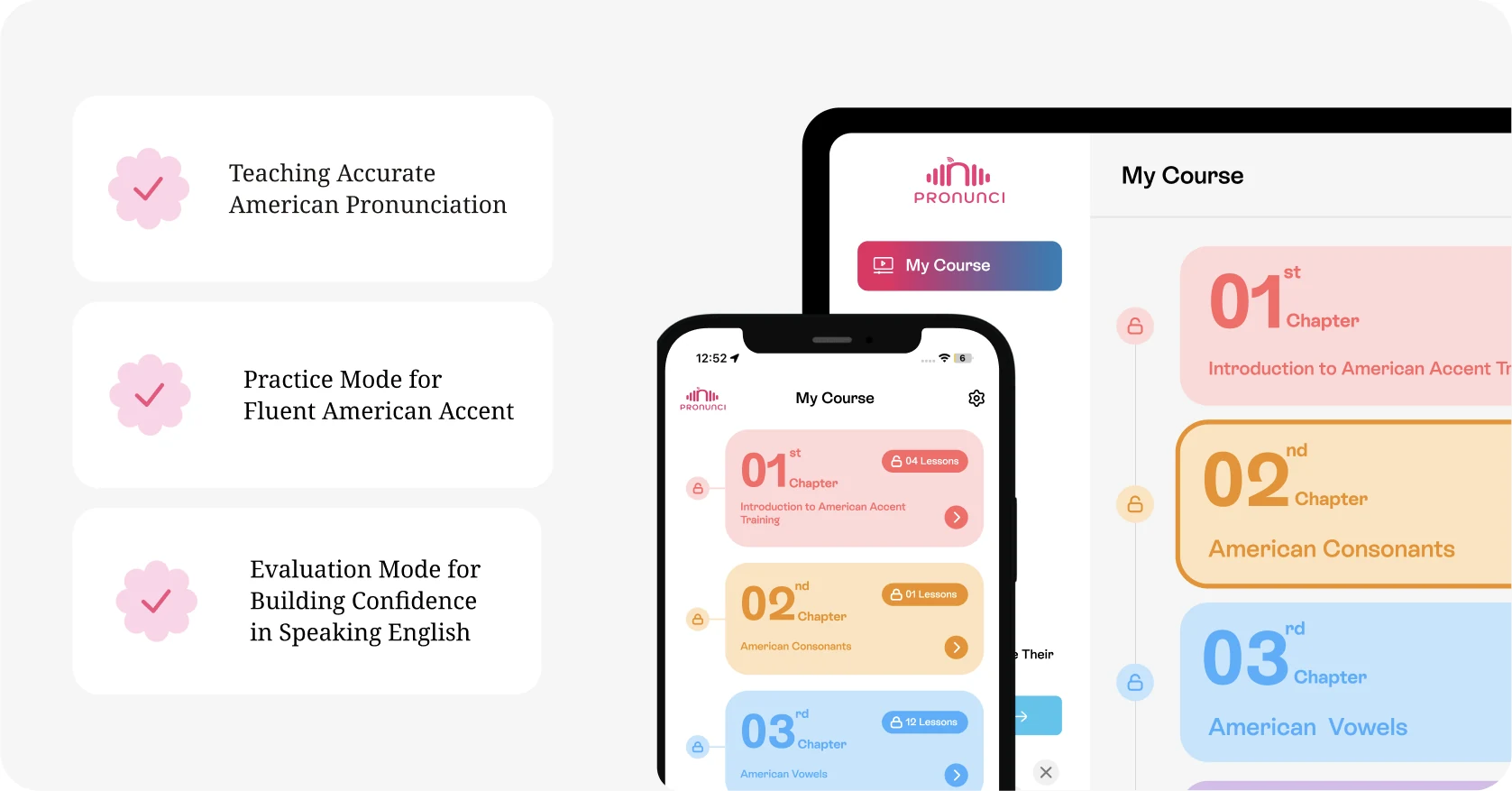
- Speech Organs EducationStudents learn how the speech organs work, along with the AI Accent Coach commands and feedback.
- American ConsonantsPractice and evaluate American consonants in phonetic exercises and practice sentences with the AI Accent Coach.
- American VowelsPractice and evaluate American vowels in phonetic exercises and practice sentences with the AI Accent Coach.
- IntonationLearn how intonation can change the meaning of what you say.
- CertificateBy the end of the course, students receive a certificate.
US vs UK: Concrete Differences and Which to Choose
The two versions differ in three predictable ways: the opening vowel, the “r” treatment, and overall rhythm.
- General American: /ˈbɛrəstər/, fully rhotic, every “r” pronounced.
- British RP: /ˈbærɪstə®/, non-rhotic, the final “r” dropped or barely audible.
- Example (US): “The barrister argued the case with confidence.” Notice the crisp final “r.”
- Example (UK): “The barrister argued the case with confidence.” Same sentence, softer ending, no audible final “r.”
If you’re aiming for professional communication in the United States, business calls, interviews, or academic presentations, General American is your target. If your goal leans toward UK-based legal or academic contexts, RP might fit your audience better. Either way, pick one model and stay consistent.
Practice Drills: Step-by-Step Exercises From Sound to Phrase
Repetition without structure wastes time. Follow this sequence instead.
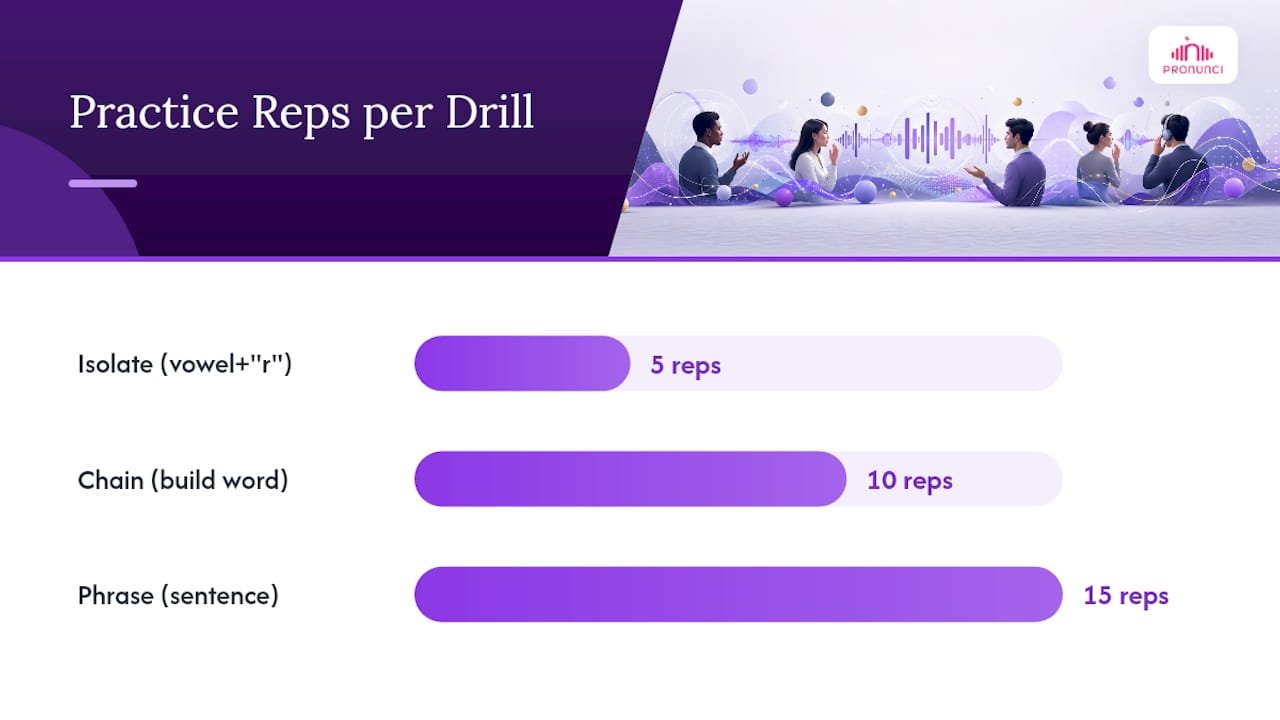
- Isolate: Say the vowel and “r” combination alone, “er… er… er,” five times, focusing on tongue curl.
- Chain: Build the full word slowly: BARR-i-ster, ten repetitions, increasing speed each time.
- Phrase: Drop the word into a full sentence and repeat it fifteen times at a natural pace.
Two phrase drills that force natural linking:
- “The barrister argued the case for hours.”
- “Her barrister explained the ruling clearly.”
Record yourself saying each phrase, then slow the playback to half speed and compare your rhythm against a native model. Listen specifically for whether your middle syllable is reduced enough, and whether your medial “t” sounds like a tap rather than a hard stop.
Pro Tip: Practice in short five-minute blocks, twice a day, rather than one long session. Phrase-level fluency matters far more than perfecting the isolated word. If you want a structured daily routine built around drills like these, InPronunci’s beginner practice plan lays out a full week of guided sessions.
Listening Resources and Corpus Examples
Hearing the word said correctly, repeatedly, and in context builds your ear faster than any written explanation.
- Cambridge Dictionary offers clean, downloadable native-speaker audio for both US and UK forms.
- YouGlish pulls real speech clips from video content, so you hear “barrister” used naturally across different speakers and accents.
- Search YouGlish by typing the word directly, then filter by accent to compare American and British speakers side by side.
- Loop short clips and shadow them, speaking along in real time, to train your rhythm against a live model.
Be selective. Some general video platforms host pronunciation clips with inconsistent quality or non-native speakers mislabeled as native models, so lean on dictionary or corpus audio first before trusting a random upload.
Expert Coaching Perspective: Why Precision Beats Repetition
Most learners assume pronunciation improves through sheer repetition, saying a word hundreds of times until it sticks. That assumption is only half right. Repetition without awareness of what your speech organs are actually doing tends to lock in bad habits just as easily as good ones.
The medial “t” in “barrister” is a perfect example. Most learners either over-pronounce it as a hard, aspirated stop or skip it entirely. Neither matches natural American speech. What works is training the tap, learning exactly where the tongue lands and how briefly it makes contact, before trying to reproduce it yourself. That’s the entire premise behind InPronunci’s Interactive Visual 2D Sound Simulator for the American [t] sound, which you can
.
Two cues worth trying right now: drop your jaw slightly more than feels natural on the first syllable, and keep your tongue tip loose and ready near the ridge behind your teeth for that quick tap. Add both into a five-minute daily block, and the word starts feeling automatic within a week rather than a month.
— Prof. Alex, Ph.D. Accent Coach
Turn This Into a Habit With InPronunci
Reading about the alveolar tap is one thing. Feeling your tongue produce it correctly, every time, is another. InPronunci: Accent Training App gives you exactly that gap between knowing and doing, structured lessons, 2D sound simulators, AI feedback, and native-speaker comparison, so words like “barrister” stop being guesswork and start being muscle memory.
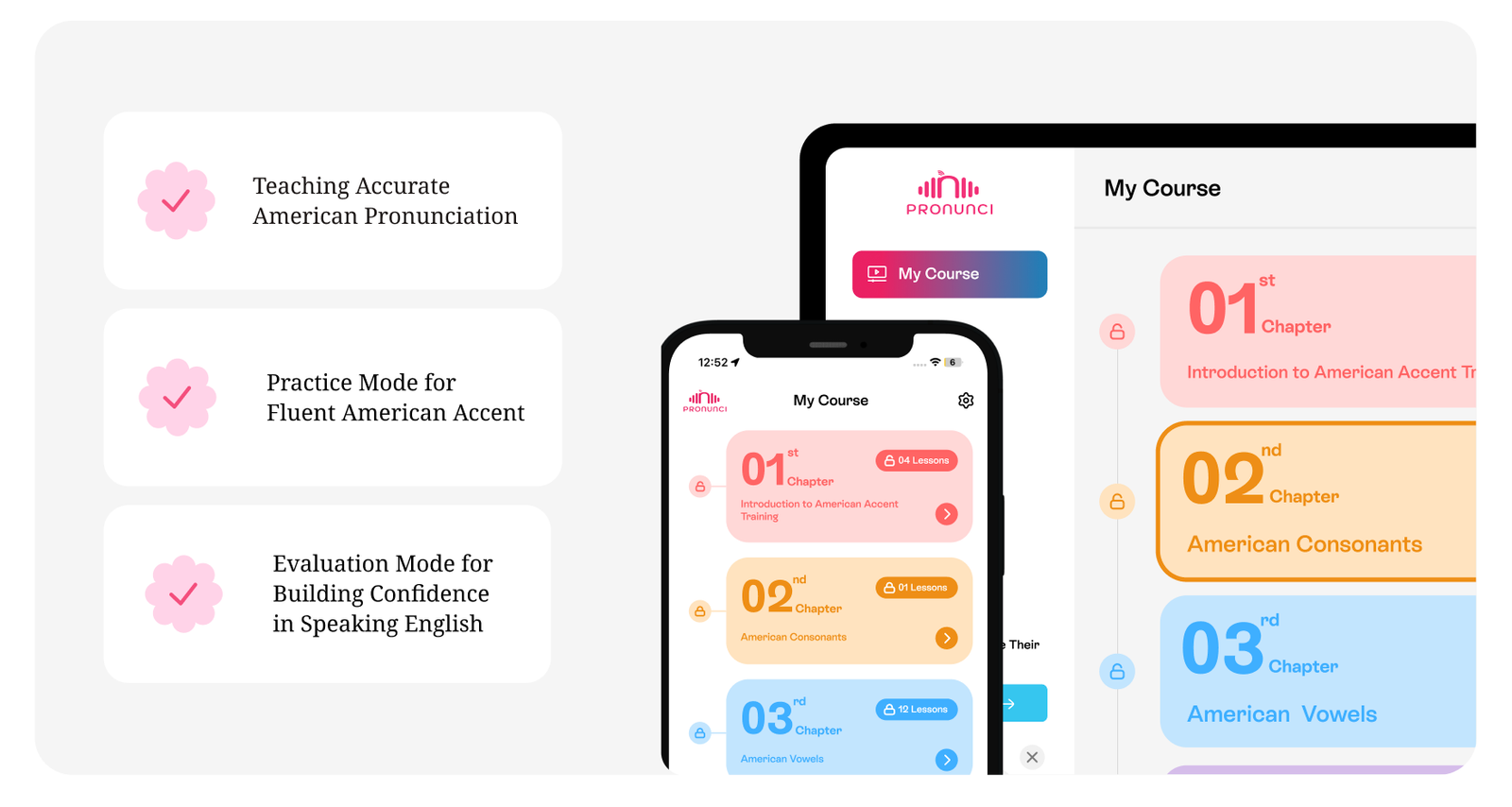
Start with the free onboarding chapter through the InPronunci: American Accent Training Course and spend seven days on nothing but syllable stress and the medial “t” tap. That single week of focused practice, backed by AI Accent Coach feedback comparing your recording against a native model, builds the kind of precision that repetition alone never delivers. Ready to hear the difference in your own voice? Download the app and try your first lesson today.
Cognitive Accent Training
Compare Your Coach vs. Your Pronunci
In every practice sentence, students listen to Your Coach, record their own voice, and compare it with Your Pronunci, so they consciously notice and correct each sound.
![InPronunci Cognitive Accent Training on web and mobile: practice sentence for the American voiced [r] consonant with Your Coach and Your Pronunci buttons and an overall match score](https://inpronunci.com/wp-content/uploads/2026/10/inpronunci-cognitive-accent-training-screens.webp)
- Listen to Your CoachThe model American pronunciation of each practice sentence.
- Compare with Your PronunciYour own recorded pronunciation, side by side with the coach.
- Correct with feedbackThe match score and color-coded letters guide each correction.
Get InPronunci on iPhone or Android, or explore the beginner accent training plan to build a full weekly routine around drills like these.
Sources
- How to pronounce BARRISTER in English — Cambridge Dictionary
- barrister_n — OED
- How to pronounce barrister in English — YouGlish
Questions & Answers
FAQ
01What Is the Definition of a Barrister?
A barrister is a lawyer, chiefly in the United Kingdom, who represents clients in court and specializes in courtroom advocacy, as opposed to solicitors who handle broader legal work outside court, according to Oxford Advanced Learner’s Dictionary.
02Is It “Barista” or “Barrister”?
They’re two completely different words. A barista makes coffee, pronounced buh-REE-stuh, while a barrister is a courtroom lawyer, pronounced BARR-uh-stər, and mixing them up is a common but easy-to-fix error for English learners.
03Is a Barrister a Judge or a Lawyer?
A barrister is a lawyer, not a judge, specifically one trained for courtroom advocacy and legal argument rather than sitting on the bench.
04What Is the American Word for Barrister?
The United States doesn’t split legal roles the same way the UK does; the closest American equivalent is simply “lawyer” or “trial attorney,” since American law doesn’t formally distinguish barristers from solicitors.
Recommended

InPronunci Accent Training App for Professional Communication
Improve American pronunciation with InPronunci, an accent training app using AI feedback, human guidance, and 2D Sound Motion Technology.

InPronunci AI Accent Coach: Pronunciation Feedback for Professional Clarity
Learn how to use AI pronunciation feedback to go beyond scores. Master your American accent and gain professional clarity with our guide to real-time adjustm...

InPronunci vs. BoldVoice: American Accent Training App Comparison
Compare InPronunci and BoldVoice for American pronunciation, intonation, rhythm, and connected speech, with Pronunci Instructions and AI Accent Coach.
Plans
What InPronunci costs
InPronunci Basic
$35 per month
Chapter 1 is free after signup.
InPronunci Premium
$200 per month
Includes a coach:
Why InPronunci is worth the price
- Interactive Visual 2D Sound Simulators, built on 2D Sound Motion Technology developed by Prof. Alex, train your speech organs for each American sound.
- Prof. Alex's guided instructions in every lesson, like working with a real coach.
- The Advanced AI Accent Coach evaluates sounds, intonation, rhythm, stress, and connected speech against native American English speech (100 = native speaker).