


Worcester is pronounced “WUSS-ter” in General American English, or /ˈwʊstɚ/ in IPA. The first syllable rhymes with “foot,” and the second syllable ends in the American rhotic sound, like the “er” in “sister.”
You can confirm this instantly by playing the audio clips at Cambridge Dictionary, which transcribes it as /ˈwʊs.tɚ/, or checking Wiktionary’s entry, which lists /ˈwʊstɚ/ as the standard U.S. form. Some sources also note /ˈwɪstɚ/ as a fast-speech variant.
- Plain English: WUSS-ter (rhymes with “foot” + “stir”)
- IPA: /ˈwʊstɚ/
- Syllables: 2, with stress on the first
- Quick cue: Say “foot,” then add “ster” without a hard “ces” sound
If you’re gearing up to say this word out loud in a meeting, a class, or a conversation with someone from Massachusetts, the fastest fix is training your mouth to skip the “ces” your eyes see on the page.
Worcester is pronounced /ˈwʊstɚ/, a two-syllable word with first-syllable stress, and the “-cester” spelling never produces a third syllable in speech.
Where to Hear and Verify Worcester’s Pronunciation
- Cambridge Dictionary offers IPA transcription and native-speaker audio for both US and UK forms.
- Oxford Learner’s Dictionaries confirms the two-syllable, first-stress pattern with its own audio clip.
- Wiktionary lists alternate transcriptions, including fast-speech variants, alongside the standard form.
- The Worcester Telegram & Gazette documents how local speech patterns differ from broadcast pronunciation.
How Do You Pronounce Worcester? A Phonetic Breakdown
Worcester carries two syllables, not three. Your eyes see “Wor-ces-ter,” but your mouth only needs to produce “WUS” and “ter.” That mismatch between spelling and sound trips up more readers than almost any other English place name.
The stress sits entirely on the first syllable. Dictionary transcriptions from Cambridge, Oxford, and Merriam-Webster all agree on this pattern, treating the word as a single stressed beat followed by an unstressed tail. If you’re new to how English marks emphasis in words like this, InPronunci’s guide on American English stress patterns breaks down why some syllables disappear entirely under stress rules.
Here’s the sound-by-sound sequence:
- /ʊ/ — the short vowel in “foot,” “put,” or “book.” Your jaw stays relaxed and your lips round slightly.
- /s/ — a clean hiss, tongue tip near the ridge behind your top teeth.
- /t/ — a light, quick tap, almost swallowed into the next sound.
- /ɚ/ — the American rhotic vowel, the same sound at the end of “tester” or “computer.”
Minimal pairs help train the ear before you train the mouth. Compare “Worcester” to “tester”: both end in that same /ɚ/ tail. Compare the first syllable to “wood” or “wolf,” and you’ll notice the vowel never stretches into the “or” sound your eyes expect from the spelling.
Pro Tip: Record yourself saying “foot” and “Worcester” back to back. If the first syllable of both words sounds identical, your vowel placement is correct.
For a deeper dive into isolating vowels like /ʊ/ before combining them with consonants, InPronunci’s guide to mastering American vowels walks through the mouth positions step by step.

Why Do Locals and Out-of-Staters Say Worcester Differently?
Not everyone lands on the exact same sound, and that’s normal. Worcester, Massachusetts has spawned its own small ecosystem of pronunciations, and which one you hear often depends on who’s talking and where they’re from.
- “Wuss-ter” — the standard General American form, used by national broadcasters and most dictionaries.
- “Wuh-stah” — a stylized, locally flavored version tied to New England speech patterns and regional identity.
- “Wooster” — an older or informal rendering that pops up in casual conversation and sometimes in writing.
- “War-chester” — a common mispronunciation from readers who haven’t heard the word spoken aloud.
Local reporting from the Worcester Telegram & Gazette found that sports announcers and news anchors tend to stick with the clipped “Wuss-ter” for clarity on air, while longtime residents sometimes lean into the stylized “Wuh-stah” as a marker of local identity or humor. Neither is wrong. They serve different social purposes.
Worcester isn’t unique to Massachusetts, either. Ohio, New York, and Pennsylvania all have small towns named Worcester, and pronunciation can drift slightly from one to the next depending on local custom. If you’re speaking in a professional or academic setting, the General American /ˈwʊstɚ/ is your safest, most universally understood choice.
Why Is Worcester Spelled With “-cester” but Pronounced “-ster”?
The gap between spelling and sound traces back to how English place names evolved over roughly a thousand years. “Worcester” comes from an Old English formation combining a tribal or personal name with “ceaster,” a borrowing from the Latin “castra,” meaning a fortified camp or military settlement.
Over centuries of spoken use, English speakers clipped that heavy “-ceaster” ending down to a quick, unstressed “-ster,” even though the written form preserved the older, fuller spelling. This is exactly why the word looks like it should have three syllables but only produces two.
- Worcester → WUSS-ter
- Leicester → LESS-ter
- Gloucester → GLOSS-ter
The pattern is consistent enough that dictionary editors treat it as a recognized rule for English town names, not an exception. Lexicographic sources tracing this shift, including a historical discussion at Grammarphobia, point to the same clipping process across all three names. Once you learn one, the others click into place fast.
How Do You Practice Saying Worcester Correctly?
Reading the IPA is one thing. Getting your tongue, jaw, and airflow to cooperate is another. Isolating each sound before you connect them is the same method Prof. Alex uses with clients working through the American vowel and consonant chapters inside InPronunci.
- Isolate the vowel. Say “foot,” “put,” and “book” five times each, keeping your jaw relaxed and lips slightly rounded. This locks in the /ʊ/ sound you need for the first syllable.
- Add the consonants slowly. Move from /ʊ/ to “woos,” then “woost,” then finish with the rhotic tail: “woos.ter.” Say each stage five to ten times before moving forward.
- Speed up to natural pace. Once the sequence feels smooth, say the full word at conversational speed ten times in a row, checking that the “ces” spelling never sneaks back into your pronunciation.
The tongue placement for that quick /t/ release, right before the rhotic /ɚ/, is where most learners lose clarity. Watching the articulation happen frame by frame, rather than just hearing it, is what makes the sound stick.
That’s exactly the gap InPronunci’s
was built to close. The demo for the American [t] sound shows tongue placement, airflow, and release timing in a way audio alone can’t capture, which matters here because the /t/ in Worcester is fast and easy to blur into the following vowel.
Pro Tip: Practice the word in front of a mirror. If you can see your tongue tap the ridge behind your top teeth for the /t/, then immediately drop into the /ɚ/ shape, you’ve nailed the transition.

For the full walkthrough alongside similar consonant drills, InPronunci’s How to Pronounce video library covers the /t/ sound and several others that show up constantly in American place names and everyday speech.
What Are the Most Common Worcester Mispronunciation Mistakes?
Most errors come from trusting the spelling over the sound.
- “War-ces-ter” (three syllables): happens when readers sound out every letter instead of following the clipped “-ster” pattern. Fix: drop straight to two syllables.
- “Wor-ces-ter” (heavy first vowel): comes from applying the “or” sound seen in “world” or “word.” Fix: use the short /ʊ/ from “foot” instead.
- “Wooster” as a formal pronunciation: not wrong socially, but it can read as overly casual in professional contexts. Fix: default to “Wuss-ter” for interviews, presentations, or academic settings.
Local stylizations like “Wuh-stah” are fine in casual, regional conversation. Switch to the neutral General American form whenever clarity matters more than local flavor.
A Linguist’s Take on Clarity Versus Local Flavor
Prof. Alex recommends the neutral General American /ˈwʊstɚ/ as the default target for most learners, since it’s understood everywhere and carries no regional baggage. Adopting a local variant like “Wuh-stah” can be a great choice once you’re already comfortable with the standard form and want to signal local identity or connect socially. Practice both with InPronunci, and you’ll have the flexibility to choose either one deliberately.
Try InPronunci’s Free Chapter to Practice This Sound Pattern
Reading about the /ʊ/ vowel and the rhotic /ɚ/ tail is a start, but real progress comes from watching your own mouth and comparing it against a native-speaker model. That’s the core of how InPronunci: Accent Training App works.
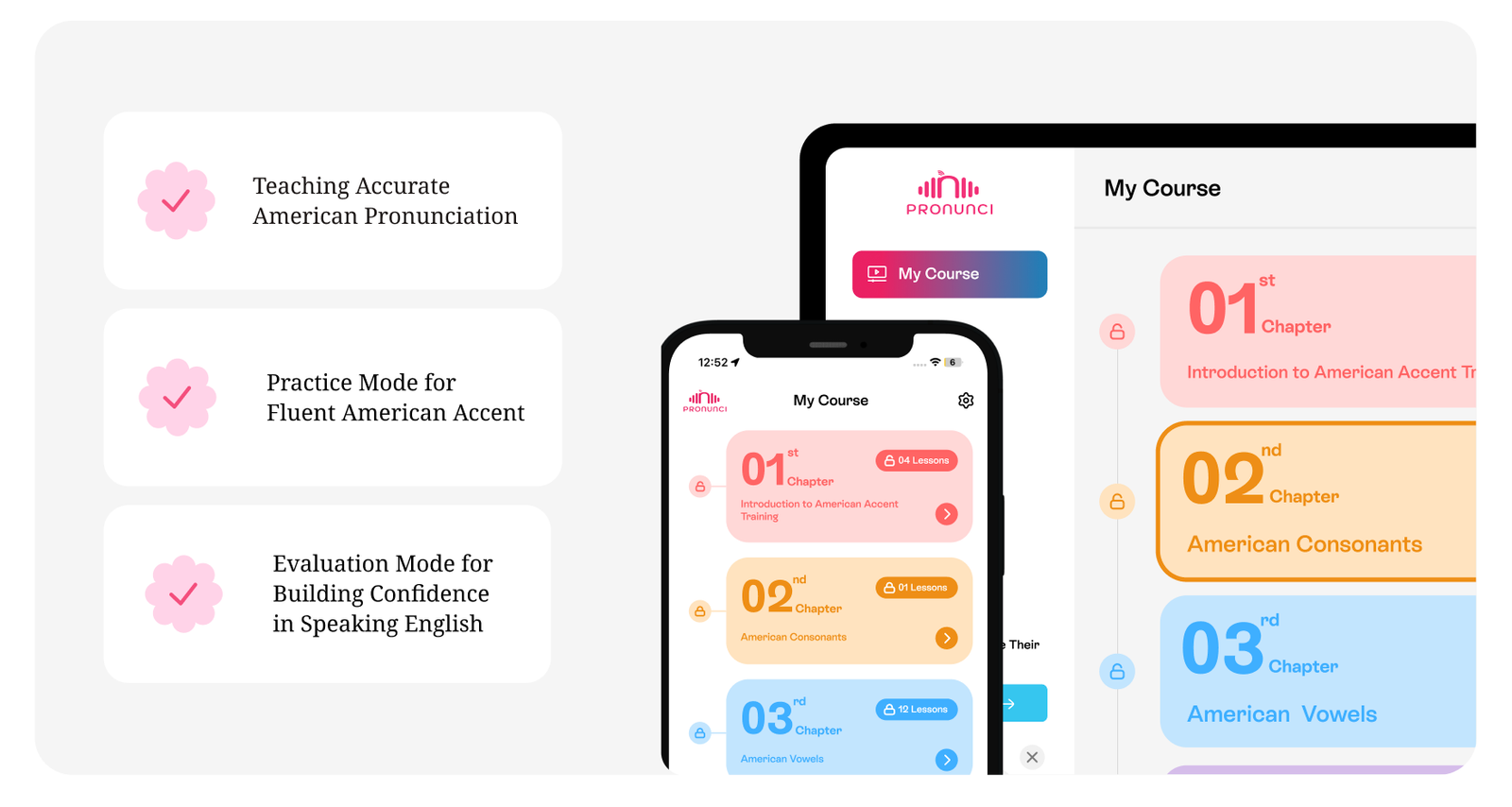
The free onboarding chapter gives you direct access to the tools used throughout this guide: the Interactive Visual 2D Sound Simulator for consonants like /t/, guided vowel drills covering /ʊ/ and other American vowels, and AI Accent Coach feedback that compares your recording against a native model so you know exactly where the sound drifts. Prof. Alex built the program’s four chapters, from speech-organ awareness through intonation and emphasis, so learners move from isolated sounds to fluent, natural speech instead of memorizing IPA symbols and hoping it sticks.
Structured American Accent Training Course
From Speech Organs Education to American Intonation
The InPronunci course is built step by step: every chapter prepares the next one, and by the end of the course students receive a certificate.
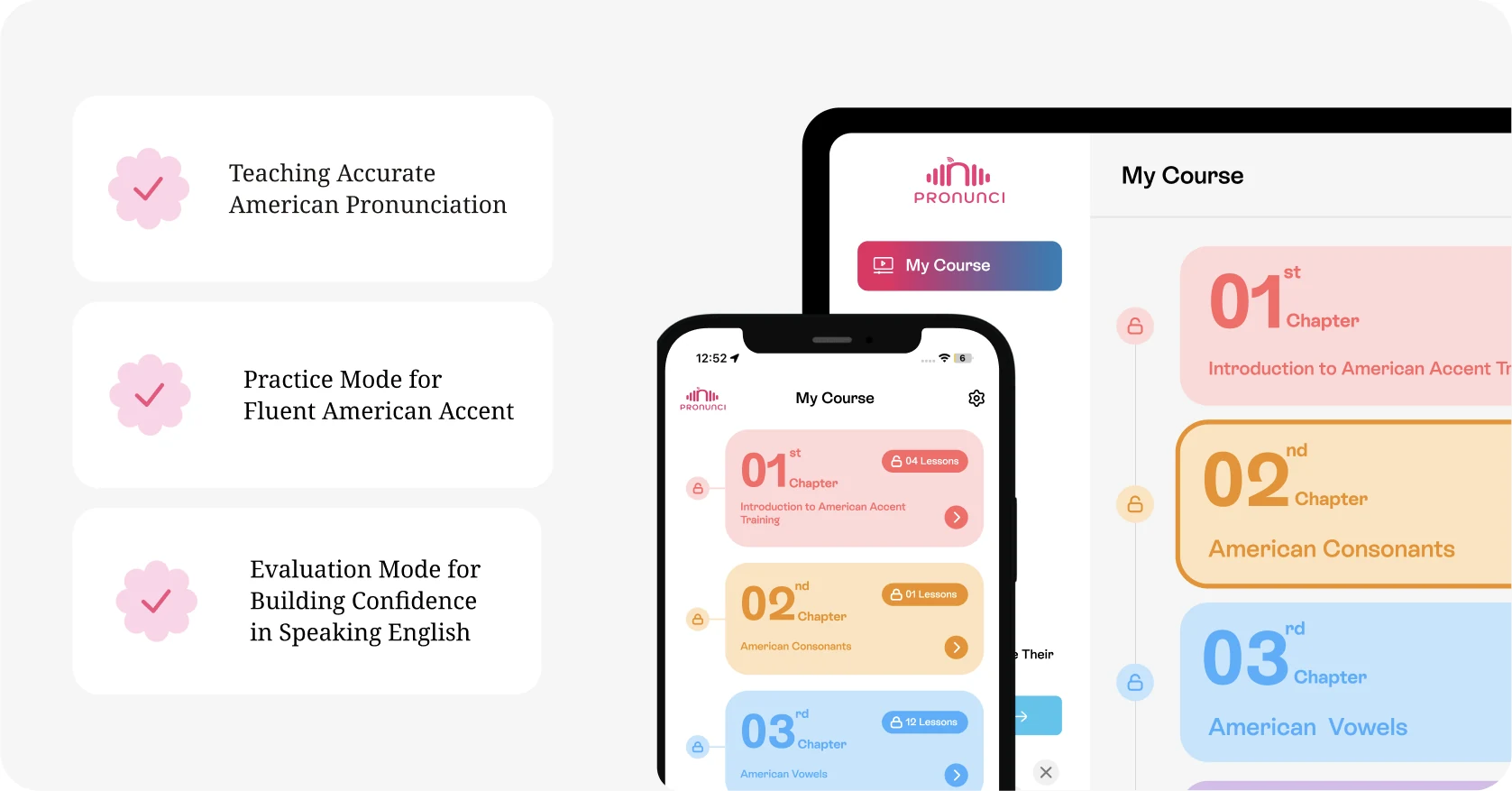
- Speech Organs EducationStudents learn how the speech organs work, along with the AI Accent Coach commands and feedback.
- American ConsonantsPractice and evaluate American consonants in phonetic exercises and practice sentences with the AI Accent Coach.
- American VowelsPractice and evaluate American vowels in phonetic exercises and practice sentences with the AI Accent Coach.
- IntonationLearn how intonation can change the meaning of what you say.
- CertificateBy the end of the course, students receive a certificate.
Start with the free chapter, then explore the full American Accent Training Course when you’re ready to build beyond single words into sentences and conversation.
Cognitive Accent Training
Compare Your Coach vs. Your Pronunci
In every practice sentence, students listen to Your Coach, record their own voice, and compare it with Your Pronunci, so they consciously notice and correct each sound.
![InPronunci Cognitive Accent Training on web and mobile: practice sentence for the American voiced [r] consonant with Your Coach and Your Pronunci buttons and an overall match score](https://inpronunci.com/wp-content/uploads/2026/10/inpronunci-cognitive-accent-training-screens.webp)
- Listen to Your CoachThe model American pronunciation of each practice sentence.
- Compare with Your PronunciYour own recorded pronunciation, side by side with the coach.
- Correct with feedbackThe match score and color-coded letters guide each correction.
Sources
- How to pronounce Worcester in English – Cambridge Dictionary
- Worcester – Wiktionary
- How do you pronounce Worcester? Everyone has an opinion – Worcester Telegram & Gazette
More than mechanics: InPronunci doesn’t teach only the mechanics of sounds. It teaches students how to become confident, fluent English speakers through a step-by-step system. Training may begin with how each American sound is made. Then it moves into sound combinations, sound contractions, phonetic exercises, practice sentences, and paragraphs in real rapid speech, so students start speaking English fluently and comfortably.
Questions & Answers
FAQ
01How Do Locals Pronounce Worcester?
Longtime Worcester, Massachusetts residents often use a stylized “Wuh-stah,” while news anchors and public speakers typically default to the clearer “Wuss-ter” form documented in local reporting.
02How Do Americans Say Worcester?
Most Americans outside Massachusetts say “WUSS-ter” (/ˈwʊstɚ/), matching the standard General American pronunciation found in Cambridge and Oxford dictionary entries.
03Why Is Worcester Pronounced Like “Wooster”?
The “-cester” ending descends from Old English and Latin “castra,” which got clipped to “-ster” over centuries of spoken use, even though the older spelling stuck around in writing.
04How Is Worcester Pronounced in Massachusetts?
Within Massachusetts, you’ll hear both the standard “Wuss-ter” and the locally stylized “Wuh-stah,” with the choice often depending on context and personal or regional identity rather than a single fixed rule.
Recommended

InPronunci: The Revolutionary American Accent Training App for Real Speech Transformation
Master the American accent for your career with the InPronunci App. Our 2026 guide shows how visual tech & AI feedback build executive vocal presence.

InPronunci vs. BoldVoice: American Accent Training App Comparison
Compare InPronunci and BoldVoice for American pronunciation, intonation, rhythm, and connected speech, with Pronunci Instructions and AI Accent Coach.
American Accent Training Course | InPronunci Curriculum
Explore InPronunci, a global American accent training course with AI feedback, human guidance, 2D Sound Motion Technology, vowels, consonants, and intonation.
Plans
What InPronunci costs
InPronunci Basic
$35 per month
Chapter 1 is free after signup.
InPronunci Premium
$200 per month
Includes a coach:
Why InPronunci is worth the price
- Interactive Visual 2D Sound Simulators, built on 2D Sound Motion Technology developed by Prof. Alex, train your speech organs for each American sound.
- Prof. Alex's guided instructions in every lesson, like working with a real coach.
- The Advanced AI Accent Coach evaluates sounds, intonation, rhythm, stress, and connected speech against native American English speech (100 = native speaker).