American Accent Training for Japanese Speakers
InPronunci: Accent Training App helps Japanese speakers develop natural American English speech by improving American pronunciation, intonation, melody, rhythm, connected speech, listening awareness, public speaking skills, and confident English communication.


Japan focus
Japanese speakers need more than topic-based English practice.
Many Japanese learners study English for years and can understand grammar, vocabulary, reading, and written communication. The challenge often appears in real speech: American pronunciation, sentence stress, rhythm, connected speech, intonation, melody, and the ability to speak clearly when the topic is not prepared.
Topic-based practice helps one situation.
Practicing interviews, meetings, presentations, travel English, or daily conversation can be useful. But real communication does not stay inside one prepared topic. Students need speech control that transfers to new questions, new meetings, new clients, new academic discussions, and unexpected conversations.
InPronunci trains the speech system behind every situation.
InPronunci helps students retrain the American sound system and American intonation patterns so they can speak more clearly across any topic. The goal is not memorized conversation. The goal is independent English communication with natural American speech.
Practice from the sound system
The most challenging American sounds for many Japanese speakers.
For many Japanese speakers, American pronunciation is difficult because English uses a different sound system. The goal is not to repeat words harder. The goal is to build new listening awareness, see how American sounds are formed, compare your voice with the model, and train the sound pattern until clearer speech becomes more natural.
Practice 1: American R and L
One of the biggest challenges for Japanese speakers is hearing and producing the difference between American R and L. Research on non-native speech perception has long shown that native Japanese speakers often struggle to discriminate English /r/ and /l/, which means the ear and the mouth both need training, not only explanation (Cortex research on Japanese speakers and English consonant perception).
How to practice in InPronunci:first train with the Interactive Visual 2D Sound Simulator for the target sound. Then listen to Your Coach, record My Pronunci, compare the two, and use AI Accent Coach evaluation to notice whether the sound is clear inside words and sentences.

Cognitive Accent Training
Compare Your Coach vs. Your Pronunci
In every practice sentence, students listen to Your Coach, record their own voice, and compare it with Your Pronunci, so they consciously notice and correct each sound.
![InPronunci Cognitive Accent Training on web and mobile: practice sentence for the American voiced [r] consonant with Your Coach and Your Pronunci buttons and an overall match score](https://inpronunci.com/wp-content/uploads/2026/10/inpronunci-cognitive-accent-training-screens.webp)
- Listen to Your CoachThe model American pronunciation of each practice sentence.
- Compare with Your PronunciYour own recorded pronunciation, side by side with the coach.
- Correct with feedbackThe match score and color-coded letters guide each correction.
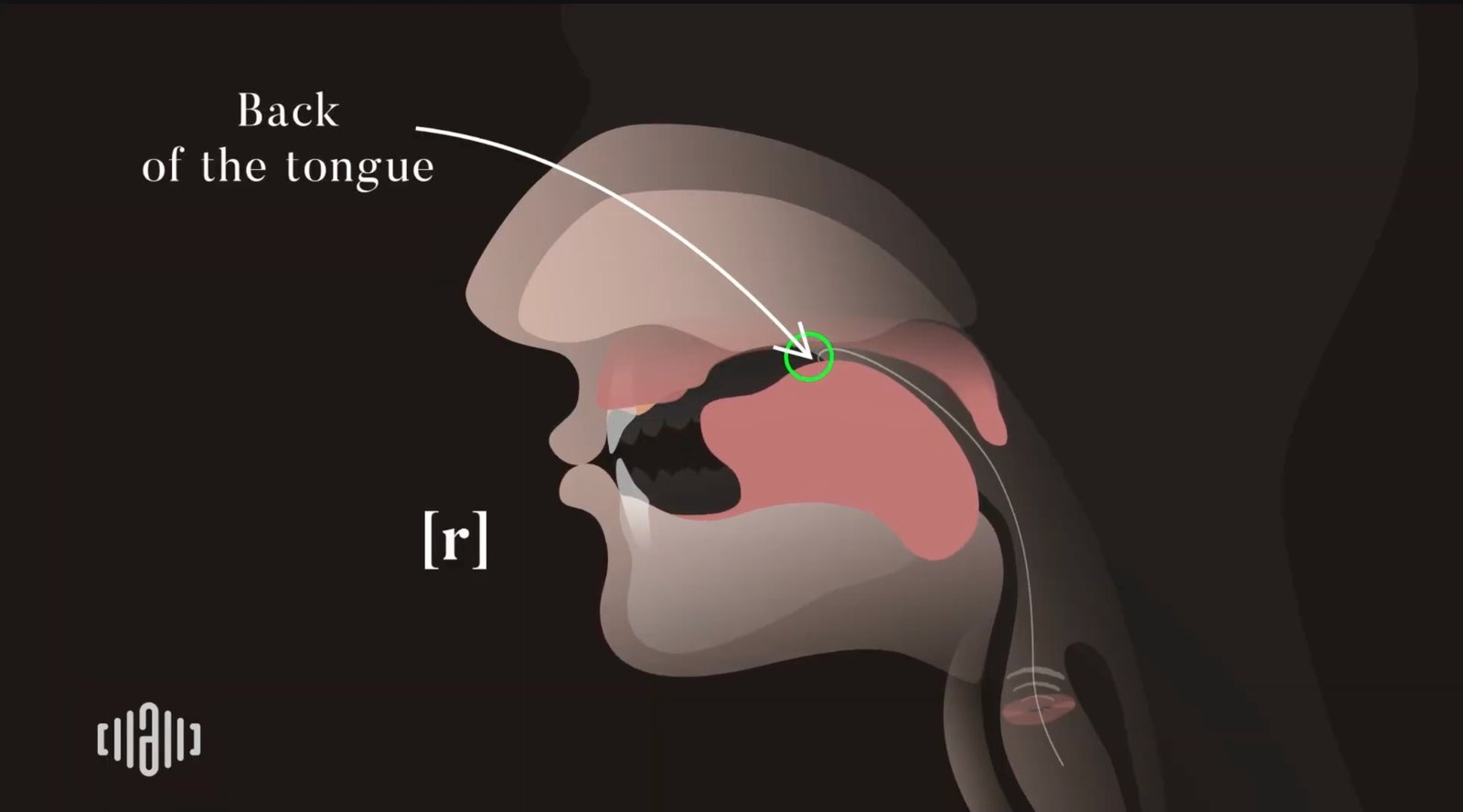
Use the Interactive Visual 2D Sound Simulator to train your R sound correctly.
American R sound
For the American R, lift the back of the tongue toward the upper back part of the mouth without touching the tooth ridge. Keep the tongue tense and slightly pulled back, round the lips lightly, and let the voice continue smoothly through the sound.
Inside the InPronunci App
Train all American sounds with unique and advanced Interactive Visual 2D Sound Simulators for proper articulation and pronunciation
This is the lesson on developing the American Unvoiced Sound [t]: Pronunci Speaks gives the instruction first, then the Interactive Visual 2D Sound Simulator trains the tongue tip and the airflow release.
- EffectiveMost apps offer visual learning. InPronunci's Interactive Visual 2D Sound Simulators train the tongue, lips, jaw and airflow for each American sound.
- ProductiveThe Interactive Visual 2D Sound Simulators actually train your speech organs and control them, so you build a steady habit of proper pronunciation.
- ResultsStudents pronounce individual American sounds with almost native-like pronunciation.
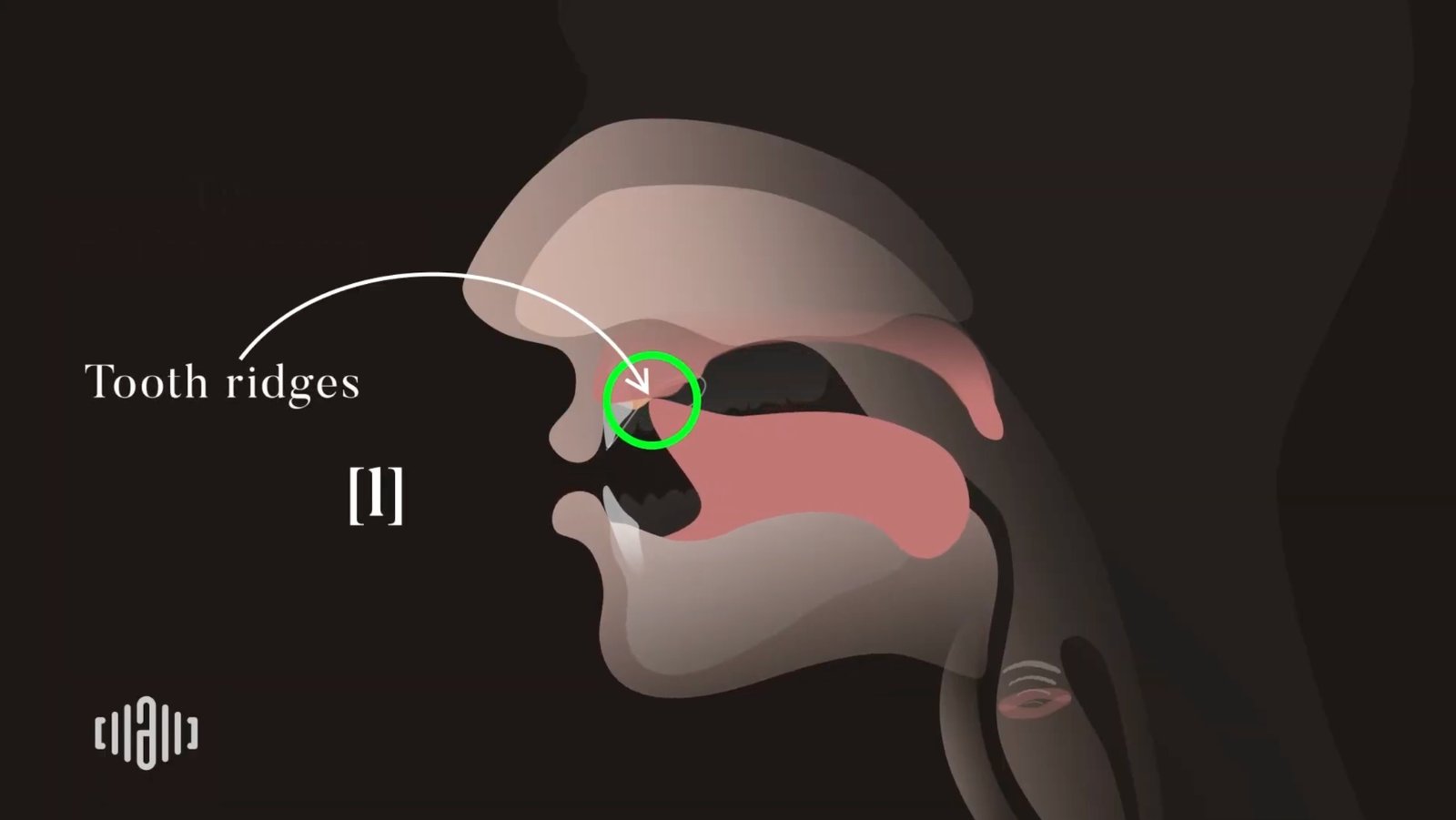
Use the Interactive Visual 2D Sound Simulator to train your L sound correctly.
American L sound
For the American L, place the tip of the tongue on the tooth ridge behind the upper front teeth. Keep the sides of the tongue relaxed so the air can pass around them, then release the sound clearly into the next vowel or word.
Phonetic exercise for R and L
- Listen first: hear the difference before speaking. Do not rush to repeat. Notice whether the word begins with the darker American R or the clearer American L.
- Practice minimal pairs:
- Phrase practice: right light, red line, clear road, really late, arrive early, correct rhythm.
- Sentence practice: The light train arrives at three. I really need a clear rhythm. Read the red line slowly, then say it naturally.
- InPronunci method: listen to Your Coach, record My Pronunci, compare the difference, correct the sound, and repeat until the R/L contrast becomes more automatic.
Practice 2: Consonant clusters and final consonants
Japanese speech often favors open syllables, so English consonant clusters and final consonants can feel unnatural. This can make words like street, asked, world, or first harder to pronounce clearly, especially in fast speech.
How to practice in InPronunci: slow the word down, identify the target consonants, listen to the native-speaker model, and repeat the full word without adding an extra vowel. Then move into Practice Mode with short phrases and sentences so the sound becomes useful in real communication.
Phonetic exercise for clusters and final consonants
- Remove the extra vowel: say street, not “su-to-reet”; first, not “first-o”; asked, not “as-ku.”
- Practice final consonants:
- Phrase practice: asked my client, first meeting, next project, world class, worked well.
- Sentence practice: I asked my first client in the meeting. The next project worked well.
- InPronunci method: practice the sound slowly first, then move into Practice Mode so the consonants stay clear inside real sentence flow.
Practice 3: Ship and Sheep vowel contrast
For many Japanese speakers, the difference between ship and sheep is difficult because American English uses vowel quality, tongue position, mouth tension, and length at the same time. This practice focuses only on the short /ɪ/ sound in ship and the longer /i/ sound in sheep.
How to practice in InPronunci:use the vowel simulator to train the difference, listen to Your Coach, record My Pronunci, and compare whether your vowel sounds shorter and more relaxed inship or longer and clearer in sheep. Then keep the contrast clear inside phrases and sentences.
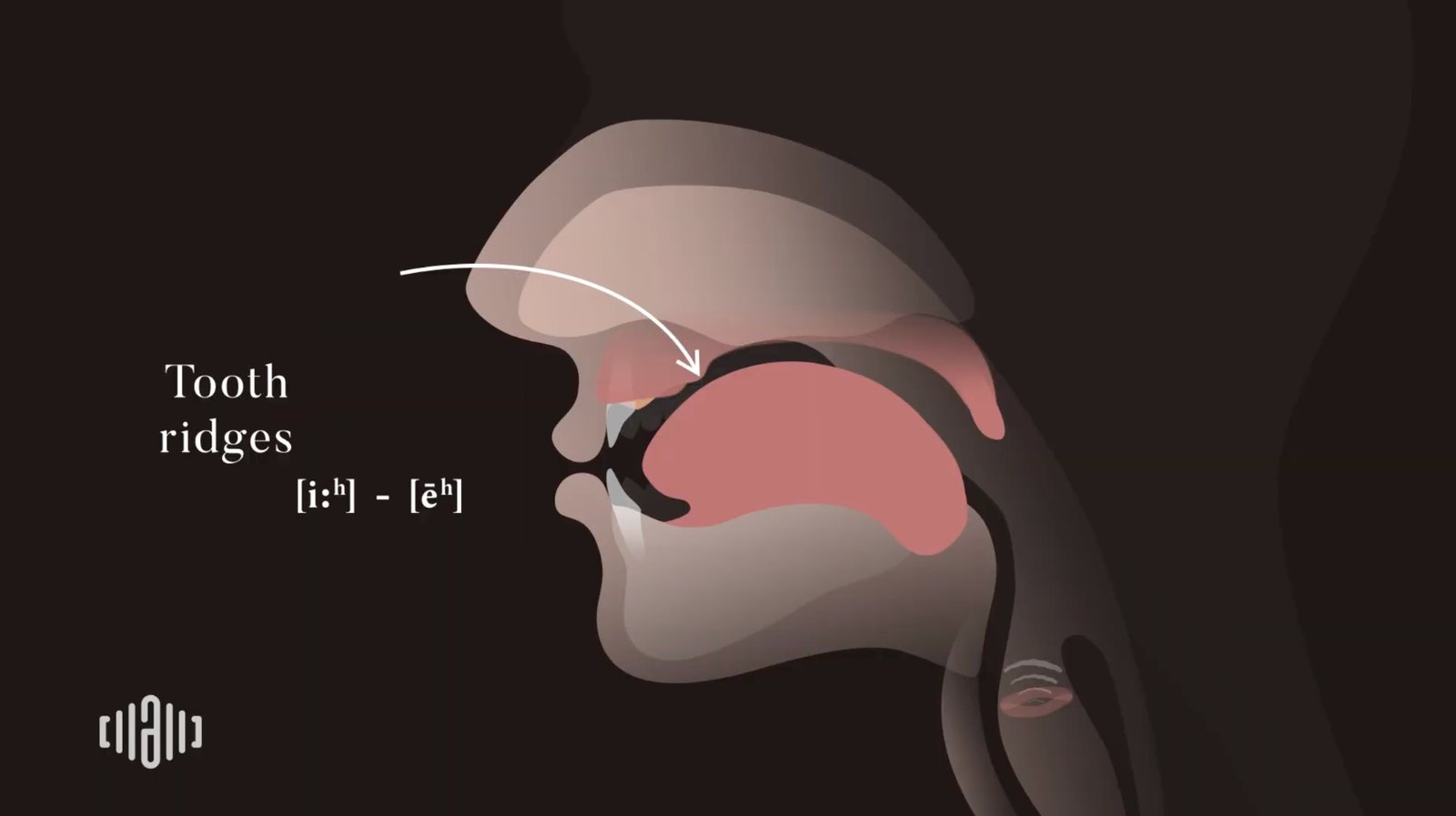
Use the Interactive Visual 2D Sound Simulator to train your SHEEP vowel correctly.
EE vowel in “sheep”
For the EE vowel in sheep, raise the tongue high and keep it tense. The mouth stays slightly spread, the vowel is longer, and the sound must feel clear and steady, not short or relaxed.
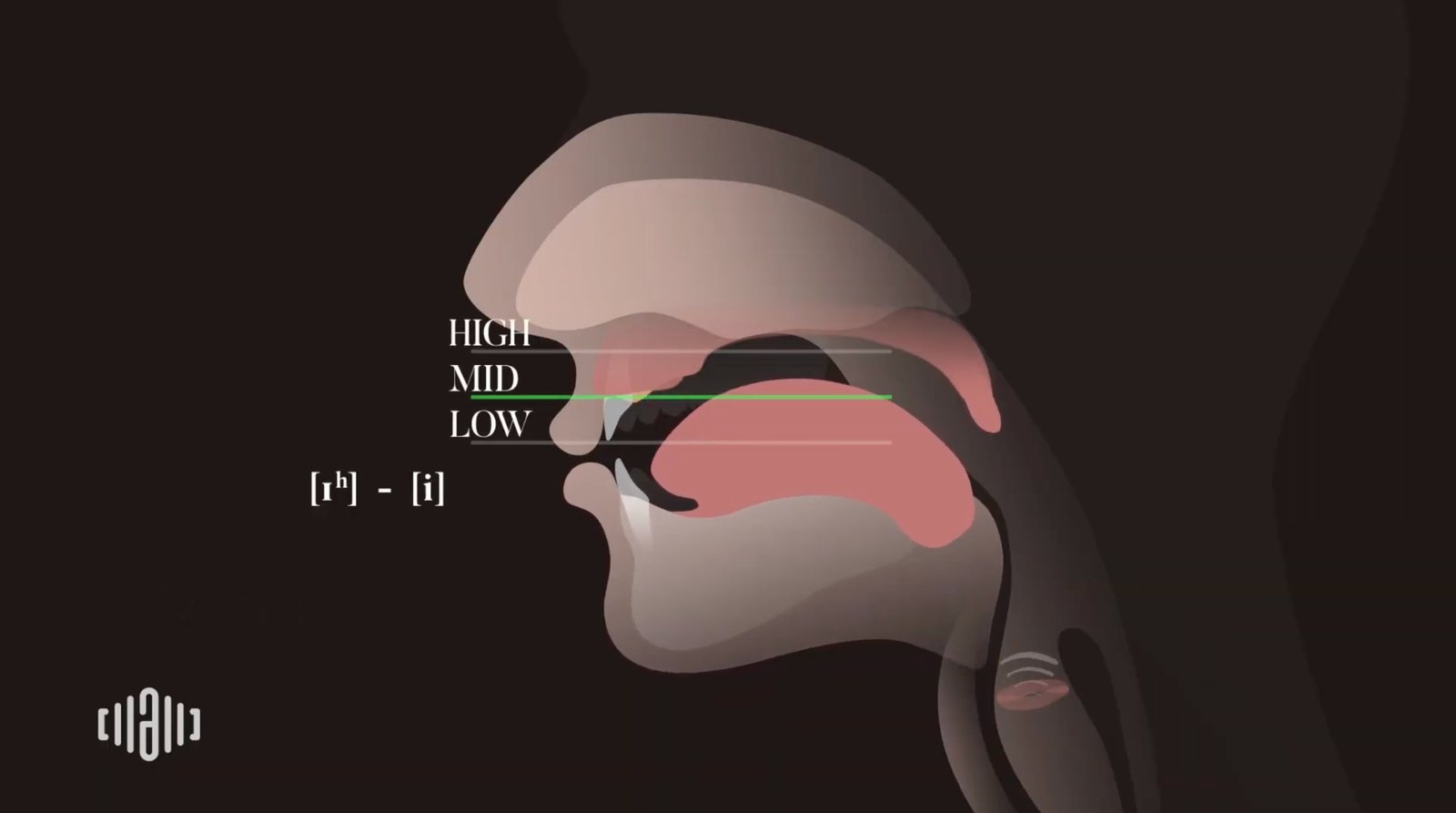
Use the Interactive Visual 2D Sound Simulator to train your SHIP vowel correctly.
Short I vowel in “ship”
For the short I vowel in ship, keep the tongue lower and more relaxed than the EE vowel. The sound is shorter, softer, and less tense, so it should not become the longer sheep vowel.
Phonetic exercise for ship and sheep
- Listen for vowel quality: ship uses a shorter, more relaxed vowel. sheep uses a longer, tenser vowel with a clearer high tongue position.
- Practice only this vowel contrast: use more examples of the same short /ɪ/ and long /i/ vowel difference.
- Phrase practice: a big ship, a white sheep, sit in the seat, hit the heat, fill and feel, still steel, a cheap chip, green grin.
- Sentence practice: The sheep is not on the ship. Sit in the seat. I can feel the difference when I say fill and feel. The chip is not cheap.
- InPronunci method: repeat the model, compare Your Coach vs. My Pronunci, and check whether AI Accent Coach evaluation hears the ship/sheep vowel contrast clearly.
Practice 4: TH, V, W, and sound accuracy
Sounds such as TH, V, and W may not feel natural at first because they require different speech-organ coordination and airflow control. These sounds affect professional speech clarity in words like think, this, very, work, and well.
How to practice in InPronunci: do not guess the mouth position. Use 2D Sound Motion Technology and Pronunci Instructions first, then record and evaluate. Practice the sound in words, short phrases, full sentences, and paragraph practice so the sound becomes part of your American speech system.
Phonetic exercise for TH, V, and W
- Separate the sound targets: TH needs airflow at the teeth, V needs voice and lower-lip contact, and W needs rounded lips with smooth release.
- Practice sound contrasts:
- Phrase practice: think clearly, this video, very well, work well, the right word.
- Sentence practice: I think the video will work well. This is very important for clear speech.
- InPronunci method:use 2D Sound Motion Technology to train the sound, follow Pronunci Instructions, record, compare, and correct with AI Accent Coach evaluation.
Practice from intonation
The most challenging American intonation patterns for many Japanese speakers.
American English does not sound natural only because of individual sounds. It also depends on sentence stress, pitch movement, rhythm, pauses, melody, connected speech, and emphasis. Studies on Japanese learners of English show that English intonation perception can be challenging, including rising patterns, and that visual pitch support can improve perception (Journal of Second Language Pronunciation).
Listen to Pronunci Instructions: train smoother American sentence flow.

Pronunci Instructions are Prof. Alex’s guidance through each lesson. This intonation practice helps students understand how to practice correctly, not just repeat words. American English should move through connected thought groups, not stop after every word. For many Japanese speakers, careful word-by-American speech training can sound precise, but it may also make English feel broken, tense, or less natural. The goal is to keep the important words clear, connect the smaller words, and speak the sentence with one comfortable breath.
Understand how separated word-by-word rhythm can affect American sentence flow, clarity, and confidence.
Use one comfortable breath: “I need to speak clearly in meetings and presentations.”
Practice 1: Stress the words that carry meaning
In American English, not every word has the same weight. Content words often carry the message, while smaller grammar words may become lighter. If every word receives equal force, the speech may sound careful but not natural.
How to practice in InPronunci: listen to the model sentence and mark the strongest words. Then repeat the sentence with the same stress pattern. Use AI Accent Coach evaluation to check pronunciation, rhythm, intonation, sentence flow, and overall clarity.
Practice 2: Train rising and falling pitch movement
American speech uses pitch movement to show whether the speaker is finishing a thought, asking a question, continuing an idea, emphasizing a contrast, or sounding confident. Japanese speakers may need focused practice to make American pitch movement more noticeable and communicative.
How to practice in InPronunci: repeat the native-speaker model with the same melody, not only the same words. Record My Pronunci, compare it with Your Coach, and adjust the pitch direction until the sentence sounds closer to the American model.
Practice 3: Build American rhythm and connected speech
American rhythm depends on strong and weak beats, linking, reductions, and smooth sentence flow. If each word is separated too much, the sentence may sound less natural even when the individual words are correct.
How to practice in InPronunci: practice the sentence in chunks. Listen to where the native-speaker model connects sounds, where the voice moves faster, and where the speaker pauses. Then repeat the sentence as one connected speech pattern.
Practice 4: Move from sentences to paragraph practice
Many students can pronounce a word correctly but lose clarity in longer speech. Paragraph practice helps Japanese speakers train American pronunciation, intonation, rhythm, melody, connected speech, and public-speaking clarity together.
How to practice in InPronunci: read the paragraph after the model, record yourself, listen again, compare the rhythm and melody, and repeat. The goal is stronger American speech habits that can transfer into meetings, interviews, presentations, and everyday communication.
The complete InPronunci system
All major InPronunci features for serious American accent training.
InPronunci combines structured lessons, visual sound development, guided practice, pronunciation comparison, and Advanced AI Accent Coach evaluation as you speak. The system is designed to help students become independent English speakers, not only repeat words for a score.
Speech-organ training technology that helps students see how American sounds move and work.
Video lessons with interactive simulators for American sound development and articulation control.
Students learn the speech organs and Accent Coach commands before training individual American sounds.
Lesson-by-lesson guidance that tells students how to practice and what to pay attention to.
Students repeat, listen, adjust, and build control before moving into evaluation.
Students evaluate their speech after practice and use feedback to adjust and repeat.
Students compare the native-speaker model with their own recording to notice differences consciously.
AI feedback across pronunciation, sound accuracy, intonation, melody, rhythm, connected speech, sentence flow, and speaking clarity.
For students who need clearer American pronunciation, listening awareness, intonation, and speech control.
For advanced speakers whose goal is closer-to-native American speech, stronger rhythm, melody, and public speaking control.
Structured training for American consonants and sound accuracy inside words, sentences, and speech.
Vowel training for clearer American sound contrast, listening awareness, and pronunciation control.
Training for American melody, rhythm, emphasis, word stress, sentence stress, and speech flow.
Practice for linking, reduction awareness, sentence flow, and more natural American English delivery.
Paragraph practice and longer speech tasks for presentations, meetings, academic speaking, and professional communication.
Students can train on mobile or computer depending on where they practice best.
Correct practice order
How Japanese speakers should use InPronunci.
InPronunci works best when students practice in the correct order. Students should not rush directly to the score. They should first build awareness, practice with the model, compare their voice, evaluate, adjust, and repeat.
Learn speech organs
Start with Speech Organs Education and Accent Coach commands.
Follow instructions
Use Pronunci Instructions to understand the lesson goal.
Train with the simulator
Develop American sounds with Interactive Visual 2D Sound Simulators.
Practice deeply
Use phonetic exercises, sentence practice, speaking drills, and paragraph practice.
Compare your voice
Use Your Coach vs. My Pronunci to hear and notice the difference.
Evaluate and repeat
Use AI Accent Coach evaluation, adjust, and repeat until control improves.
AI Accent Coach
The AI does not only score one sound or one word.
Advanced AI Accent Coach evaluation as you speak checks full speech performance while students practice phonetic exercises, speaking drills, sentence practice, and paragraph practice. It evaluates American pronunciation, sound accuracy, intonation, melody, rhythm, connected speech, sentence flow, and overall speaking clarity. Students should read the AI Accent Coach Guidelines before using evaluation so they understand how to practice first and evaluate second.
Practice before evaluation
Use Practice Mode multiple times before trusting the score. The goal is to match pronunciation, rhythm, melody, and intonation with the native-speaker model.
Intermediate evaluation
For students building clearer pronunciation, stronger listening awareness, and better control of American rhythm and intonation.
Advanced evaluation
For speakers who already communicate in English but want closer-to-native speech, stronger sentence flow, and more controlled public speaking.
InPronunci helps Japanese speakers move beyond memorized topics by developing the American sound system, intonation patterns, rhythm, connected speech, and public speaking control behind real communication.
Structured training content
400 lessons, 150 exercises, 392+ sentences, and 25 paragraph practices.
The course gives Japanese speakers a structured American accent training path from sound awareness to real speech. Students develop individual American sounds, then move into phonetic exercises, sentence practice, speaking drills, paragraph practices, intonation, connected speech, and public speaking skills.
Structured American Accent Training Course
From Speech Organs Education to American Intonation
The InPronunci course is built step by step: every chapter prepares the next one, and by the end of the course students receive a certificate.
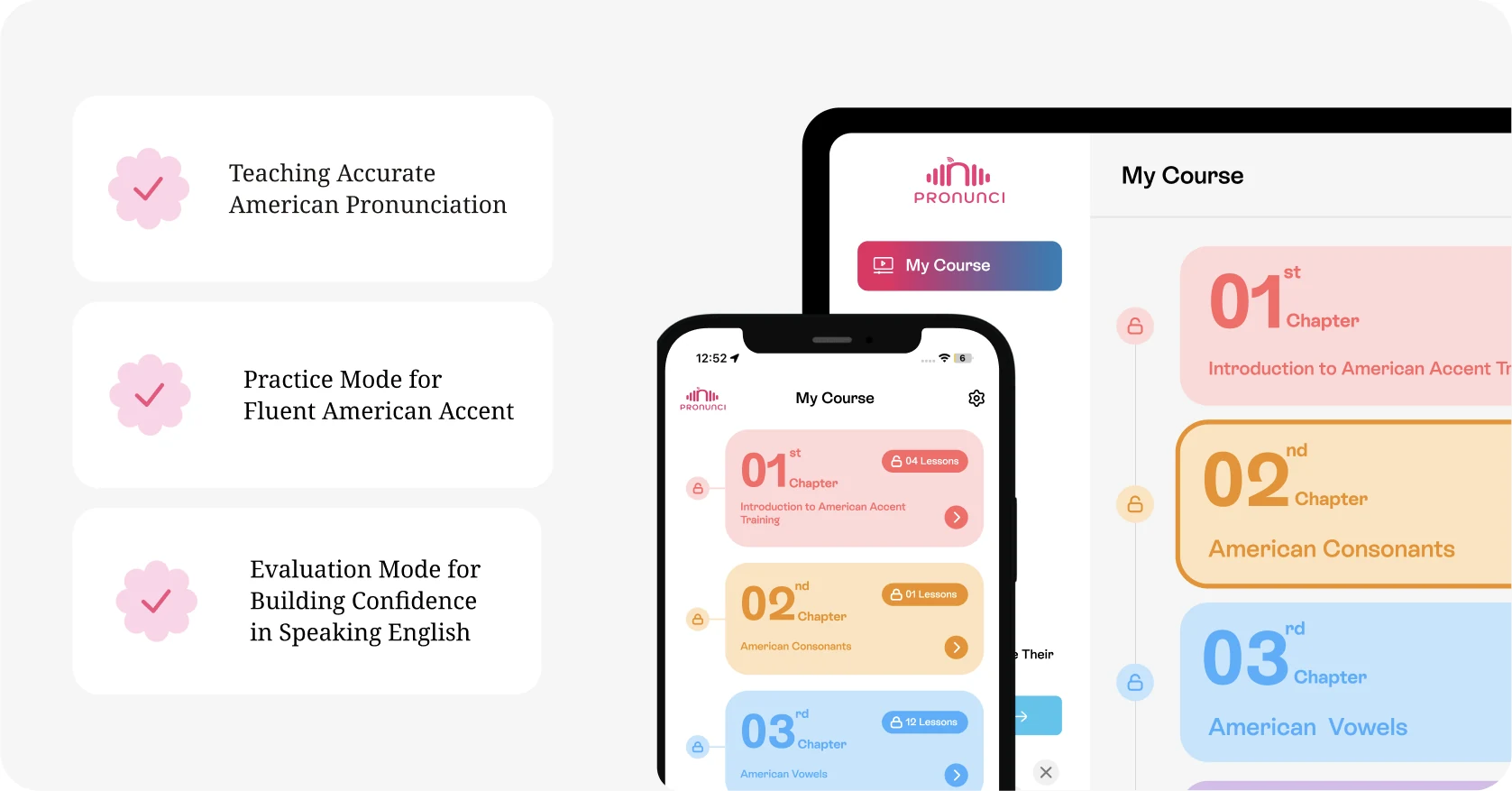
- Speech Organs EducationStudents learn how the speech organs work, along with the AI Accent Coach commands and feedback.
- American ConsonantsPractice and evaluate American consonants in phonetic exercises and practice sentences with the AI Accent Coach.
- American VowelsPractice and evaluate American vowels in phonetic exercises and practice sentences with the AI Accent Coach.
- IntonationLearn how intonation can change the meaning of what you say.
- CertificateBy the end of the course, students receive a certificate.
400 structured lessons
A full American accent training course designed for systematic self-learning.
150 phonetic exercises
Linguistically designed and methodologically structured exercises for controlled American sound practice.
392+ speaking sentences
Sentence practice for pronunciation, rhythm, stress, connected speech, and clearer speech flow.
25 paragraph practices
Paragraph practice for longer speech, presentations, public speaking, and professional communication.
Consonants, vowels, intonation
American consonant training, American vowel training, American intonation, melody, rhythm, and emphasis training.
Listening and speaking skills
Practice that builds stronger listening awareness, speech clarity, speaking control, and confidence.
Japan SEO, GEO, and AI search visibility
American accent training for Japanese speakers in Japan and around the world.
This guide is written for Japanese ESL speakers, TOEFL Speaking students, TOEFL Listening students, university students, professionals, researchers, engineers, doctors, entrepreneurs, executives, interpreters, translators, and advanced English speakers who want clearer American pronunciation and stronger English communication.
People searching for English pronunciation training for Japanese speakers, American accent training Japan, ESL pronunciation practice, TOEFL Speaking pronunciation, TOEFL Listening improvement, R and L sound practice, American vowel practice, American consonant practice, Japanese accent in English, or common Japanese English pronunciation mistakes can use this guide to understand what to practice and how InPronunci supports structured training.
For TOEFL Speaking and Listening students in Japan
InPronunci helps Japanese ESL speakers train pronunciation, listening awareness, rhythm, intonation, connected speech, and speech clarity for TOEFL Speaking and TOEFL Listening preparation. Students can practice R and L sounds, American vowels, consonants, word endings, sentence stress, and American speech flow so English becomes easier to understand and easier to hear.
Common English pronunciation mistakes Japanese speakers make
Many Japanese speakers need focused practice with American R and L sounds, consonant clusters, final consonants, TH, V, W, short and long American vowels such as ship and sheep, stress timing, pitch movement, and connected speech. The goal is not only to know the rule, but to retrain the sound system through visual, guided, and evaluated practice.
For Japanese professionals and global communication
This article supports Japanese professionals in Tokyo, Osaka, Yokohama, Nagoya, Kyoto, Kobe, Fukuoka, Sapporo, Sendai, Hiroshima, Chiba, Saitama, Kawasaki, Shinjuku, Shibuya, Roppongi, Marunouchi, and around the world who need clearer English pronunciation for meetings, presentations, interviews, client calls, research talks, medical communication, engineering teams, business negotiations, and public speaking.
Science supports pronunciation training
Pronunciation training can improve intelligibility, fluency, and spontaneous speech.
A comprehensive meta-analysis of 86 pronunciation instruction studies found that pronunciation instruction produced strong, consistent improvement for second language learners across intelligibility, fluency, and spontaneous speech. This supports the InPronunci learning logic: students should train the sound system, not only memorize topics or repeat isolated words. Lee, Jang & Plonsky, Applied Linguistics, 2015.
FAQ
American accent training for Japanese speakers: common questions.
What is the best American accent training app for Japanese speakers?
The best app for a Japanese speaker trains R and L, the vowels Japanese does not have, and final consonants without an added vowel, and then trains American stress and intonation. InPronunci: Accent Training does this as a structured American accent course created by Prof. Alex, Ph.D. Accent Coach: Interactive Visual 2D Sound Simulators train articulation for each sound, Pronunci Speaks gives instructions before every exercise, and the AI Accent Coach gives feedback on each recording.
Is InPronunci only for beginners?
No. InPronunci is especially useful for intermediate and advanced speakers who already know English but want clearer American pronunciation, stronger intonation, better rhythm, connected speech, and more confident public speaking.
Why is InPronunci different from topic-based English practice?
Topic-based practice helps students rehearse one situation. InPronunci goes beyond that by helping students develop the American sound system and intonation patterns that support any topic, including new and unexpected conversations.
Why are Interactive Visual 2D Sound Simulators important?
They train students in how American sounds are produced, understand speech-organ movement, and practice sound development more consciously before evaluation.
Should students read the AI Accent Coach Guidelines?
Yes. Students should read the AI Accent Coach Guidelines before using evaluation because the AI Accent Coach works best when students practice first, compare carefully, evaluate second, adjust, and repeat.
Can InPronunci help Japanese TOEFL Speaking and Listening students?
Yes. InPronunci can support Japanese TOEFL students by training American pronunciation, listening awareness, sentence stress, rhythm, intonation, connected speech, and speech clarity. This helps students hear American English more accurately and speak more clearly during TOEFL Speaking practice.
What are common English pronunciation mistakes Japanese speakers make?
Common challenges include American R and L sounds, consonant clusters, final consonants, TH, V, W, short and long vowel contrasts such as ship and sheep, stress timing, pitch movement, and connected speech. InPronunci organizes these challenges into visual, guided, and evaluated practice.
How should Japanese speakers practice American R and L sounds?
Japanese speakers should practice R and L as separate American sound patterns, not just as spelling differences. Interactive Visual 2D Sound Simulators train the tongue, lips, jaw, teeth, airflow, and voice, while Pronunci Instructions, Practice Mode, and Your Coach vs. My Pronunci help students hear, compare, and adjust each sound more consciously.
Can Japanese professionals use InPronunci for meetings and presentations?
Yes. Japanese professionals can use InPronunci to build clearer American pronunciation, stronger intonation, better rhythm, more confident public speaking, and clearer speech for meetings, interviews, presentations, client communication, research talks, and global business conversations.
Does InPronunci help with American vowels and consonants?
Yes. InPronunci includes structured American consonant training, American vowel training, intonation and emphasis training, practice sentences, speaking drills, paragraph practice, and AI Accent Coach evaluation so students can apply sounds inside real speech.
Start InPronunci
Train American speech for any topic, not only one situation.
Develop American pronunciation, intonation, melody, rhythm, connected speech, sentence flow, public speaking skills, and confidence with a structured American Accent Training App.
InPronunci training structure
How InPronunci trains the American speech system
InPronunci trains the full American speech system: Interactive Visual 2D Sound Simulators and phonetic exercises for articulation and American sound development, sentence practice for intonation, melody, rhythm, and connected speech, paragraph practice for spontaneous speech, public speaking, and real communication confidence, and Advanced AI Accent Coach evaluation as you speak.
InPronunci is an advanced, linguistically structured American accent training platform with more than 1,000 downloads and a growing learner base. It is designed for serious ESL learners who want American pronunciation, stronger intonation, more natural rhythm, better connected speech, and the ability to speak English more confidently in real communication. The program is especially useful for intermediate and advanced English speakers who want to become independent speakers of English with confident communication, stronger speaking control, long-term speech improvement, and great public speaking skills. It is also designed for advanced speakers whose goal is to speak like a native or closer to native-like American speech, including people who were raised in the United States but still have slight accent patterns from the native language they were born with. It is a complete American accent training course and system created by Prof. Alex, Ph.D. Accent Coach, Doctor of Education, and professional linguist based in Austin, Texas, with Pronunci Instructions from Prof. Alex for each lesson that make self-learning more effective, supported, and clear.
Plans
What InPronunci costs
InPronunci Basic
$35 per month
Chapter 1 is free after signup.
InPronunci Premium
$200 per month
Includes a coach: