


American intonation patterns for professionals are the pitch changes in speech that signal meaning, authority, and intent beyond the words themselves. Linguists define intonation as the melodic contour of an utterance, and in American English, four core pitch patterns carry this load: falling, rising, fall-rise, and rise-fall. Getting these patterns right is not a cosmetic upgrade. 63% of U.S. executives perceive a speaker as uncommitted when rising intonation appears on statements, compared to only 11% when falling intonation is used correctly. For non-native professionals in meetings, interviews, and client-facing roles, that gap in perception is the difference between being heard and being dismissed.
What are the four core American intonation patterns and how do professionals use them?
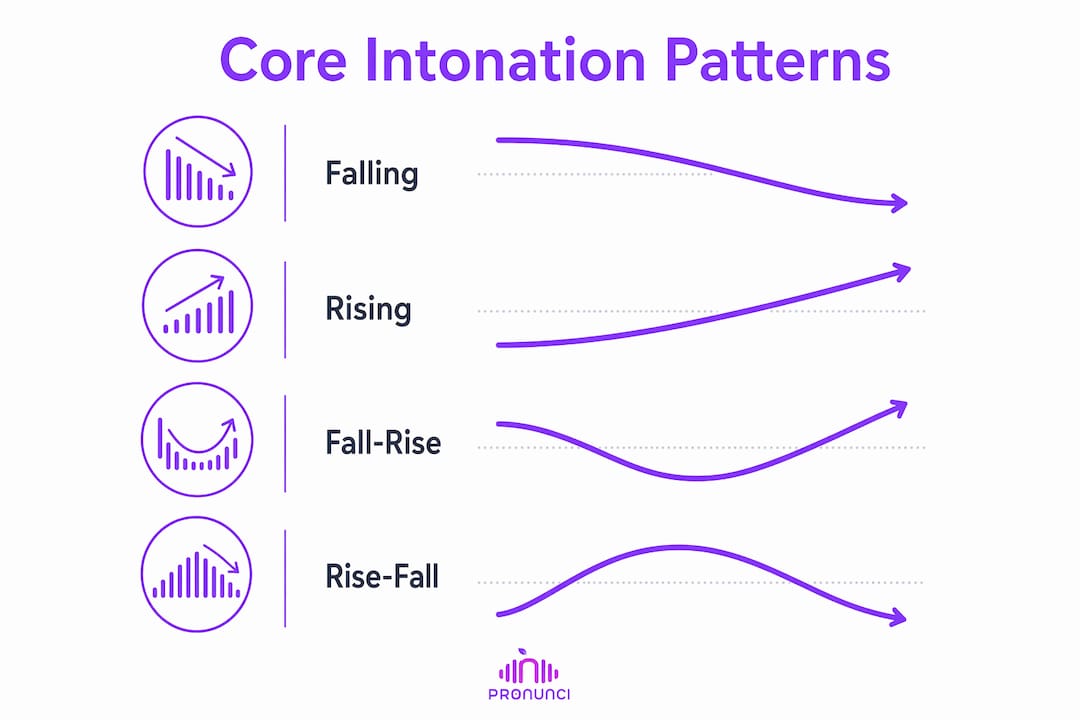
The four core American English intonation patterns are falling, rising, fall-rise, and rise-fall. Each one signals a different communicative intent, and misusing them sends the wrong message regardless of your word choice.
- Falling intonation is the pitch dropping from high to low at the end of an utterance. Use it for statements, WH-questions, and commands. In a meeting, saying “The report is ready↘” with a clear fall signals certainty and closes the topic. Professionals who master this pattern project authority naturally.
- Rising intonation is the pitch moving upward at the end. Use it for yes/no questions and for listing items where more is coming. “Did you receive the contract↗?” signals genuine inquiry. Rising intonation on a statement, however, sounds uncertain and erodes credibility.
- Fall-rise intonation starts high, drops, then rises again. This pattern signals politeness, hesitation, or implied contrast. It appears on 68% of conversational “but” clauses, making it the primary tool for polite disagreement. “I understand your point↘↗, but the timeline needs adjustment” uses fall-rise to soften the contrast without sounding passive.
- Rise-fall intonation moves upward then drops sharply. Reserve it for strong emphasis, enthusiasm, or sarcasm. “That↗ is exactly what we needed↘” with a rise-fall on “that” highlights the key word and conveys genuine excitement.
Misusing these patterns creates real professional risk. Misplaced pitch movement causes listeners to miss critical information and undermines the speaker’s perceived authority. Correct intonation also reduces listener cognitive load, which directly improves comprehension and trust in professional settings.
Pro Tip: Record yourself delivering one statement, one yes/no question, and one polite disagreement. Listen back and identify which pitch pattern you actually used. Most professionals are surprised to find they use rising intonation on statements without realizing it.

Inside the InPronunci App
Learn the four American intonation patterns and 15 sentence types
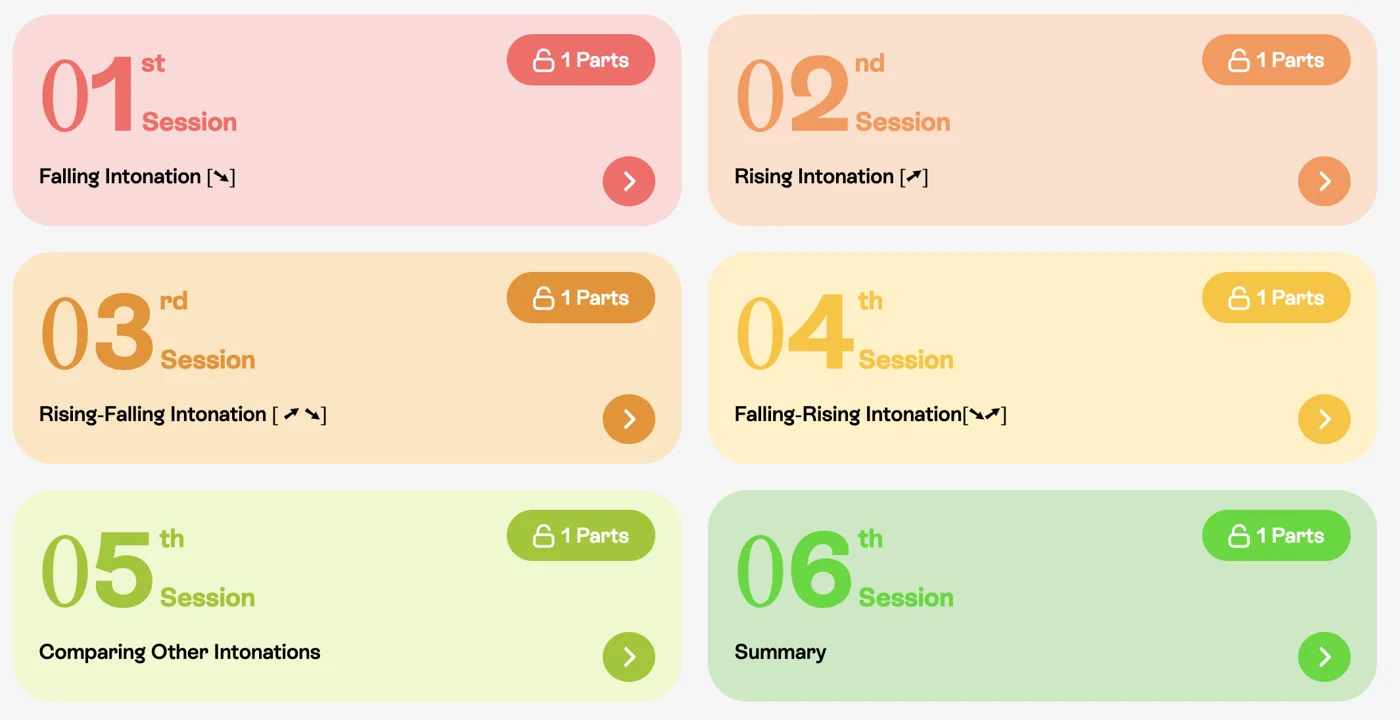
The InPronunci Intonation chapter teaches one pattern per session, then compares the patterns and ends with a summary.
-
01Statements ↘I’m going to the ↘store.
-
02Wh-questions ↘What ↘time is it?
-
03Commands ↘Close the ↘door.
-
04Exclamations ↘What a great ↘idea!
-
05Yes/no questions ↗Are you ↗ready?
-
06Statement as a question ↗You’re coming ↗tonight?
-
07Echo questions ↗You said ↗Tuesday?
-
08Tag question, real question ↗It’s open, ↗isn’t it?
-
09Tag question, expecting agreement ↘It’s a nice day, ↘isn’t it?
-
10Lists ↗ … ↘↗Apples, ↗bananas, and ↘grapes.
-
11Choice questions ↗ ↘Tea ↗or ↘coffee?
-
12Unfinished thought ↗ … ↘If you have ↗time, call ↘me.
-
13Strong feeling ↗↘That’s a↗↘mazing!
-
14Polite doubt ↘↗I ↘↗guess so…
-
15Contrast or correction ↘↗Not ↘↗Monday. ↘Tuesday.
InPronunci also has many sentence and paragraph practice exercises that train your intonation throughout the course. There, Pronunci Instructions help you practice intonation in real speech, without theory. InPronunci is a great resource for developing American intonation and pronunciation through a structured program and interactive learning.
How can professionals practice American intonation effectively?
Effective practice requires active engagement with real speech, not passive listening. The following sequence builds intonation skill systematically.
- Start with speech shadowing. Speech shadowing is the best method for internalizing American intonation. You listen to a native speaker and repeat simultaneously, mimicking rhythm, pitch, and melody in real time. Use short professional dialogues, TED talks, or recorded business meetings as your source material.
- Train pitch flexibility with vocal exercises. Pitch gliding means sliding your voice from low to high and back on a single vowel sound. Humming scales loosens the vocal tract and builds awareness of your natural pitch range. These exercises take five minutes and prepare your voice for controlled intonation work.
- Practice with professional context phrases. Use sentences from your actual work life. “The deadline is Friday↘” or “Can you confirm the budget↗?” are more useful than generic textbook examples because you will say them again in real situations.
- Use AI feedback to catch what your ear misses. Inpronunci’s AI Accent Coach evaluates your intonation, rhythm, and connected speech as you speak. It gives you specific feedback on pitch movement, so you know exactly where your pattern breaks down.
- Set a consistent daily goal. Fifteen minutes of focused intonation practice every day produces faster results than two hours once a week. Consistency builds the muscle memory that makes correct pitch patterns automatic.
Professionals from tonal or syllable-timed language backgrounds, such as Mandarin or Japanese speakers, face a specific challenge. Non-native speakers from tonal languages tend to produce monotone English intonation because their native prosody system does not transfer. The fix is deliberate focus on tonic stress placement, the single most stressed syllable in each phrase, because that is where the pitch movement lives. Mandarin speakers, for example, can find it useful to study key differences between English and Mandarin pitch systems before beginning intonation drills.
Pro Tip: Practice intonation patterns out loud, not silently. Your brain needs the physical feedback of your own voice to build new speech habits. Silent reading of intonation rules produces almost no transfer to actual speaking.
Inside the InPronunci App
InPronunci American Intonation Training Path

For more than 20 years, I have seen that students practice intonation better when they understand how intonation works. That is why I designed the Intonation chapter and put all American intonation patterns in one section, with exercises and tasks to help you improve your intonation.
Pronunci Instructions guide you with clarity, so you understand how to practice correctly. Listen to my instructions carefully and interact for success.
Prof. AlexPh.D. Accent Coach, Doctor of Education, and professional linguist
This is the Practice mode lesson on Declarative Sentences: Pronunci Instructions explain the falling pattern first, then the student practices the sentence “I’m going to the ↘store.”
- Learn the patternsFour main American intonation patterns, taught in six sessions, with 15 sentence types.
- Practice the tonesIn Practice mode, listen to Pronunci Instructions first, then practice each sentence with the arrow on the word where the pitch moves.
- Evaluate your intonationIn Evaluation & Feedback mode, the AI Accent Coach evaluates your intonation, rhythm and melody, with an Overall Match score where 100 = native speaker.
What are common intonation mistakes professionals make?
Most intonation errors fall into a small set of patterns. Recognizing them is the first step to correcting them.
- Rising intonation on statements. This is the most damaging mistake in professional settings. Saying “I have five years of experience↗” sounds like a question. It signals uncertainty and invites doubt. The fix is a deliberate falling pitch on every declarative statement.
- Monotone delivery. Flat pitch throughout an utterance removes all meaning signals. Listeners must work harder to understand intent, and they often disengage. This is especially common among speakers whose native language uses less pitch variation in connected speech.
- Misplaced tonic stress. Putting the pitch movement on the wrong syllable changes meaning. “I didn’t say he stole the money” carries seven different meanings depending on which word receives the tonic stress and its accompanying pitch pattern.
- Ignoring fall-rise for politeness. Skipping the fall-rise pattern in situations that call for it produces unintended bluntness. “That won’t work” with a flat or falling pitch sounds dismissive. The same words with fall-rise sound considered and professional.
- Physical tension blocking natural pitch. A tight jaw, raised shoulders, or a constricted throat physically prevents smooth pitch variation. Relaxed body and voice placement, sometimes called the “monster voice” technique, reduces tension in the vocal tract and allows natural intonation to emerge. Drop your jaw, relax your shoulders, and let your voice sit lower in your chest before speaking.
The accent reduction methods that work best for professionals address these errors directly, combining awareness training with targeted feedback rather than generic repetition drills.
Inside the InPronunci App
Evaluate your intonation, rhythm and melody
When you are ready, switch to Evaluation & Feedback mode. Tap the mic and record the sentence. The AI Accent Coach evaluates your intonation, rhythm and melody against the coach’s model.
Cognitive Accent Training
Compare Your Coach vs. Your Pronunci
In every practice sentence, students listen to Your Coach, record their own voice, and compare it with Your Pronunci, so they consciously notice and correct each sound.
![InPronunci Cognitive Accent Training on web and mobile: practice sentence for the American voiced [r] consonant with Your Coach and Your Pronunci buttons and an overall match score](https://inpronunci.com/wp-content/uploads/2026/10/inpronunci-cognitive-accent-training-screens.webp)
- Listen to Your CoachThe model American pronunciation of each practice sentence.
- Compare with Your PronunciYour own recorded pronunciation, side by side with the coach.
- Correct with feedbackThe match score and color-coded letters guide each correction.
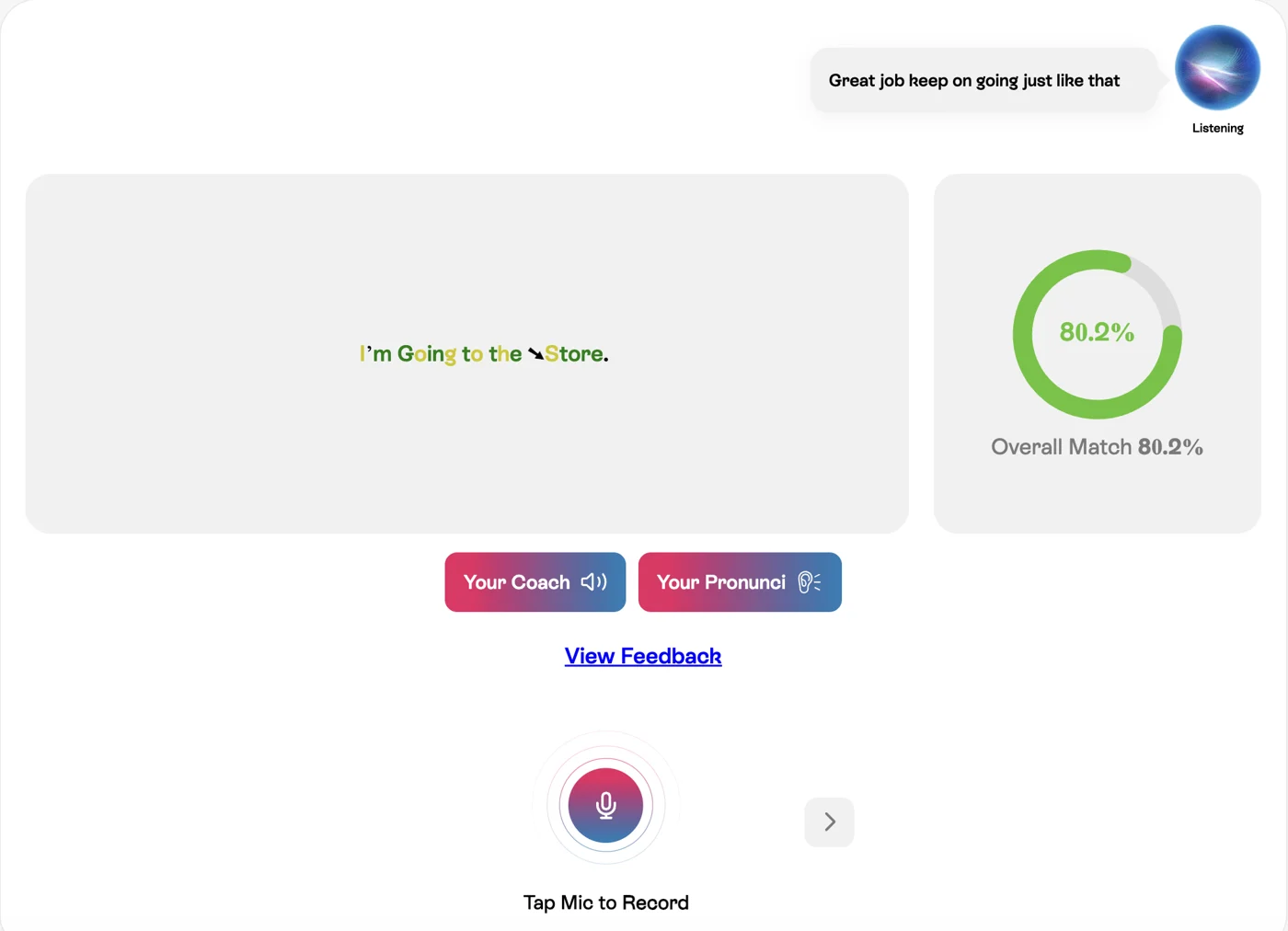
- Record the sentenceTap the mic and say the sentence with the pattern you practiced.
- Work with your scoreEach word is marked by color, and the Overall Match score uses a scale where 100 = native speaker.
- Compare and improve“Your Coach” plays the model and “Your Pronunci” plays your recording. “View Feedback” opens the details.
How to apply American intonation patterns in interviews and client meetings
High-stakes conversations require deliberate pitch control. These four steps apply the patterns directly to interview and client scenarios.
- Use falling intonation to assert commitments. When an interviewer asks “Why should we hire you?”, your answer must end with a clear falling pitch. “I deliver results on time, every time↘” closes with authority. A rising pitch on the same sentence sounds like you are asking for permission.
- Use rising intonation only for genuine questions. “Is Tuesday a good time for the follow-up call↗?” is a real yes/no question and earns a rising pitch. Do not use rising intonation to soften statements. It reads as weakness, not politeness.
- Use fall-rise to introduce contrast or nuance. In a client meeting: “I see the value in that approach↘↗, and I’d like to suggest one adjustment.” The fall-rise signals you are not dismissing the idea. It keeps the conversation collaborative.
- Use rise-fall to highlight key points. “This solution↗ cuts your processing time by half↘.” The rise-fall on “solution” draws the listener’s attention to the most important word before the supporting detail lands.
Pacing supports all four patterns. Slow down slightly before a key pitch movement so the listener has time to register it. Breath control matters too. A full breath before a statement gives your voice the range to execute a clean falling pitch. Short, shallow breaths produce flat, monotone delivery.
Pro Tip: Before a high-stakes interview or client call, spend two minutes reading a professional statement aloud with exaggerated falling intonation. The exaggeration trains your pitch range and makes natural falling intonation feel easier when the real conversation starts.
What I’ve learned coaching professionals on American intonation
After years of working with non-native professionals on American English speech patterns, one pattern stands out clearly. Professionals who struggle most with intonation are not struggling with pitch mechanics. They are struggling with permission. They have been told, implicitly or explicitly, that sounding authoritative in English is not their place. That belief shows up as rising intonation on statements, monotone delivery, and pitch patterns that shrink rather than assert.
The fix is not just technical. Yes, you need to practice falling intonation on statements. Yes, you need to train fall-rise for polite contrast. But you also need to practice speaking as if your words carry weight, because they do. I have seen professionals with strong grammar and vocabulary lose credibility in interviews simply because their pitch patterns signaled uncertainty. I have also seen professionals with noticeable accents earn immediate respect because their intonation was clear, deliberate, and authoritative.
Intonation mastery is a credible signal of professionalism in English-speaking business environments. It is also trainable. The professionals I coach who make the fastest progress are the ones who combine consistent daily practice with real feedback, not guesswork. Technology like Inpronunci’s AI Accent Coach gives you that feedback without waiting for a weekly lesson. Use it. Record yourself. Listen back. Adjust. Repeat. That cycle, done consistently, produces real results.
— Prof. Alex, Ph.D. Accent Coach
Inpronunci’s tools for professionals mastering American intonation
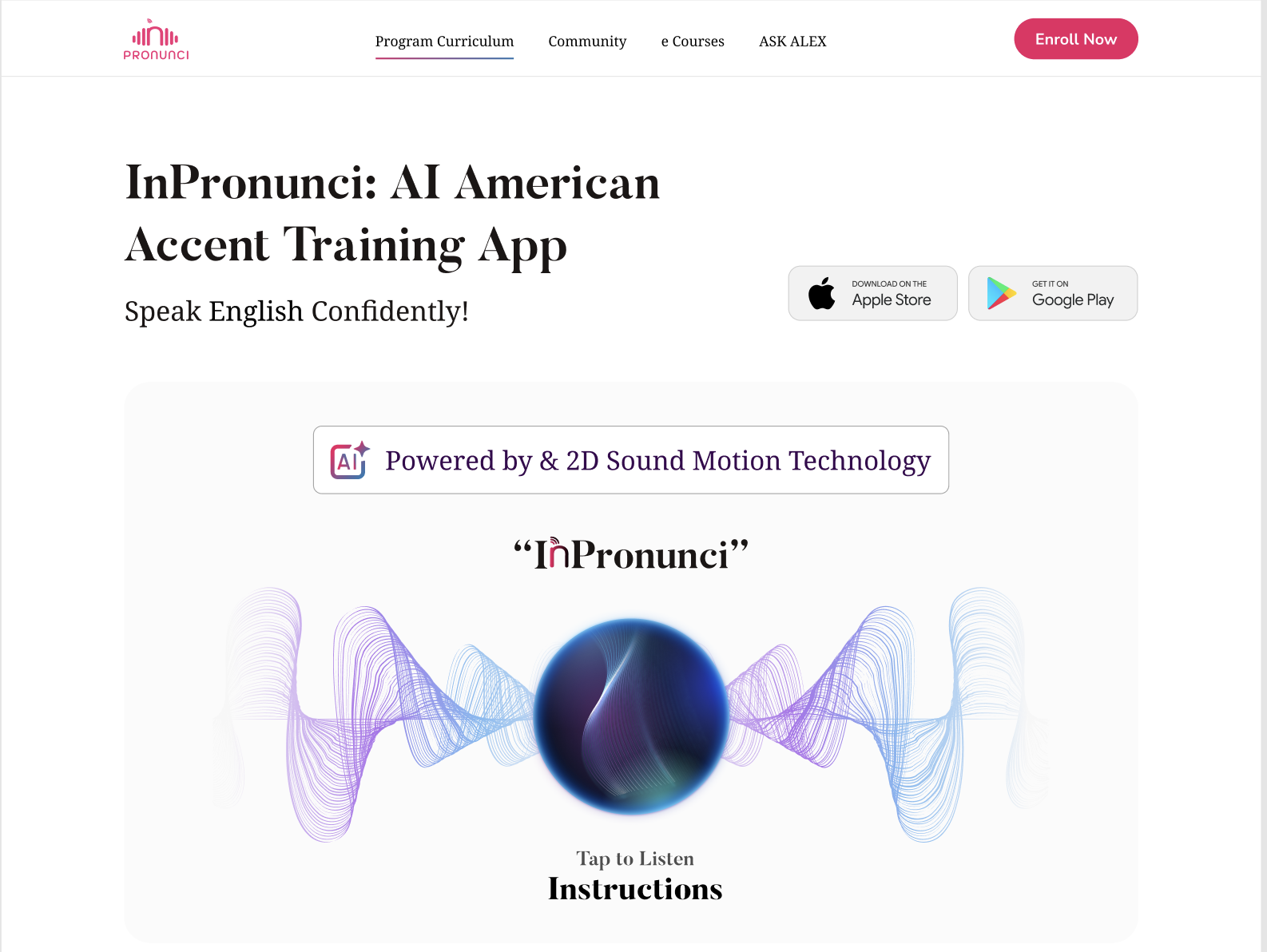
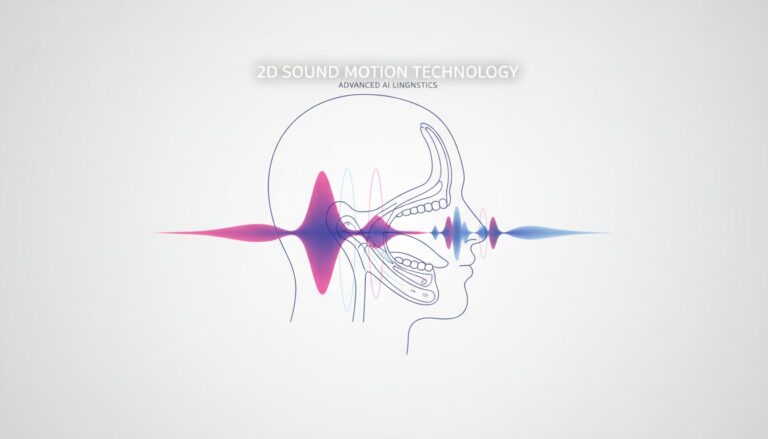
Inpronunci is built specifically for professionals who need more than passive listening exercises. The AI Accent Coach evaluates your intonation, rhythm, and connected speech as you speak and gives you specific, real-time feedback. The Interactive 2D Sound Video Mouth-Training Simulators train exactly how native speakers produce sounds and pitch movements, so you replicate the mechanics rather than guess. You can start with the free Chapter 1, “Get to Know Your Speech Organs,” to build the physical foundation. The Basic Plan offers self-study with AI and human-guided instructions. The Premium Plan gives you monthly 1-on-1 sessions with Prof. Alex, Ph.D. Accent Coach for personalized guidance. Sign up here or book a free Premium session at the link below.
Book your free Premium session
How first languages change English rhythm and intonation
| First language | Common pattern |
|---|---|
| Indian English speakers | English is often syllable-timed, with every syllable getting equal weight, and stressed syllables can be said lower in pitch instead of higher. |
| Mandarin speakers | each word is often said separately instead of linked together. |
| Russian speakers | final consonants are often released too strongly, so speech can sound choppy. |
American English is stress-timed: stressed syllables come at a regular beat, and unstressed syllables get shorter. Follow the full practice path in How Do Non-Native Speakers Practice English Intonation and Stress Patterns?
Sources: Wikipedia: Indian English, San Diego Voice and Accent, Wikipedia: Non-native pronunciations of English
Questions & Answers
FAQ
01What are American intonation patterns?
American intonation patterns are the pitch movements in speech that signal meaning, emotion, and intent. The four core patterns are falling, rising, fall-rise, and rise-fall, each used in specific communicative contexts.
02Why does rising intonation on statements sound unprofessional?
Rising intonation on a statement signals uncertainty or a question rather than a confident claim. Research shows 63% of U.S. executives perceive this pattern as a sign of uncommitment.
03How long does it take to improve intonation patterns?
Consistent daily practice of 15 minutes, using methods like speech shadowing and AI feedback, produces noticeable improvement within weeks. Full internalization takes several months of regular, focused work.
04What is the best practice method for American intonation?
Speech shadowing is the best method. It trains pitch, rhythm, and melody simultaneously by having you mimic native speech in real time.
05How does fall-rise intonation help in professional settings?
Fall-rise intonation signals polite disagreement or implied contrast without sounding dismissive. It appears in the majority of conversational “but” clauses and keeps professional dialogue collaborative rather than confrontational.
Recommended

Intonation Patterns in Academic English: Inpronunci Guide
Master intonation patterns in academic English with real examples. Boost clarity and confidence in your presentations using Inpronunci tools!
American English Intonation: The Strategic Guide to Natural Speech in 2026
Stop sounding robotic. Master American English intonation to project confidence and authority. Our guide covers pitch and rhythm for persuasive business speech.

InPronunci Accent Training App for Professional Communication
Improve American pronunciation with InPronunci, an accent training app using AI feedback, human guidance, and 2D Sound Motion Technology.
InPronunci training structure
How InPronunci trains the American speech system
InPronunci trains the full American speech system: Interactive Visual 2D Sound Simulators and phonetic exercises for articulation and American sound development, sentence practice for intonation, melody, rhythm, and connected speech, paragraph practice for spontaneous speech, public speaking, and real communication confidence, and Advanced AI Accent Coach evaluation as you speak.
InPronunci is an advanced, linguistically structured American accent training platform with more than 1,000 downloads and a growing learner base. It is designed for serious ESL learners who want American pronunciation, stronger intonation, more natural rhythm, better connected speech, and the ability to speak English more confidently in real communication. The program is especially useful for intermediate and advanced English speakers who want to become independent speakers of English with confident communication, stronger speaking control, long-term speech improvement, and great public speaking skills. It is also designed for advanced speakers whose goal is to speak like a native or closer to native-like American speech, including people who were raised in the United States but still have slight accent patterns from the native language they were born with. It is a complete American accent training course and system created by Prof. Alex, Ph.D. Accent Coach, Doctor of Education, and professional linguist based in Austin, Texas, with Pronunci Instructions from Prof. Alex for each lesson that make self-learning more effective, supported, and clear.
Plans
What InPronunci costs
InPronunci Basic
$35 per month
Chapter 1 is free after signup.
InPronunci Premium
$200 per month
Includes a coach: