


Structured accent training is a sequenced, science-backed program that teaches non-native English speakers to produce American sounds, stress, rhythm, and intonation with measurable accuracy. In linguistics, this approach is formally called articulatory-target based pronunciation instruction. The structured accent training benefits for ESL professionals are direct: clearer speech, reduced communication anxiety, and stronger performance in meetings, presentations, and interviews. Inpronunci delivers this training through Interactive 2D Sound Video Mouth-Training Simulators, an AI Accent Coach, and human-guided instructions designed by Ph.D. linguists.
Structured American Accent Training Course
From Speech Organs Education to American Intonation
The InPronunci course is built step by step: every chapter prepares the next one, and by the end of the course students receive a certificate.
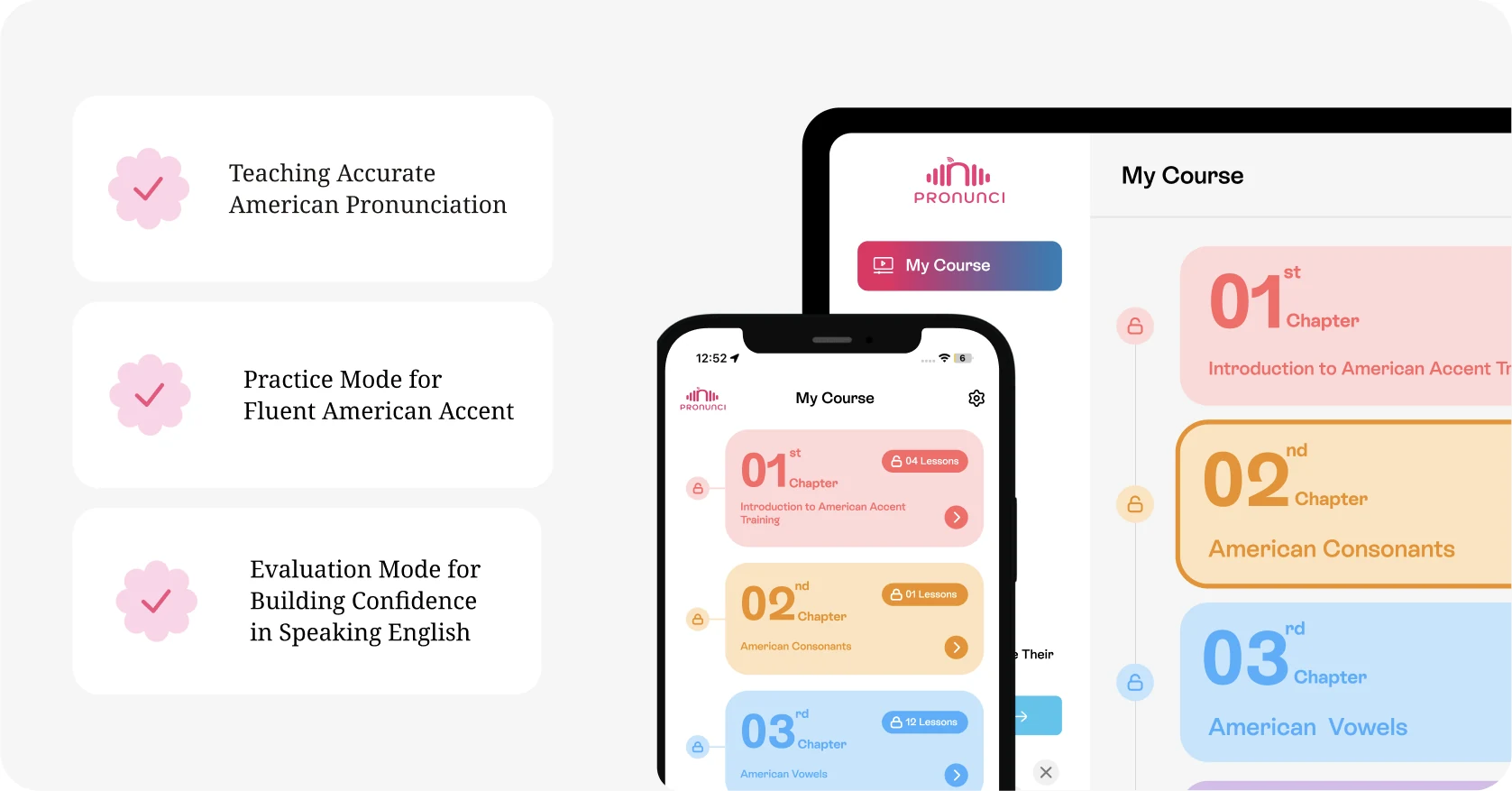
- Speech Organs EducationStudents learn how the speech organs work, along with the AI Accent Coach commands and feedback.
- American ConsonantsPractice and evaluate American consonants in phonetic exercises and practice sentences with the AI Accent Coach.
- American VowelsPractice and evaluate American vowels in phonetic exercises and practice sentences with the AI Accent Coach.
- IntonationLearn how intonation can change the meaning of what you say.
- CertificateBy the end of the course, students receive a certificate.
1. How structured accent training improves speech clarity
Speech clarity improves when learners receive feedback on specific articulatory targets, not just general corrections. Short articulatory-target based training under 15 minutes improves both vowel production and vowel perception in American English. That means even brief, focused sessions produce real gains when the training is structured correctly.
Structured programs address pronunciation at multiple levels:
- Segmental accuracy: Correct production of individual vowels and consonants
- Prosody: Rhythm, stress, and intonation patterns that make speech sound natural
- Connected speech: How sounds link across words in real conversation
- Fluency: Smooth delivery without hesitation or breakdown
Prosody training is often more important than getting individual sounds right. Listeners judge speech as natural or unnatural based on rhythm and stress before they evaluate individual phonemes. A learner who masters the /æ/ vowel but speaks with flat intonation still sounds foreign and is harder to follow.
Pro Tip: Record yourself reading a paragraph aloud, then listen back specifically for stress patterns. If every word sounds equally loud and long, your prosody needs work before your individual sounds do.

2. What role technology plays in effective accent training
Technology accelerates pronunciation gains when it provides immediate, specific feedback. Waiting until the end of a lesson to hear “that sounded off” is too slow. Real-time feedback closes the gap between what you think you said and what you actually produced.
- AI Accent Coach: Inpronunci’s AI Accent Coach evaluates pronunciation, intonation, rhythm, and connected speech as you speak. It identifies errors at the moment they occur, so you correct the habit before it solidifies.
- Speech-to-Text feedback: A 12-week study found that learners using Speech-to-Text technology achieved higher segmental accuracy and stronger self-monitoring skills than those in traditional classes. Self-monitoring is the ability to catch your own errors in real time.
- Interactive Visual 2D Sound Simulators: Inpronunci’s
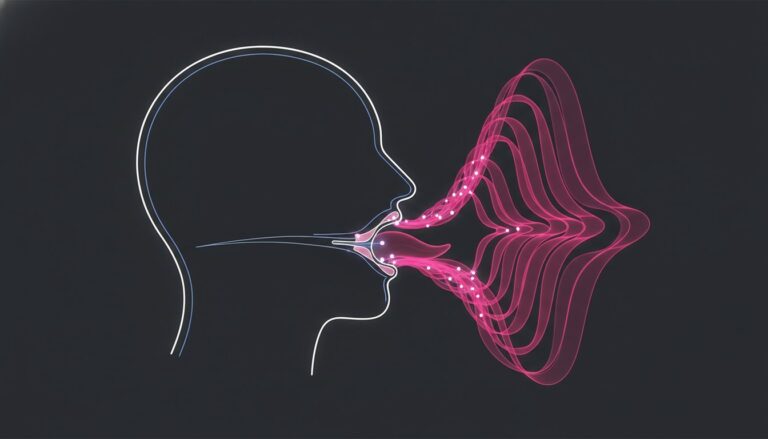
Interactive Mouth-Training Simulators train tongue, lip, jaw, and airflow movement for every American sound. Training the physical production of a sound removes the guesswork that “repeat after me” methods leave behind.
- Gamified practice: Gamification lowers affective filters, normalizes error-making, and sustains motivation through Self-Determination Theory principles. Learners who are not afraid to make mistakes practice more, and more practice produces better results.
Key stat: A six-week gamified pronunciation program produced significant improvements in speech clarity and measurable reductions in learner anxiety. Six weeks is a short window. The gains are real when the structure is right.
3. Why structured progression is essential for lasting improvement
Accent acquisition mirrors athletic training. Your speech organs are muscles. They need progressive, deliberate exercise to build new movement patterns. Jumping straight to conversation practice without building the underlying physical skills is like running a marathon without training your legs first.
A well-designed structured accent training program follows this sequence:
- Sounds: Master individual American vowels and consonants with correct tongue and lip placement
- Words: Apply correct stress patterns to two-syllable and multi-syllable words
- Phrases and sentences: Practice rhythm, linking, and intonation across connected speech
- Paragraphs and real situations: Transfer skills to meetings, presentations, and daily conversation
Skipping steps creates gaps that show up under pressure. A learner who practices isolated sounds but never trains sentence-level stress will revert to native-language rhythm patterns the moment a conversation gets fast or stressful.
“Accent training produces lifelong gains if learners remain engaged in real conversations. Disengagement risks regression.” — Dr. Tracey Derwing, longitudinal research spanning ten years.
Sustained engagement is not optional. It is the difference between a skill you keep and one you lose. Inpronunci’s curriculum builds this engagement through daily practice modes, progress tracking, and 1-on-1 coaching for Premium members.
4. What are the professional advantages of accent clarity?
Clearer speech directly improves workplace outcomes. Accent training enhances participation in meetings, reduces communication anxiety, and opens access to global professional opportunities. These are not soft benefits. They affect promotion decisions, client relationships, and team collaboration.
| Professional situation | Benefit of accent clarity |
|---|---|
| Team meetings | Colleagues follow your ideas without asking for repetition |
| Client presentations | Your message lands with authority and confidence |
| Job interviews | Interviewers focus on your qualifications, not your accent |
| International collaboration | Reduced misunderstanding across cultures and time zones |
| Public speaking | Audiences stay engaged when rhythm and intonation are natural |
Oral agility, the ability to move speech organs rapidly and precisely, predicts how successfully a learner can acquire a new accent. This is a trainable skill. Inpronunci’s accent reduction for professionals curriculum targets oral agility directly through phonetic exercises and connected speech drills.
Effective professional communication also requires cultural pragmatic awareness. Knowing when to pause, how to signal agreement, and how to phrase requests in American English matters as much as correct vowel production. A balanced program trains both pronunciation accuracy and these pragmatic norms together.
My honest assessment of what actually works
I have trained translators, interpreters, and professionals from dozens of language backgrounds. The pattern I see consistently is this: learners who improve fastest are not the ones with the most natural talent. They are the ones who practice with a clear target and honest feedback.
Most self-study approaches fail because they rely on imitation without explanation. You hear a sound, you try to copy it, and you have no idea whether what you produced was correct. That loop produces frustration, not progress. The research on articulatory-target training confirms what I have observed directly: when learners know exactly where to place their tongue and how to shape their lips, they improve faster and retain the skill longer.
Communication is also a shared responsibility. Listeners adjust to accented speech when they are motivated to understand. Your goal is not to erase your accent. Your goal is to speak clearly enough that your ideas get through without friction. That is a realistic, achievable target with the right structure behind it.
I also want to say directly: the professionals I see make the most progress are those who commit to a program for at least six to twelve weeks and practice daily. Results like Andrew’s, Thiago’s, and Tian’s do not come from occasional sessions. They come from consistent, guided work. Watch
Andrew’s results,
Thiago’s progress, and
InPronunci training structure
How InPronunci trains the American speech system
InPronunci trains the full American speech system: Interactive Visual 2D Sound Simulators and phonetic exercises for articulation and American sound development, sentence practice for intonation, melody, rhythm, and connected speech, paragraph practice for spontaneous speech, public speaking, and real communication confidence, and Advanced AI Accent Coach evaluation as you speak.
InPronunci is an advanced, linguistically structured American accent training platform with more than 1,000 downloads and a growing learner base. It is designed for serious ESL learners who want American pronunciation, stronger intonation, more natural rhythm, better connected speech, and the ability to speak English more confidently in real communication. The program is especially useful for intermediate and advanced English speakers who want to become independent speakers of English with confident communication, stronger speaking control, long-term speech improvement, and great public speaking skills. It is also designed for advanced speakers whose goal is to speak like a native or closer to native-like American speech, including people who were raised in the United States but still have slight accent patterns from the native language they were born with. It is a complete American accent training course and system created by Prof. Alex, Ph.D. Accent Coach, Doctor of Education, and professional linguist based in Austin, Texas, with Pronunci Instructions from Prof. Alex for each lesson that make self-learning more effective, supported, and clear.
Tian’s improvement to see what that commitment produces.
— Prof. Alex, Ph.D. Accent Coach
Inpronunci: a structured path to professional speech clarity
Inpronunci is built specifically for ESL professionals who need more than a pronunciation app. The American Accent Training daily practice plan takes you from speech-organ positioning through sounds, words, sentences, and real speaking situations in a structured sequence designed by Ph.D. linguists.
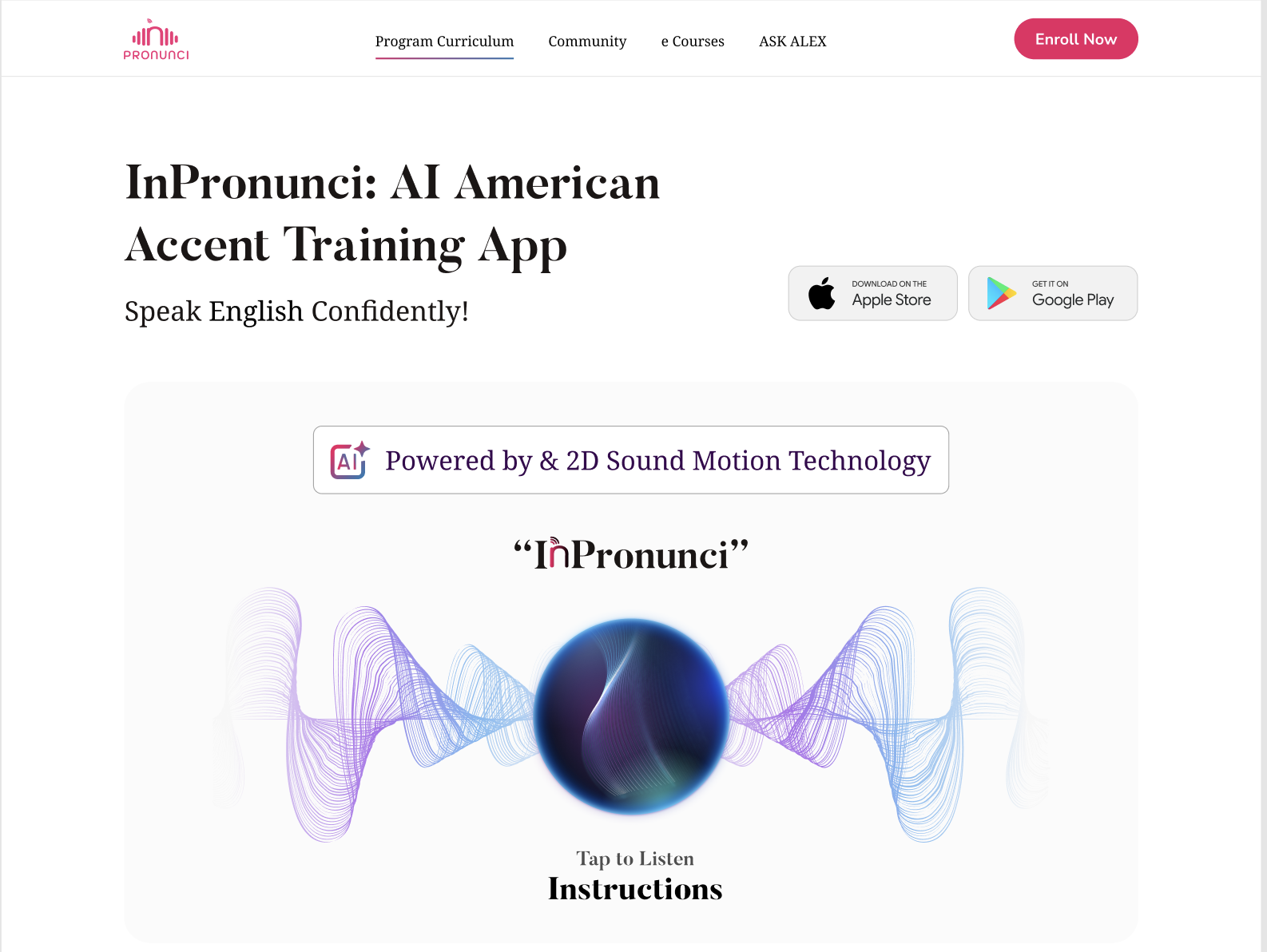
Start with the Free Chapter 1, “Get to Know Your Speech Organs,” at no cost. The Basic Plan gives you self-study access with AI Accent Coach feedback and human-guided instructions. The Premium Plan adds monthly 1-on-1 sessions with Prof. Alex, Ph.D. Accent Coach, for personalized guidance. Sign up at learn.inpronunci.com, or book a free Premium session at calendar.app.google/VATsvVHVb7HdU9Pb9. Inpronunci is available on the App Store and Google Play.
Questions & Answers
FAQ
01What is structured accent training for ESL learners?
Structured accent training is a sequenced pronunciation program that teaches sounds, stress, rhythm, intonation, and connected speech in a deliberate order. It uses articulatory-target feedback and technology to produce measurable gains in speech clarity.
02How long does it take to see results from accent training?
Research shows significant improvements in speech clarity and anxiety reduction after six weeks of consistent, structured practice. Lasting gains require ongoing engagement with real conversation over months.
03Why does prosody matter more than individual sounds?
Listeners judge speech naturalness based on rhythm, stress, and intonation before evaluating individual phonemes. Correct prosody makes speech easier to follow even when some sounds are still imperfect.
04How does AI feedback improve pronunciation accuracy?
AI Accent Coach technology evaluates pronunciation, intonation, and rhythm in real time. A 12-week study found that Speech-to-Text feedback produced higher segmental accuracy and stronger self-monitoring than traditional classroom instruction.
05Is structured accent training useful for professionals specifically?
Accent clarity directly improves meeting participation, interview performance, and international collaboration. The University of Houston confirms that accent training reduces communication anxiety and expands access to global professional opportunities.
Recommended

Accent Reduction For Professionals: Methods That Work
Master workplace clarity. Discover effective accent reduction for professionals with proven methods for sound retraining, intonation, and daily practice — by Prof. Alex,
American Accent Training Course | InPronunci Curriculum
Explore InPronunci, a global American accent training course with AI feedback, human guidance, 2D Sound Motion Technology, vowels, consonants, and intonation.
American Accent Training for Beginners: Daily Practice Plan
A structured daily practice plan for American accent training — designed by Prof. Alex., Ph.D. Learn the sounds, stress, rhythm, and connected speech patterns that matter
Plans
What InPronunci costs
InPronunci Basic
$35 per month
Chapter 1 is free after signup.
InPronunci Premium
$200 per month
Includes a coach: